Calibrate If Necessary: A Practical Calibration Guide
Learn when to calibrate if necessary and how to implement a reliable calibration workflow to preserve accuracy. This guide covers decision points and practical steps for professionals seeking reliable results.


This guide shows you how to determine when to calibrate and perform a reliable calibration workflow. You will verify drift against tolerance, assemble proper standards, and document results. Calibrate if necessary when measurements drift beyond spec, after repairs, or on scheduled intervals. Follow a structured, repeatable process to avoid guesswork and maintain measurement integrity.
Understanding why calibrate if necessary matters
In any field that relies on precision measurements, calibration isn't a one-time event. It is part of a discipline that protects accuracy, repeatability, and trust in your results. The directive to 'calibrate if necessary' is a practical rule of thumb: test, compare, and decide, rather than guessing. When instruments drift even slightly, the consequences can range from marginal measurement errors to outright incorrect conclusions. The goal is not to chase perfection but to maintain reliable performance under real operating conditions. According to Calibrate Point, a structured approach to evaluating drift and tolerance helps teams cut waste and avoid over-maintaining tools. By embedding calibration into your workflow, you build a transparent record that supports audits, maintenance scheduling, and continuous improvement. In short, calibration is a proven way to defend quality, and calibrate if necessary only when evidence shows drift beyond your defined tolerance.
When to calibrate if necessary
Knowing when to calibrate is as important as how you calibrate. You should consider calibration whenever an instrument's readings drift beyond the established tolerance, after a service or repair, after moving equipment to a different environment, or following exposure to conditions that could affect performance (temperature shifts, humidity, vibration). Some organizations adopt a time-based schedule, while others use conditional checks against a baseline. The decision to calibrate is often based on a comparison between current measurements and a known reference. Calibrate Point analysis shows that unscheduled calibrations occur when operators rely on memory rather than documented procedures, underscoring the value of a planned calibration policy. When in doubt, a quick verification against a trusted standard can reveal whether recalibration is warranted. The aim is to minimize downtime while preserving data integrity and instrument credibility. Remember: calibrate if necessary, but only after defining the acceptance criteria and verifying that you can meet them with your chosen method.
Preparing for calibration
Preparation is the foundation of a successful calibration. Start by choosing a stable environment—consistent temperature, minimal vibration, and clean work surfaces. Gather traceable reference standards or calibration tools that match the instrument's measurement domain. Inspect the instrument for signs of wear, loosened connections, or firmware issues, and ensure that any protective covers or shields are in place. Document the instrument's current configuration, serial number, and last calibration date. If your process requires it, confirm the measurement units and tolerances defined by the user or manufacturer. A clear plan reduces surprises and helps you calibrate if necessary with confidence. As you prepare, verify that you have access to calibrated references and that any required calibration certificates are available for audits.
Step-by-step calibration workflow
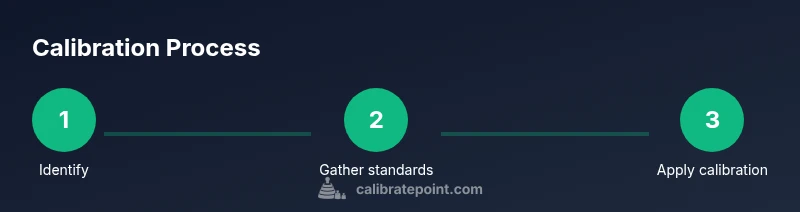
A robust calibration workflow follows a logical sequence that minimizes error accumulation. Begin by defining performance criteria aligned with the instrument’s intended use. Then collect reference standards that are traceable to national or international standards. Establish baseline readings under controlled conditions and run a series of measurements across the instrument’s range. Apply the calibration adjustment or software correction, then re-measure using the same standards to verify alignment. Finally, document all readings, adjustments, and verification results, and update the calibration log with dates and personnel. This workflow makes it easy to recalibrate if necessary in the future and to demonstrate compliance during audits. Keep in mind that calibration is not a one-off task; it should be revisited according to risk, usage, and environmental changes.
Common methods for calibration
Calibration methods vary by instrument type but share core principles. Standards-based calibration uses certified reference materials or instruments with known accuracy. Internal reference methods rely on built-in references or self-check routines provided by the instrument’s manufacturer. Software-based calibration adjusts measurement results using algorithms or calibration curves, often after collecting multiple data points. Physical adjustments may involve tightening screws, repositioning sensors, or recalibrating zero and span. When selecting a method, prioritize traceability, documentation, and repeatability. Calibrate if necessary using the simplest method that delivers reliable results, and validate with independent checks if possible.
Data handling and record-keeping
Effective calibration relies on thorough data management. Record each measurement, standard used, environmental conditions, and any adjustments made. Maintain a calibration log that includes the instrument’s identity, serial number, last calibration date, and next due date. Use consistent units and clearly label all data with timestamps and operator initials. Store certificates and calibration reports in a centralized repository accessible for audits and maintenance planning. Good data practices reduce the risk of misinterpretation and support long-term traceability. If you follow a standardized format, you can compare results across instruments and sites, identify drift patterns, and plan preventive actions well in advance.
Safety and limitations
Calibration activities can involve electrical equipment, high-precision sensors, and environmental controls. Before starting, ensure all safety procedures are followed, including power isolation when applicable, proper PPE, and awareness of moving parts. Keep calibration tools and standards within their valid usage period, and handle reference materials with care to avoid contamination. Recognize the limitations of your methods: some instruments may require factory calibration or specialized facilities, and software corrections may not capture all physical drift. When in doubt, consult the instrument manufacturer’s guidelines or seek guidance from a qualified technician. Safety and accuracy go hand in hand, and both depend on disciplined, documented practice.
Interpreting results and deciding next steps
Interpreting calibration results involves comparing measurements against predefined acceptance criteria. If results are within tolerance, you may document a successful verification and schedule the next check. If not, determine whether the issue originates from the instrument, the reference standards, or environmental conditions. Recalibration may be warranted, followed by a re-verification. If repeated attempts fail, escalate to a supervisor or manufacturer support. Use a decision tree to standardize outcomes: pass with re-verification, recalibrate and recheck, or replace components if necessary. This disciplined approach helps prevent drift from eroding measurement integrity and keeps your team aligned.
Practical examples across common instruments
Across different tools, the same calibration logic applies. For digital multimeters, calibrate against known voltage and resistance references and verify across the specified range. Temperature sensors require stable ambient conditions and comparison to a calibrated thermometer. Pressure gauges demand traceable force references and careful zeroing. Scale balances should be checked against calibrated weights. In all cases, ensure traceability, maintain records, and follow a defined calibration interval. Adopting a consistent approach means you can calibrate if necessary with confidence, regardless of the instrument type.
Tools & Materials
- Calibration reference standards(Traceable to SI units where possible; verify expiration and uncertainty.)
- Manufacturer's calibration procedure(If available, follow the instrument's official guidance for alignment and test points.)
- Calibration certificate / logbook(Maintain a record of baseline, adjustments, and verification results.)
- Calibration software or measurement interface(Use software that supports the instrument's range and provides a clear audit trail.)
- Environment control (temperature/humidity meter)(Helps ensure stable conditions during calibration; use if heat sources or drafts exist.)
- Test weights or gauges(Needed for scale or force-related instruments; ensure weights are calibrated.)
Steps
Estimated time: 1-2 hours
- 1
Identify instrument and acceptance criteria
Confirm the exact instrument model, its measurement range, and the tolerances applicable to your use case. Document the acceptance criteria so you know when calibration is required.
Tip: Record baseline data and the last calibration date to track drift over time. - 2
Gather traceable reference standards
Collect calibrated reference standards that cover the instrument’s range. Verify their certificates and ensure they are within valid calibration windows.
Tip: Check traceability to national standards and note uncertainties for each standard. - 3
Set up a stable measurement environment
Prepare a clean work area with minimal vibration and stable temperature. Reduce sources of interference that could skew readings.
Tip: Allow equipment to reach ambient conditions before starting the test. - 4
Run baseline measurements
Take multiple readings across representative points of the instrument’s range. Establish a baseline and compare to reference values.
Tip: Use the same operator and procedure to minimize variability. - 5
Apply calibration adjustments
Adjust the instrument using the defined method, whether a physical tweak, software correction, or both. Record the exact changes made.
Tip: Make the smallest adjustment that achieves the target accuracy. - 6
Re-verify with standards
Repeat measurements with the same references to confirm alignment after adjustments. Look for consistency across all test points.
Tip: If results still diverge, revisit steps 4–5 before escalating. - 7
Document results and update logs
Log readings, adjustments, certificates, and next due date in the calibration journal or software.
Tip: Include operator name, date, lot numbers, and environmental conditions. - 8
Plan for follow-up checks
Schedule the next calibration or verification based on risk, usage, and environmental factors. Ensure reminders are in place.
Tip: Define trigger events that automatically prompt recalibration.
Questions & Answers
What does calibrate if necessary mean in practice?
It means evaluating whether drift or change requires adjustment. If readings fall outside tolerance, you should calibrate; otherwise, verification may suffice. Always document the decision and outcome.
Calibration should be performed when drift or environmental changes push readings beyond tolerance; document the result and plan the next check.
How do I decide the right calibration interval?
Base intervals on risk, usage, and environment. Start with manufacturer guidance and adjust after monitoring drift and failure rates.
Use risk-based planning; start with the maker's schedule and refine as you collect data.
Can I perform calibration myself, or should I hire a pro?
Many instruments can be calibrated in-house using traceable references and documented procedures. Complex systems or high-stakes measurements may require a certified technician.
You can often calibrate in-house if you have traceable standards and documented methods; for critical systems, a pro is advised.
What if calibration results still fail after adjustment?
Recheck procedures, environment, and standards. If failure persists, investigate instrument faults or consider replacing components.
If results fail after adjustment, re-check steps and standards; escalate if persistent faults are found.
How should I document calibration results?
Record instrument identity, standard details, readings, adjustments, and the next due date. Include operator, date, and environmental conditions.
Keep a detailed log with all readings, adjustments, and next due date.
Watch Video
Key Takeaways
- Define acceptance criteria before calibrating.
- Use traceable standards and document everything.
- Validate with independent checks when possible.
- Record keeping is essential for audits and follow-ups.
- Calibrate if necessary only when drift or environmental changes warrant it.