Calibrated vs. Uncalibrated: A Practical Calibration Guide for Tools
Learn how calibrated vs. uncalibrated devices affect accuracy, traceability, and decision quality. Get practical steps to verify status, manage calibration, and keep measurements reliable across tools and environments.


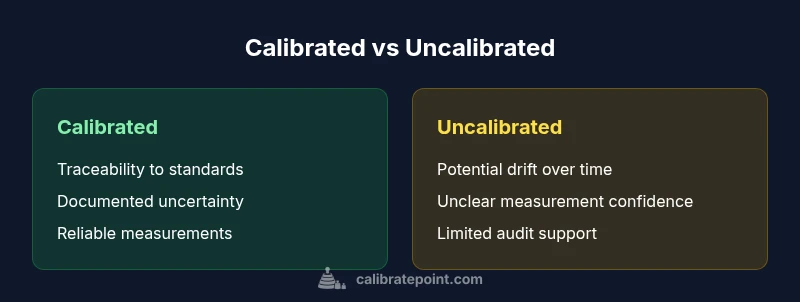
Calibrated devices have verified accuracy and traceability, with a documented uncertainty; uncalibrated tools lack this assurance and can drift or bias readings. For critical work, calibration status is a prerequisite for reliable measurements and safe decisions. In short, calibration status matters for data integrity and compliance.
Understanding calibrated vs. uncalibrated
In the world of measurement and tool usage, calibrated vs. uncalibrated is not a vague concept—it defines whether a device's readings can be traced back to a recognized standard. A calibrated instrument has undergone a formal process where its output is compared against a reference standard, adjustments are made if necessary, and a certificate of calibration records the results and the date. An uncalibrated instrument has not undergone this verification, or its calibration date has lapsed. For professionals and DIY enthusiasts alike, recognizing this distinction is essential because it affects data integrity, safety, and compliance with industry requirements. According to Calibrate Point, the calibration status of a tool is a practical predictor of whether measurements will be reliable in critical tasks. When you encounter calibrated vs. uncalibrated, you are looking at a difference in verified accuracy, traceability, and confidence in results. In short: calibration status matters because it anchors measurements to a known standard. The choice between calibrated and uncalibrated tools should be driven by the criticality of the measurement, the regulatory environment, and the potential consequences of error.
Why calibration status impacts measurement quality
Measurement quality isn't a vibe—it's a function of how well a device's output aligns with a reference. Calibrated instruments carry a documented uncertainty and traceability chain, which means that results can be defended under audits, manufacturing controls, and quality systems. Uncalibrated devices, by contrast, may drift due to temperature, wear, or aging, leading to biases that accumulate over time. In practice, that drift translates into out-of-tolerance readings, incorrect part dimensions, or unsafe process decisions. For technicians, this can mean rework, increased downtime, and difficulty diagnosing root causes. The consequences extend beyond the lab: field service teams rely on properly calibrated tools to ensure safety and compliance. Calibrate Point's data synthesis emphasizes that calibration status should be part of the asset management plan rather than a recurring afterthought. If you track calibration intervals, certificate validity, and instrument condition, you can reduce surprises and improve long-term reliability.
How calibration status is established and documented
Establishing calibration status begins with selecting a recognized reference standard, performing comparisons under defined conditions, and recording the outcomes in a certificate. A calibration certificate should include the device identifier, the standard used, the applied tolerance, the measured result, and the date of calibration, along with the due date for next verification. The traceability chain typically runs from the device under test to national or international standards, ensuring that measurements can be repeated and verified by others. Documentation is not just paperwork; it's a control mechanism. Calibrate Point Team notes that organizations with robust calibration documentation report fewer nonconformities and clearer audit trails. In addition to certificates, many teams attach labels or stickers to the instrument showing calibration status and due date, helping operators recognize when a tool is out of tolerance at the moment of use. Keep digital backups of certificates and ensure access for QA, safety committees, and customers.
Practical scenarios across industries
Consider a precision scale in a chemical lab: a calibrated scale ensures that sample masses are accurate, supporting valid experimental results and compliance with regulatory limits. In manufacturing, torque wrenches and calipers must be calibrated to maintain assembly tolerances and prevent rejects. In healthcare, thermometers and blood glucose meters require calibration to deliver correct patient readings. In the field, a simple pressure gauge with current calibration status can avert over- or under-inflation, reducing risk. Across these contexts, calibration status reduces uncertainty and fosters trust with stakeholders. The Calibrate Point team notes that a disciplined calibration culture—not just the initial check—propels reliability across functions, from R&D to maintenance. When teams implement centralized calibration logs, standardized procedures, and routine verification, the organization gains a predictable performance baseline.
Methods to verify if something is calibrated
Begin with locating the device's calibration certificate and label. Verify that the certificate is current, and that the instrument's model and serial numbers match. Review the stated uncertainty, tolerance, and the reference standard. If the device has undergone a recent calibration but lacks a certificate, you should request one or perform a quick in-house check with a known standard. For some tools, you can perform quick functional checks (for example, a balance check with a known mass or a multimeter against a calibration source). Create a short verification plan that includes test conditions (temperature, humidity, power supply) and acceptable pass criteria. Record results and update the status label if necessary. If uncertain, schedule a formal calibration with a certified lab or a calibration service. The essential principle is to keep a documented, auditable trail that proves the status of the tool.
Pitfalls of assuming calibration status
Common mistakes include assuming that a tool remains calibrated after a single adjustment, relying on a past certificate without checking dates, and treating calibration as optional for non-production tasks. Temperature swings, rough handling, and inappropriate storage can degrade calibration quickly. Another pitfall is misinterpreting labels; a "calibrated" tag might refer to a previous date, not the current status. Finally, DIY verification without proper standards can give a false sense of security. Avoid these by establishing clear procedures, training teams, and integrating calibration checks into daily workflows.
A pragmatic calibration workflow you can follow
Step 1: inventory and categorize devices by criticality. Step 2: verify certificate presence and dates. Step 3: review reference standards and uncertainties. Step 4: schedule next calibration and communicate reminders. Step 5: perform or witness the calibration, record the results, and attach the certificate. Step 6: implement a labeling system to quick-check status during use. Step 7: audit periodically to ensure documentation is complete and accessible. Tools for the workflow include calibration software, digital certificates, and a centralized database. By following a repeatable process, teams reduce surprises and keep measurements defensible.
Tools and resources for DIY calibration
DIY calibration can cover basic tasks with consumer-grade equipment, but professional calibration requires certified standards and traceable procedures. Useful resources include reference standards, manufacturer manuals, and peer-reviewed calibration guides. Security and data integrity matter: store certificates online, back up data, and implement access controls. For professional contexts, consider partnering with accredited calibration labs and using calibration software that logs results, tolerances, and due dates. Finally, stay updated on industry standards and regulatory guidelines to ensure ongoing compliance. Calibrate Point recommends building a calibration plan early in the asset lifecycle to minimize unplanned downtime and maximize measurement confidence.
Comparison
| Feature | calibrated | uncalibrated |
|---|---|---|
| Accuracy and bias | High accuracy with documented uncertainty | Uncertain accuracy; potential drift and bias |
| Traceability | Yes, with certificate and reference standards | Often none or unclear |
| Maintenance and upkeep | Regular calibrations; records maintained | No formal maintenance; records may be missing |
| Audit and compliance | Supports audits and quality systems | Challenging for audits without proof |
| Downtime and workflow impact | Managed through planned calibrations | Unexpected downtime risk |
| Best use case | Critical measurements, regulated environments | Non-critical tasks or exploratory work |
Pros
- Improved decision reliability with calibrated tools
- Clear traceability enables audits and quality assurance
- Reduces risk of rework and incorrect conclusions
- Better long-term value through documented maintenance
- Supports regulatory compliance and supplier confidence
Disadvantages
- Higher upfront or ongoing calibration costs
- Requires scheduling and storage of certificates
- Possible downtime during calibration windows
- Administrative overhead for certificate management
Calibrated tools are the safer, more reliable choice for critical measurements.
For precision work and audits, calibration status is a fundamental prerequisite. Calibrated devices reduce drift, enhance traceability, and support compliance, while uncalibrated tools introduce avoidable risk. The best practice is to establish a formal calibration regime and document outcomes consistently.
Questions & Answers
What is the difference between calibrated and uncalibrated tools?
Calibrated tools have been compared to a reference standard and documented with an uncertainty value and traceability chain. Uncalibrated tools lack this verification, making readings less reliable and harder to defend in audits.
Calibrated tools are tested against a standard and labeled with an uncertainty; uncalibrated tools haven’t been verified, so readings can drift over time.
How often should calibration be performed for common tools?
Calibration frequency depends on tool criticality, usage, and environmental conditions. High-risk or highly regulated tools typically require more frequent calibration; consult your internal quality plan and reference standards for specific intervals.
Check your quality plan and the tool’s usage to set an appropriate calibration interval.
Can I test calibration status without full calibration?
Yes, you can perform quick verification checks using known references or functional tests to gauge whether readings are within expected ranges. However, a certificate from a certified lab is needed for formal proof of status in audits.
A quick check can indicate if a tool seems off, but you still need a formal calibration certificate for proof.
What is a calibration certificate and why is it important?
A calibration certificate documents the device identity, the reference standard used, the uncertainty, the date of calibration, and the due date for next verification. It provides traceability and supports compliance and quality audits.
A certificate proves measurements are traceable to standards and confirms when the tool needs reverification.
Is DIY calibration effective for professional use?
DIY calibration can cover basic checks, but professional calibration using certified standards is essential for high-stakes measurements, regulatory compliance, and formal audits. DIY methods cannot replace certified calibration in regulated environments.
DIY checks help, but for serious work you should rely on certified calibration.
How does calibration affect product quality and safety?
Calibration directly affects measurement accuracy, leading to higher product quality and safer operations. Poor calibration can cause defects, safety incidents, and liability in regulated industries.
Accurate measurements prevent defects and safety issues; poor calibration increases risk.
Key Takeaways
- Treat calibration status as essential for critical measurements
- Maintain an auditable trail with certificates and due dates
- Schedule regular calibration to minimize drift and nonconformities
- Use centralized logs to track status across assets
- Educate teams on recognizing and acting on calibration labels