How Much to Calibrate a PAT Tester: A Practical Guide for 2026
Learn typical PAT tester calibration costs, drivers, and lab-selection tips for 2026. Practical guidance for DIYers and professionals seeking reliable calibration.


What PAT Tester Calibration Covers
According to Calibrate Point, PAT tester calibration covers both electrical safety tests and accuracy checks against established standards. When you ask how much to calibrate a pat tester, you’re really considering the scope: instrument calibration to maintain measurement accuracy, insulation checks, display readability, and traceability documentation. The process typically includes an initial assessment, a controlled adjustment, re-testing, and a formal calibration certificate. For most field units, the calibration process ensures the tester continues to meet local safety regulations and behaves consistently across a variety of test scenarios. Keep in mind that the exact tests performed depend on the model and the lab’s procedures. Calibrate Point's guidance emphasizes documenting the calibration interval in your instrument’s records, and scheduling rechecks before the end of the current validity period. This is essential for ongoing compliance and for reducing unexpected downtime in high-use environments. The key takeaway is that calibration is not a one-off; it’s a repeatable process with clear deliverables.
Factors Driving Calibration Cost
Price for PAT tester calibration is driven by several factors that vary by model and lab. Higher-end units with more test modules and stricter traceability requirements typically command higher fees. Certificate needs, such as ISO/IEC 17025-compliant reports, add to the base price. Turnaround expectations—standard vs. expedited—often determine labor and shipping costs. Geography also matters: labs in regions with higher operating costs tend to price higher, while in-house shop calibrations can reduce some overhead. Calibrate Point analysis shows that labs that bundle documentation (certificate, results, traceability data) into a single package usually deliver better value. If you rely on third-party inspection schedules, plan around annual or biannual rechecks to maintain compliance and minimize last-minute rush charges.
Choosing a Calibration Lab
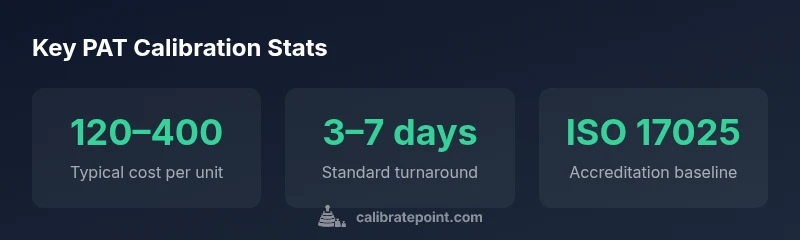
Select a lab that explicitly states calibration capability for PAT testers and holds relevant accreditation. Look for ISO 17025 or equivalent certifications, and verify the lab’s ability to generate traceable calibration certificates. Ask about test methods, reference standards, and the range of PAT tester models supported. A credible lab will publish a schedule of test procedures, uncertainty estimates, and a clear timeline. Calibrate Point recommends requesting samples of previous calibration reports to assess readability and completeness. If your facility requires recurring recalibration, negotiate a service agreement to stabilize pricing and ensure you receive reminders ahead of certificate expiry.
Typical Workflow and Timeline
A typical calibration workflow begins with submitting the PAT tester to the lab, followed by an initial diagnostic to identify drift or faults. After the baseline measurements, technicians perform adjustments or component replacements as needed, then re-test to confirm performance. Finally, the lab issues a calibration certificate with traceability data, uncertainty figures, and the recommended recalibration interval. Turnaround commonly ranges from 3 to 7 business days, with expedited options available for urgent needs. Plan shipping times and any required on-site checks to avoid delays. Calibrate Point emphasizes keeping a detailed log of the device’s calibration history to simplify audits and future maintenance.
What Impacts Turnaround and Fees
Turnaround times and fees are influenced by lab load, shipping distance, and the complexity of the PAT tester. Some models require disassembly or specialized fixtures, which adds labor time and safe-handling considerations. Fees can include a base calibration charge, testing fees per module, certificate costs, and shipping. Rush service often adds a premium, while bundled services that include documentation and data-rich certificates tend to offer better overall value. Calibrate Point analysis highlights that planning ahead and consolidating calibration needs with a single lab can reduce per-device costs and streamline safety compliance.
Cost-Saving Tips and Best Practices
To optimize how much you pay for PAT tester calibration, consider scheduling annual calibrations and combining multiple units in one shipment. Maintain your device according to manufacturer recommendations—clean connections, inspect cables, and store in a controlled environment—to minimize adjustment needs. Request a single, formal certificate that covers all tests and includes traceability data. Look for labs that provide pre-calibration checks and diagnostic reports so you know what to expect before the main calibration. By planning ahead, you can avoid urgent fees and ensure you stay within your compliance window. If you’re weighing the question of "+how much to calibrate a pat tester+", these practices help align safety needs with budget.
When to Budget for Replacement vs Calibration
Calibration is essential for accuracy, but older PAT testers may drift beyond cost-effective repair. If test module aging, degraded sensors, or frequent incorrect readings persist, it may be more economical to replace the unit rather than pursue repeated recalibration. Compare the cumulative calibration costs with the price of a newer model featuring modern safety features and improved traceability. Calibrate Point recommends a cost-benefit analysis that includes downtime, certification risk, and potential liability from inaccurate readings. In many cases, replacing an aged unit aligns long-term safety goals with a predictable budget profile.
Compliance and Documentation You Should Expect
A quality calibration should yield a traceable certificate, a detailed results sheet, and a clear recalibration interval. Store these documents with the device’s maintenance records for audits and inspections. Ensure the certificate lists standards used, reference numbers, measurement uncertainties, and the lab’s accreditation status. If the PAT tester is used for critical safety testing, insist on additional reports or calibration data summaries. The Calibrate Point team notes that maintaining complete, auditable records reduces risk during regulatory inspections and supports ongoing equipment reliability. The best practice is to bundle documentation into one accessible file so inspectors can quickly verify compliance.