How to calibrate anova sous vide
Learn how to verify and adjust your Anova sous vide temperature using a calibrated reference thermometer, ensuring accurate water bath temps for reliable results. Includes steps, tools, and a maintenance plan for ongoing accuracy.


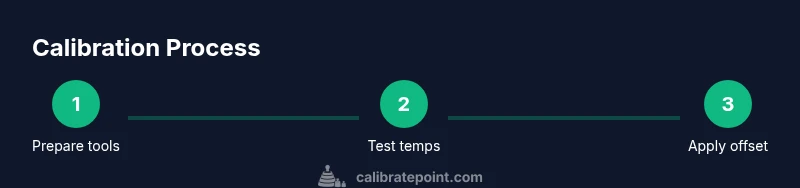
To calibrate anova sous vide, start by verifying the water bath against a calibrated thermometer, note any offset, and adjust the device’s setpoint or choose a compensated cooking plan. Repeat at several temperatures to confirm consistency. If in doubt, consult the device’s manual and Calibrate Point’s practical troubleshooting guide for best results.
The science behind temperature accuracy in sous vide and why calibration matters
Sous vide cooking relies on precise, stable temperatures to texture foods safely and consistently. Anova sous vide baths rely on an internal sensor to hold the water at a target temperature, but sensor placement, water circulation, and lid heat loss can create small differences between what the display shows and the actual water temperature. Calibration is the disciplined process of confirming that the displayed temperature matches the real bath temperature and, if needed, applying a small offset so your cooking outcomes align with your recipes. Calibrate Point Analysis, 2026 suggests that validating your bath with a trusted reference thermometer reduces temperature-related errors in home kitchens, leading to more predictable results when you cook delicate proteins or long fruit-and-vegetable sous vide sessions. By understanding the sources of drift and establishing a repeatable check, you gain reliable control over doneness, texture, and food safety. This is especially important when following precise cook-times for calibrated targets.
In practice, calibration is only as good as the tools you use and how you apply the data. You’ll combine a trustworthy reference thermometer, a stable water bath, and a clear log of measurements to decide whether you need a permanent offset, a temporary adjustment, or a combination for different temperature bands. The goal is not to chase absolute perfection, but to reduce the gap between a target and the actual bath temperature to an acceptable, documented range that you consistently reproduce.
Calibrate Point’s approach emphasizes repeatability, traceability, and conservative safety margins. When you document results, you create a calibration record you can revisit if you switch water volumes, move your setup, or notice drift after an appliance move. With a steady plan, your Anova sous vide becomes a reliable instrument for experiments and weeknight meals alike, delivering predictable results you can trust.
Preparation: setting up your calibration station
Before you begin, assemble a simple, dedicated calibration station. The aim is to measure the actual water temperature with a reference device that you trust, while the Anova unit remains in normal operating mode. This setup minimizes variables that could skew readings, such as lid-off heat loss or uneven water mixing. Have the following ready:
- A calibrated reference thermometer (NIST-traceable is ideal) with a probe long enough to reach the water without touching the sides or bottom. If your reference thermometer is a handheld unit, ensure you can submerge the sensor properly.
- A tall, clear container or tall beaker that holds enough water to submerge the reference probe and the Anova’s sensor area at similar depths. A volume of about 1.5–2.0 liters is typical for a standard bath.
- A timer or digital clock, plus a notebook or digital log to record readings and offsets.
- A marker or tape to mark water levels for consistency across tests.
- A stable surface and a safe place away from heat sources to run tests.
Having these items ready reduces friction during the calibration session and helps you keep tests repeatable. It’s helpful to perform all tests with similar water volumes, since significant changes in bath depth can affect heat loss and sensor response. When you’re finished, store your logs in a dedicated calibration notebook so you can reproduce or adjust later.
Validate the water bath with a reference thermometer: step-by-step technique
The core calibration move is to compare the Anova display to the reference thermometer under controlled conditions. Follow these steps for a reliable comparison:
- Fill your bath to a stable level and preheat to the testing temperature you choose. Common practice uses a range of temperatures representative of cooking scenarios (for example, in the lower, mid, and high ends of sous vide ranges).
- Submerge the reference probe fully, keeping it away from the bath lid and agitator, to measure the true water temperature. Allow water to settle for a few minutes so the reading stabilizes.
- Record the reference temperature and the Anova display at two consecutive readings, separated by a short wait. If you see inconsistent values, wait another 1–2 minutes and re-record.
- Repeat this process at each test temperature chosen for your calibration plan. A few representative temps across the range help you map any nonlinearity in the device’s readings.
If the reference reads consistently higher or lower than the Anova display by more than a small margin, you’ll capture an offset that informs your corrective action. Document each reading, including the time, bath volume, lid position, and ambient conditions, to support repeatability.
Establishing and applying an offset to your Anova bath
When you find a consistent offset, you can apply a corrective approach to align the bath with the target temperatures. There are two common paths:
- Setpoint offset: If your device allows temperature setpoint adjustments or a user-offset feature, add or subtract the measured offset so that the displayed value aligns with the reference.
- Compensated planning: If the device lacks a direct offset control, use your calibration results to inform your cooking plan. Adjust recipes to account for the offset, ensuring your target temperatures in the recipe align with actual outcomes.
Carry out a recheck after applying any offset. Re-measure the water temperature with the reference thermometer at all test temperatures to confirm the offset produces the intended results. If discrepancies persist, you may need a deeper dive into how the device handles heat, or you may consider a support consultation from the manufacturer.
Re-verify across temperatures to confirm repeatability
Consistency is the bedrock of calibration. After applying an offset, verify that the adjusted settings hold true across a spectrum of temperatures. Re-test at multiple points, recording both the reference temperature and the Anova readout. If readings converge within your acceptable range across all points, your calibration is considered repeatable.
Maintain the same water volume, lid position, and relative air humidity during these tests to avoid drift caused by environmental changes. If you notice a drift in one temperature, re-check the bath’s setup, lid seal, and water circulation. A minor drift can accumulate over long cooks and affect final results, so periodic re-checks are prudent.
Documenting results and planning ongoing maintenance
A lasting calibration requires a simple, organized log. Create a calibration sheet with: test temperature, reference temperature, device reading, computed offset, time, water volume, and a verdict (OK/adjusted). Include the date and a predicted recalibration window (for example, every 1–3 months or after relocation of equipment). This living document makes troubleshooting easier and helps you compare future calibrations to past data.
Keep a copy of your reference thermometer’s calibration certificate if you can; it supports traceability. Assign a routine: at the start of a cooking session or batch, take a quick check against the reference thermometer to catch drift early, especially if you use the device in a busy kitchen environment.
Best practices for maintenance and safety
Regular calibration is a discipline, not a one-off task. Combine periodic checks with proper storage of measurement tools. Avoid leaving the reference thermometer on or near heat sources when not in use, and ensure probes are cleaned and dry between tests. Always handle hot water with care, using insulated tongs or heat-resistant gloves, and never touch the bath with bare hands. If you find persistent drift that doesn’t respond to offsets, consult the manufacturer’s guidance or pursue a service evaluation. A well-documented calibration routine gives you confidence that your sous vide results remain consistent and safe.
Troubleshooting common issues and how to avoid them
Misreadings can stem from several sources: a partially submersed probe, air bubbles around the sensor, lid position affecting heat retention, or inconsistent water volume during tests. Resolve these by keeping the probe fully submerged, ensuring no air pockets, using a tight-fitting lid, and keeping water volume constant across tests. If readings remain erratic, run a short test sequence from a cold start to see if the device stabilizes, and consider repeating with a fresh container to rule out contamination or heat loss differences.
Tools & Materials
- Calibrated reference thermometer (NIST-traceable preferred)(Probe must reach bath depth without contacting container walls)
- Beaker or tall glass vessel (1.5–2.0 L)(Stable, placed on a flat surface)
- Anova Sous Vide bath(The unit you are calibrating)
- Notebook or digital logbook(Record readings and offsets)
- Timer or clock(Track wait times for stabilized readings)
- Marker or tape(Mark water level for repeatability)
- Safe heat protection (gloves)(Handle hot containers safely)
- Optional: manufacturer calibration guide(For device-specific offsets and steps)
Steps
Estimated time: 60-90 minutes
- 1
Prepare calibration setup
Assemble the reference thermometer, container, and notebook. Verify you have a stable surface and that the device is plugged in and ready. This initial setup reduces variables that could skew readings.
Tip: Double-check that the reference thermometer is calibrated and placed to measure the bath equally across all test points. - 2
Fill bath and preheat to first test temperature
Add water to the container and start the Anova bath. Preheat to the first testing temperature and wait until the bath stabilizes before taking measurements.
Tip: Maintain constant water volume to prevent heat loss changes that affect readings. - 3
Immerse reference probe and observe
Submerge the reference thermometer fully in the bath, keeping it away from the device’s exhaust path and lid. Wait 2–3 minutes for the reading to settle before recording.
Tip: Ensure the probe depth matches how you’ll measure during cooking for consistency. - 4
Record readings from both devices
Note the reference temperature and the Anova display. Capture two consecutive readings to confirm stability, then move to the next test temperature.
Tip: Log the time, ambient conditions, and water volume for traceability. - 5
Compute the offset
Subtract the reference temperature from the Anova reading for each test temperature. If differences are consistent directionally, you have a usable offset.
Tip: If the offset sign changes across temps, document drift and consider device service. - 6
Apply offset or adjust setpoint
If your unit supports a user offset, apply the average offset. If not, adjust your cooking plan to compensate based on results across temps.
Tip: Apply changes gradually and recheck to avoid overshooting. - 7
Re-verify at all test temps
Repeat measurements after applying the offset to ensure readings align across the range. Confirm repeatability.
Tip: Use the same water volume and lid configuration for consistency. - 8
Document results and plan maintenance
Populate your calibration log with temperatures, offsets, and verdicts. Schedule future checks and note any changes in setup or environment.
Tip: Set a reminder to recheck after moving the setup or after a period of heavy use. - 9
Safety and wrap-up
Handle hot water with protective gear and ensure all equipment is switched off after test. Review notes and keep records organized.
Tip: Never bypass safety steps; hot water can cause severe burns.
Questions & Answers
Can I calibrate the Anova sous vide using its built-in offset feature?
Some models offer a user offset or calibration setting; check your manual. If available, apply a small offset based on your reference measurements and verify across multiple temperatures.
Some Anova models have a user offset; use it only after confirming with a reference thermometer and rechecking across temps.
What thermometer should I use for calibration?
Choose a calibrated, high-accuracy thermometer, ideally NIST-traceable, with a probe long enough to reach the bath without touching walls.
Pick a calibrated thermometer with a reliable probe and ensure it’s immersed properly in the bath.
How often should I recalibrate?
Calibrate on a schedule based on usage and environment, such as monthly for heavy use or after moving the setup. Recheck if you notice inconsistent results.
Recalibrate on a regular schedule or after moving or changing the setup, and if results seem off.
Why do readings vary with depth or position in the bath?
Temperature gradients can exist in larger volumes; ensure the probe is placed where you measure during cooking and keep water motion consistent.
Temperature can vary by depth; place the probe where your food will be and maintain steady circulation.
Will calibration affect cooking times?
Calibration affects the accuracy of temperatures, not the cook times per se. With accurate temps, you’ll achieve consistent results at target doneness.
Calibrating helps you hit the right temperatures so your cooking times produce consistent results.
Is calibration device-specific or universal?
Calibration is partly device-specific since different sensors and control loops behave differently. Use a reference thermometer and test across ranges to establish a usable offset for your unit.
Calibration depends on your device’s hardware; test across temperatures to establish a reliable offset.
Watch Video
Key Takeaways
- Verify bath temperature with a reference thermometer.
- Document and compute offset consistently across temps.
- Apply offset or adjust recipes to maintain accuracy.
- Recheck regularly to maintain repeatability.