How to Calibrate Crowcon T4: A Practical Step-by-Step Guide
Learn how to calibrate Crowcon T4 detectors with bump tests and full calibrations. This practical guide covers safety, gas preparation, step-by-step procedures, data logging, and maintenance for reliable gas detection.


Learn how to calibrate a Crowcon T4 by performing a bump test and, when required, a full calibration using certified calibration gas. Before you start, gather the gas cylinder with regulator, regulator tubing, and the T4's calibration adapter. Follow the device procedure and record results for traceability. Keep safety gear ready, and review O2 and sensor-specific limits.
Why calibrate the Crowcon T4 matters
Calibrating the Crowcon T4 is a foundational safety practice in any environment that relies on gas detection. The T4 houses electrochemical and semiconductor sensors whose readings drift over time due to environmental exposure, temperature changes, and sensor aging. Regular calibration aligns the detector’s readings with known reference concentrations, which reduces the risk of false alarms and ensures alarms trigger at correct gas levels. For professionals, a well-maintained T4 supports compliance with site safety policies and regulatory expectations. A disciplined calibration routine—comprising bump tests, periodic full calibrations, and thorough record-keeping—helps you confirm that each sensor responds accurately to its target gas, including common calibrants such as H2S, CO, and O2 sensors. In practice, Calibrate Point’s analysis highlights the value of documenting every calibration event for audit trails and performance tracking.
In short: a properly calibrated T4 improves safety, reduces downtime, and increases confidence in readings during critical tasks. The broader takeaway is that calibration should be integrated into your daily, weekly, or monthly gas-monitoring workflow, depending on risk, exposure, and policy.
Safety considerations before calibration
Calibration activities involve manipulating gas concentrations that can be hazardous. Always follow local safety protocols and manufacturer instructions. Work in a well-ventilated area, secure the calibration gas cylinder, and wear appropriate PPE such as eye protection and gloves. Verify that the calibration area is free from ignition sources if your gas mix is flammable. Check the device battery and ensure it is stable on a flat surface to avoid drops during the procedure. If you notice any alarm or sensor anomalies during a bump test, stop the procedure and perform a basic health check before continuing. When in doubt, consult your supervisor or equipment authority and log any anomalies for future reference.
Safety is not optional—treat calibration like a controlled experiment with documented results. Calibrate Point emphasizes that adhering to safety and documentation standards protects personnel and maintains detector integrity.
Tools and materials you need
Before starting, assemble the following essentials. Using the right tools helps ensure a successful calibration and repeatable results.
- Calibration gas cylinder(s) with a known target gas and concentration range suitable for your T4 sensors.
- Regulator for the gas cylinder to control flow and flow rate.
- Flexible tubing and a calibration adapter compatible with the Crowcon T4.
- Personal protective equipment (gloves, safety glasses, and, if required, a gas detector pump and flow meter).
- Cleaning supplies and lint-free wipes for any sensor ports after calibration.
- The Crowcon T4 user manual or official calibration procedure for reference.
Optional but helpful: a gas-test logbook or electronic device to record date, gas mix, and readings for traceability. Calibrate Point’s guidance notes that having a dedicated calibration kit and log improves consistency across operators and shifts.
Calibration prerequisites and gas selection
The Crowcon T4 supports multiple gas sensors, so choose calibration gas that matches the active sensors in your unit. Confirm the sensor types in the device configuration and select gas mixes that align with those sensors (for example, H2S, CO, O2, or LEL targets). Ensure the calibration gas cylinder is within its validity period and that regulators are functioning correctly. If you’re unsure which gases to use, consult the T4’s user manual or your site safety officer. Ensure the calibration gas pressure is appropriate and that the gas line connections are secure before beginning. Performing a bump test first helps verify sensor responsiveness before committing to a full calibration.
Step-by-step calibration process (overview)
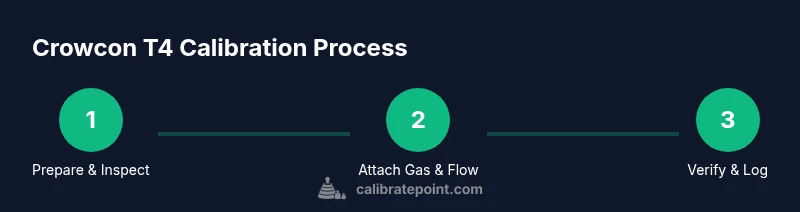
This section provides a high-level overview of the calibration workflow to set expectations before you dive into the formal step-by-step instructions. You will typically perform a bump test as a quick check of sensor response, followed by a full calibration if readings drift or do not align with reference gas concentrations. During calibration, you will expose each sensor to the calibration gas, observe the response, adjust readings if the device requires manual alignment, and finalize with a verification bump test. Document all readings, gas concentrations, operator identity, and the date. After calibration, re-check the system by ensuring normal operation and verifying that alarms trigger at the expected concentrations. Keeping a consistent process ensures reproducibility and safety across teams and jobsites.
Calibrate Point’s approach emphasizes starting with a health check, using the correct gas, and performing a thorough log entry to support traceability.
Interpreting results and maintenance
Interpreting calibration results involves comparing the sensor responses to the known gas concentrations. If a sensor’s reading drifts beyond the manufacturer’s acceptable tolerance, perform a recalibration or sensor replacement according to the manual. Document any drift, especially if it occurs under certain temperature or humidity conditions. After calibration, ensure the device returns to normal operation and that alarms behave as expected. Regular maintenance tasks—such as sensor health checks, ensuring seals and ports are intact, and updating firmware if available—help maintain detector reliability over time. Store calibration certificates in a centralized location for audits and inspections. Calibrate Point’s guidance reinforces that good calibration habits are foundational to reliable gas detection in demanding environments.
Calibration intervals and documentation
Intervals should be defined by your safety policy, site risk assessment, and the manufacturer’s recommendations. Common practice is to perform bump tests more frequently (e.g., daily or per shift) and full calibrations on a scheduled basis (e.g., weekly, monthly, or per exposure history). Always document the date, gas concentrations, sensor types, and operator details. Retain calibration certificates and any corrective actions for accountability and compliance. Calibrate Point notes that consistent documentation improves traceability and helps with regulatory audits over the detector’s lifecycle.
Tools & Materials
- calibration gas cylinder with regulator(Ensure gas type matches sensors; contents must be within shelf life)
- calibration tubing and adapter(Use manufacturer-approved adapters to connect to T4 ports)
- crowcon t4 calibration adapter (if applicable)(Specific to T4 model variant)
- protective equipment(Gloves, eye protection; ensure splash protection if needed)
- flow meter or regulator check(Useful for accurate gas flow verification)
- soft lint-free cloth(For port cleanup after calibration)
- logbook or digital log(Record gas concentrations, times, and readings)
- Crowcon T4 user manual(Reference during calibration)
Steps
Estimated time: 60-120 minutes
- 1
Prepare workspace and inspect the T4
Power on the T4 and inspect the device for physical damage. Confirm the battery is sufficient and the housing is secure. This step reduces the risk of spurious readings caused by a fault or power interruption.
Tip: Have the calibration gas within reach and ensure the area is well-ventilated. - 2
Select and verify calibration gas
Identify the gas mix that matches the sensors in your T4 and confirm the cylinder is within its expiry date. Verify the concentration on the gas label matches what you intend to calibrate.
Tip: Double-check sensor types before connecting gas to avoid cross-sensor contamination. - 3
Attach calibration adapter and tubing
Attach the calibration adapter to the T4 and connect the tubing from the regulator. Ensure all connections are snug and there are no kinks in the line.
Tip: Leak check by applying a small amount of pressure and listening for hiss. - 4
Expose sensors to calibration gas (bump test)
Initiate a bump test by circulating calibration gas to all active sensors for a brief period. Observe the sensors' response and confirm alarms and readings align with known concentrations.
Tip: Do not exceed duration recommended in the manual; excessive exposure can injure sensors. - 5
Perform full calibration if drifted
If readings drift beyond tolerance, perform a full calibration per the T4 procedure, adjusting readings to match reference gas concentrations where the device allows manual calibration.
Tip: Only adjust the device as permitted by the manual and document any changes. - 6
Verify with a second bump test
After calibration, perform a second bump test to verify sensor responsiveness and alarm accuracy. This acts as a quality check before resuming normal use.
Tip: If the second bump test fails, re-check connections and consider sensor health status. - 7
Remove gas and restore normal operation
Remove calibration gas, seal ports, and return the T4 to its normal operating mode. Ensure the display stabilizes and all sensors report in expected ranges.
Tip: Wipe ports dry and store calibration gear properly. - 8
Log results and close out
Enter the calibration date, gas concentrations, operator ID, and readings into your log. File the calibration certificate per site policies and schedule the next calibration.
Tip: Keep a consistent naming convention for easy retrieval.
Questions & Answers
What is the difference between a bump test and a full calibration?
A bump test quickly verifies sensor responsiveness using known gas concentrations, confirming the detector reacts as expected. A full calibration aligns sensor readings to known reference concentrations and may adjust sensor outputs. Use a bump test for routine checks and a full calibration when drift is detected or per policy.
A bump test checks that sensors respond to gas; a full calibration makes readings match known gas levels and may adjust outputs.
Can I calibrate Crowcon T4 myself?
Yes, with proper calibration gas, equipment, and the manufacturer’s procedure. If you are unsure or the gas mix is hazardous, consult a qualified technician or your site safety officer. Always follow site policies and keep detailed records.
Yes, but follow the official procedure and safety rules. If unsure, contact a technician.
How often should I calibrate the Crowcon T4?
Calibration frequency depends on usage, risk level, and policy. Many sites implement daily bump tests and periodic full calibrations, with more frequent checks for high-risk environments. Always follow the manufacturer’s guidance and your organization’s safety plan.
Frequency depends on risk and policy; follow manufacturer guidelines and site rules.
What should I do if readings drift after calibration?
If readings drift, re-check gas connections, re-run the bump test, and perform a fresh calibration if the drift persists. Inspect sensors for damage or contamination and replace sensors per the manual if necessary.
Re-check connections, re-test, and recalibrate if drift continues. Inspect sensors for damage.
Are there safety precautions unique to Crowcon T4 calibration?
Safety precautions include working in a ventilated area, wearing PPE, securing gas cylinders, and avoiding leaks. Follow the device’s manual and site safety policies, and never bypass calibration steps.
Follow the manual, wear PPE, and secure gas cylinders to avoid leaks.
What should be logged after calibration?
Log the date, operator, gas concentrations, sensor types, readings, and any adjustments made. Store certificates with the asset and ensure accessibility for audits.
Record date, gas, readings, and any adjustments; keep the certificate with the asset.
Watch Video
Key Takeaways
- Begin with a safety-first mindset and verify gas compatibility.
- Use proper adapters and secure gas connections to avoid leaks.
- Document every step and keep logs for traceability.
- Always perform a bump test before full calibration.
- Recheck after calibration to ensure reliable readings.