How to calibrate Honeywell BW Solo
Learn how to calibrate the Honeywell BW Solo gas monitor with a safe, traceable workflow. This guide covers safety, gas standards, preparation, step-by-step calibration, data logging, and verification to ensure accurate readings.


According to Calibrate Point, calibrating the Honeywell BW Solo follows a safe, traceable protocol: prepare calibration gas and regulator, connect tubing, enter calibration mode, perform zero and span adjustments, and log results for traceability. This quick guide outlines the essential steps, safety considerations, and how to verify calibration accuracy.
Understanding the BW Solo calibration landscape
Calibrating the Honeywell BW Solo ensures that your sensor readings reflect actual gas concentrations. The BW Solo relies on electrochemical sensors that can drift over time due to environmental exposure, aging, and sensor fatigue. Calibration aligns the instrument’s outputs with known reference standards so the readings you rely on in the field remain trustworthy. The Calibrate Point approach emphasizes following the manufacturer’s recommendations, using traceable gas standards, and keeping a formal calibration history for quality control and compliance. Before you begin, acknowledge that calibration is a maintenance activity that protects personnel safety and data integrity, not merely a routine checkbox.
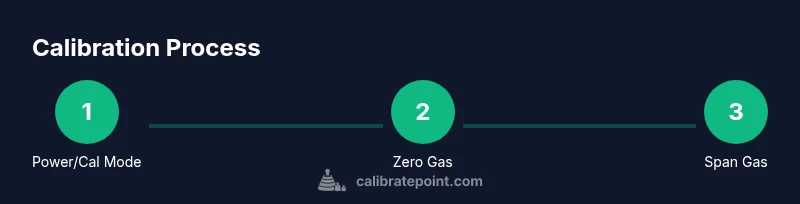
In practice, you’ll typically perform two complementary steps: a zero calibration to establish a clean baseline with zero gas, and a span calibration to align the sensor response to a known concentration. Both steps should be repeatable, well-documented, and conducted with gas standards traceable to national or international references. Remember that different gas types may require different span values, so consult the BW Solo user guide for sensor-specific guidance. This section establishes the mindset and objectives behind how to calibrate Honeywell BW Solo, setting the stage for a safe, effective workflow.
Safety and prerequisites before calibration
Calibration should be performed in a well-ventilated area with appropriate PPE and gas-handling practices. Verify that the workspace has proper ventilation and no ignition sources if you’re dealing with flammable gases. Inspect gas cylinders for color coding, leaks, and expiry dates, and verify regulator connections are secure before proceeding. Wear eye protection, gloves, and respiratory protection as needed, and have a gas detector or enough ventilation to manage exposure risk. Ensure the BW Solo is configured to a calibration-friendly state (e.g., calibration mode) and that you have a documented calibration plan with acceptance criteria. By planning safety and prerequisites, you reduce the chance of accidental exposure and measurement drift during the process.
Reference standards and calibration gas selection
Choose calibration gas standards that are traceable to a recognized reference system. The goal is to align readings with a known concentration so that the instrument’s response is reproducible across conditions. Confirm gas concentration accuracy with the cylinder’s certificate and ensure the gas is appropriate for the BW Solo’s sensors (e.g., target gases for the monitor you’re calibrating). Keep gas cylinders upright and secure, store away from direct sunlight, and rotate stock to use the oldest gas first. Document the lot numbers, expiry dates, and certificate references to support audit readiness. Calibrate Point analysis shows that using high-quality, traceable standards improves long-term drift resistance and data credibility.
Step-by-step preparation and baseline checks
Begin by powering the BW Solo and entering calibration mode as specified in the user manual. Verify that the device’s internal clock, memory, and last calibration data are intact. Prepare the calibration gas setup: regulator, tubing, and a clean fitting to the BW Solo’s sampling inlet. Check for leaks with a soap solution or an electronic leak detector. Establish a baseline by taking several readings with the zero gas to confirm the sensor has stabilized at near-zero output before applying span gas. Logging baseline data now reduces confusion later when you validate post-calibration results.
Performing the calibration and recording results
With zero established, apply the zero gas and allow the sensor to stabilize. Record the baseline reading and compare it to the zero reference; adjust if the device provides a null or auto-zero function. Next, switch to the span gas and apply the corresponding known concentration; observe the instrument’s response and adjust the span setting as directed by the BW Solo’s calibration procedure. After adjustments, perform a cross-check with a second reference gas if available and record all readings, including the final adjusted values, environmental conditions, and date/time. Save calibration data to the device and to your calibration log for traceability. Finally, restore normal operation and perform a short post-calibration check using the zero gas to confirm there’s no drift or residual influence from the test gases.
Tools & Materials
- Calibration gas cylinder (span) with known concentration(Traceable to national standards; confirm target gas matches BW Solo sensors)
- Zero gas cylinder(Zero gas to establish baseline; ensure compatibility with BW Solo inlet)
- Calibrated regulator(Precise control of gas flow; use a regulator with a flow adjuster and gauge)
- Flexible tubing (1–2 m)(Fit to device sampling inlet; avoid kinks and leaks)
- Leak-detection solution or electronic detector(Test all connections for leaks before starting calibration)
- Personal protective equipment (PPE)(Safety glasses, gloves; use additional PPE for hazardous gases as required by policy)
- Calibration logbook or software(Document all steps, readings, and dates; supports audits)
- User manual for BW Solo(Reference for entering calibration mode and device-specific steps)
Steps
Estimated time: 60-120 minutes
- 1
Power on and enable calibration mode
Power up the BW Solo and activate the calibration mode exactly as the manual prescribes. This ensures sensor pathways are isolated for zero and span gas application, reducing cross-sensitivity from normal operation.
Tip: Double-check that the device is in calibration mode before attaching any gas lines to avoid unintended gas exposure. - 2
Inspect the gas setup and connections
Visually inspect all connections for secure fit and no signs of damage. Verify regulator settings and ensure tubing is clean and free of blockages before attaching to the BW Solo inlet.
Tip: Prefer a dedicated calibration line and avoid using consumer tubing that may impart contaminants. - 3
Establish a zero baseline with zero gas
Attach the zero gas line and allow sensor to stabilize. Record several baseline readings until the output shows minimal fluctuation around the expected zero value.
Tip: If the baseline drift is high, re-check for leaks or a contaminated zero gas source. - 4
Apply zero gas and verify stability
Apply zero gas for a defined stabilization period. Confirm the instrument reads near zero and within the manufacturer’s acceptable tolerance.
Tip: Ensure the ambient environment remains stable during zero stabilization. - 5
Switch to span gas at known concentration
Connect the span gas line and allow the sensor to respond. Note the raw reading and how it compares with the known span gas concentration.
Tip: If the response is delayed, pause briefly to let diffusion settle before making an adjustment. - 6
Adjust the span/calibration factor
Using the BW Solo calibration controls, adjust the span calibration to align the sensor output with the span gas reference. Do not over-rotate adjustments; small changes are often sufficient.
Tip: Make only small incremental adjustments and re-check after each change. - 7
Cross-check with a second reference (if available)
If you have a second reference gas, perform a secondary check to validate span accuracy and consistency across different concentrations.
Tip: Cross-checks increase confidence and help catch gas-specific sensor drift. - 8
Document calibration readings
Record baseline, span, ambient conditions, gas lot numbers, and the final calibration values in your logbook or calibration software.
Tip: Keep time stamps precise to support audits and future traceability. - 9
Save calibration data and exit calibration mode
Save all adjustments and stop the calibration mode per the BW Solo procedure. Confirm that normal operation resumes without error messages.
Tip: Back up calibration data before powering down for safekeeping. - 10
Perform a post-calibration check with zero gas
Re-apply zero gas to ensure no drift occurred during the span adjustments and that the system returns to the baseline safely.
Tip: If zero drifts, re-check for leaks or residual gas in the line. - 11
Validate with a field-like condition (optional)
If possible, test the BW Solo under a controlled field-like condition to verify readings align with expected outcomes in real usage.
Tip: Field validation confirms calibration integrity outside the lab. - 12
Record final results and clean up
Enter the final calibration values, device serial number, and calibration date into your records. Disconnect gas lines, purge the line if needed, and store equipment properly.
Tip: Always return the setup to a safe, standby state and store calibration materials securely.
Questions & Answers
How often should I calibrate the Honeywell BW Solo?
Calibration frequency depends on usage, environment, and regulatory requirements. Follow manufacturer guidelines and internal QA policies; schedule regular calibration intervals and perform a calibration whenever sensor performance appears to drift.
Calibration frequency varies by use and environment. Follow the manual and your QA policy to set regular intervals.
Do I need external calibration gas for the BW Solo?
Yes, you should use traceable calibration gas standards for zero and span calibration. Ensure the gas is compatible with the BW Solo sensors and stored correctly with valid certificates.
Yes, use traceable reference gas for the zero and span calibrations.
Can BW Solo be calibrated in the field?
Field calibration is possible if you have portable gas standards and the appropriate setup, but follow safety protocols, regulatory requirements, and the device’s field calibration guidelines.
Field calibration is doable with the right gas supply and safety practices.
What precautions must I take during calibration?
Work in a ventilated area, wear PPE, verify gas cylinder integrity, check for leaks, and log all steps and results for traceability.
Stay safe—ventilate, wear protection, check leaks, and log everything.
What data should I record after calibration?
Record baseline and span readings, gas lot numbers, certificate references, ambient conditions, date/time, and final calibration values.
Record all readings and gas details for future audits.
What if readings don’t match after calibration?
Re-check gas connections, re-zero if needed, validate gas concentration, and consider repeating the zero/span steps or consulting documentation if discrepancies persist.
If readings don’t match, re-check connections and repeat calibration carefully.
Watch Video
Key Takeaways
- Calibrate with traceable gas standards for accuracy
- Document every step and data point for audits
- Zero and span calibration are essential for drift control
- Verify results with a cross-check gas when possible
- Store calibration data securely for traceability