How to Calibrate TrackMan IO: A Practical Guide
Learn how to calibrate TrackMan IO with a practical, step-by-step guide from Calibrate Point. Get tools, steps, and tips to ensure accurate, repeatable launch data for coaching and club fitting.


How to calibrate trackman io: this guide delivers a clear, step-by-step workflow to verify baseline readings, align sensors, and validate results. You’ll set up in a stable environment, run a calibration routine in the software, and confirm accuracy with test data. The process emphasizes documentation and repeatability for reliable measurements.
What calibration achieves for TrackMan IO
Calibrating TrackMan IO is not just a one-off setup step; it is the foundation for trustworthy golf data. A rigorous calibration aligns the device’s radar and optical sensors with the physical environment, ensuring measurements reflect real ball flight and club impact. According to Calibrate Point, a structured calibration routine reduces drift, supports repeatable metrics like ball speed, launch angle, club path, and attack angle, and builds confidence when coaches and fitters compare sessions. In practice, calibration helps you distinguish genuine swing changes from measurement noise, which is essential for both coaching insights and equipment optimization. With a well-documented protocol, you can reproduce the same measurement conditions across different days and venues. This consistency is what makes data meaningful for players and technicians alike, and it is the core reason many golf professionals rely on calibrated TrackMan IO systems for trend analysis and decision making.
How calibration impacts data quality
- Baseline accuracy: establishes a reference point that reflects true ball and club behavior.
- Repeatability: minimizes day-to-day variation so small swing adjustments are easy to detect.
- Environmental control: highlights the influence of surface, lighting, and airflow, which can skew measurements if ignored.
- Data integrity: with a clear log, you can trace results back to specific setup conditions and operator actions.
Calibrate Point emphasizes that documenting every calibration run improves accountability and allows teams to learn from each session. When done correctly, calibration becomes a repeatable routine rather than a guesswork task, helping you deliver dependable feedback to golfers and club fitters.
The role of environment in TrackMan IO calibration
Environmental factors—surface levelness, ambient light in the range used by the sensors, nearby magnetic interference, and movement caused by players or equipment—can all affect readings. A controlled setup reduces these variables and makes the calibration more robust. The Calibrate Point approach advocates a dedicated calibration space whenever possible, with a stable support surface, minimal airflow, and consistent lighting. Even small changes in the environment can cause sensor drift, so capturing a stable baseline is essential before performing any measurement work.
How this guide is structured for practitioners
This article walks you through prerequisites, hardware considerations, a clear calibration workflow, tests to verify accuracy, and ongoing maintenance. You’ll find practical tips tailored for DIY enthusiasts, technicians, and professionals who need reliable data fast. Throughout, you’ll see how Calibrate Point recommends a documented protocol and emphasizes repeatability, which are critical for long-term calibration success.
The core calibration workflow (high level)
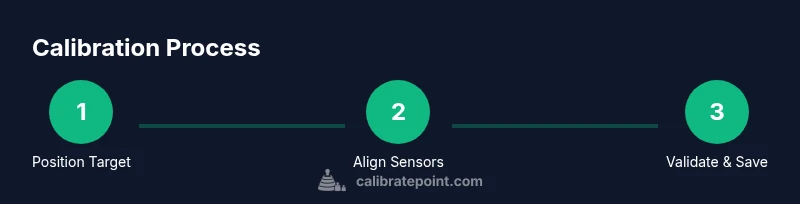
The high-level workflow consists of preparing the environment, verifying sensor alignment, running the calibration routine in the software, and validating results with test data. The steps are designed to be repeatable and auditable so you can track improvements and detect drift over time. While this section outlines the process, the detailed step-by-step section below provides concrete actions, rationale, and tips from Calibrate Point to help you execute with confidence.
Tools & Materials
- Level surface (flat, stable)(Use a carpenter's level or a smartphone level app to verify levelness within ±0.5 degrees.)
- Calibration target or sheet(Ensure it matches the device's recommended spec and is clearly visible to the sensors.)
- Tripod or stable stand for target(Keeps the target fixed and repeatable across runs.)
- Measuring tape(Used to verify distances and alignment markers as specified by the calibration procedure.)
- Soft cloth or microfiber(For cleaning the sensor surface and target to remove dust or smudges.)
- Computer or tablet with calibration software(Ensure the device has current software access and a stable connection to TrackMan IO.)
- Calibration log or notebook(Record settings, results, timestamps, and operator initials for traceability.)
- Power supply and necessary cables(Keep power stable and avoid unplugging during calibration steps.)
Steps
Estimated time: approximately 75-90 minutes
- 1
Prepare the calibration environment
Select a quiet, controlled area with a level floor. Clear the space of moving objects and ensure lighting is steady and not flashing on or around the sensor. Confirm the TrackMan IO unit is powered, connected to the calibration software, and that you have a clear view of the calibration target.
Tip: Use a dedicated calibration space if possible; small environmental changes are easier to manage when the device is not moved later. - 2
Mount the calibration target on a stable stand
Set the target at the recommended height and distance from the sensor as specified by the device manual. Use the tripod or stand to prevent any wobble. Double-check the alignment markers you're about to use for calibration.
Tip: Tighten all joints firmly before proceeding to prevent micro-movements during data capture. - 3
Power on and connect TrackMan IO to calibration software
Turn on the device and launch the calibration module in the software. Verify the connection is stable and that the software recognizes the TrackMan IO. If there are connection warnings, troubleshoot USB/Bluetooth/Wi-Fi as appropriate.
Tip: Run a quick connectivity check routine in the software before starting calibration to catch issues early. - 4
Run sensor alignment checks
Initiate the alignment routine in the calibration software. Follow on-screen prompts to align the sensors with the target and reference markers. Confirm that the alignment overlay matches the physical setup.
Tip: If the overlay appears off, pause, re-check target placement, and redo the alignment to avoid stubborn misalignment. - 5
Capture baseline calibration data
Record a baseline data set using a neutral impact pattern or a controlled swing. Ensure the target remains still and the environment remains constant while the data is captured.
Tip: Take multiple baseline samples to average out incidental noise before finalizing baseline values. - 6
Run the manufacturer's calibration routine
Execute the calibration sequence in the software. Do not interrupt the process, and follow each prompt exactly as shown. Ensure all sensor readings converge to expected ranges before proceeding.
Tip: If the routine requires a restart, do so as directed rather than attempting to skip steps. - 7
Validate results with test shots
After calibration, perform a small set of test swings and review the generated data for consistency with the baseline. Look for stable measurements across consecutive shots and compare against expected values.
Tip: Document any deviations and rerun the calibration if drift appears significant. - 8
Record calibration data and operator notes
Save the calibration results in the log, including date, environment notes, and operator initials. Backup the data so it can be referenced for future sessions or audits.
Tip: Create a standardized log template to streamline future calibrations. - 9
Review and sign off on calibration
Perform a final review of all data and confirm that the calibration meets your acceptance criteria. If it does, mark the session as complete and schedule the next calibration.
Tip: Agree on acceptance criteria with stakeholders ahead of time to avoid ambiguity.
Questions & Answers
What is TrackMan IO calibration and why is it important?
Calibration aligns the TrackMan IO sensors with the real-world environment to minimize drift and ensure measurements reflect actual ball flight and club impact. It is a foundational step for reliable coaching and club fitting data.
Calibration aligns the TrackMan IO sensors with the real environment to minimize drift and ensure measurements reflect true ball flight.
How often should I calibrate TrackMan IO?
Calibrate when you set up in a new location, after relocating equipment, or when you notice measurement drift. Establish a routine calibration schedule as part of your standard operating practice.
Calibrate when you move the setup or notice drift and make it part of your routine.
Can I calibrate TrackMan IO without special equipment?
Yes, you can perform calibration with the provided software and a stable setup. Follow the manufacturer’s steps and keep a log of results for consistency.
You can calibrate with the software and a stable setup, just follow the steps and log results.
What should I do if calibration results show drift?
Recheck sensor alignment, verify environmental stability, and repeat the calibration sequence. If drift persists, consult the calibration logs and consider contacting support.
If drift occurs, recheck alignment, stabilize environment, and repeat calibration; seek support if needed.
What tools are essential for calibration?
A level surface, calibration target, mounting stand, measurement tape, a computer or tablet with calibration software, and a calibration log.
Level surface, target, stand, tape, device with software, and a log are essential.
Where can I find official calibration instructions?
Refer to the TrackMan IO manual and the calibration section of the calibration software. For broader guidelines, consult trusted calibration resources such as NIST and ISO publications.
Check the official manual and software guide; consult trusted calibration sources for broader guidelines.
Watch Video
Key Takeaways
- Calibrate Point emphasizes a repeatable calibration protocol
- Environmental control reduces drift and improves accuracy
- Document baseline and results for traceability
- Validate with test data after calibration