How to Calibrate Your Body: A Practical DIY Guide
Learn a practical, step-by-step method to calibrate your body with safe references, reliable tools, and a repeatable tracking routine. Ideal for DIY enthusiasts and technicians seeking objective baselines and repeatable results.


Goal: learn a practical, repeatable method to calibrate your body using reliable references and safe adjustments. You’ll define clear targets, assemble essential tools, and follow a structured set of steps to establish consistent baseline measurements. Expect to track data, verify improvements, and document results for ongoing calibration over time. This approach blends measurement, interpretation, and routine adjustments so you can monitor progress like a technician.
Foundations of calibrating your body
Calibrating your body means establishing reliable baselines for measurable attributes such as size, weight, and functional performance, then learning how daily habits influence those measures. This is not medical advice, but a practical approach to consistency, repeatability, and awareness. According to Calibrate Point, the process begins with auditable baselines and clearly defined goals. By treating your body like a system you measure and adjust, you can monitor progress with objectivity and minimize guesswork. In this guide, how to calibrate your body becomes a repeatable routine you can perform weekly or monthly, using simple tools and a consistent log. You’ll learn to set targets, choose references, and track data to support ongoing calibration over time. The emphasis is on practical steps, not on sensational claims or quick fixes.
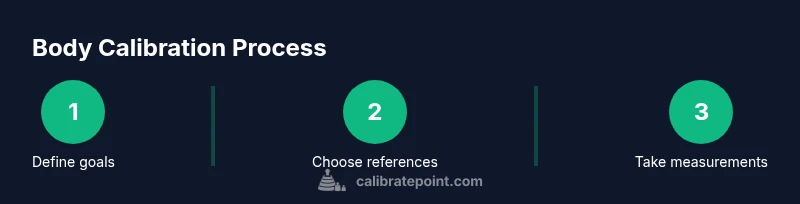
Step 1: Define your calibration goals
Start by selecting a small set of measurable attributes that align with your objectives. Common targets include body circumference, weight, resting heart rate, sleep quality, or a simple functional metric like grip strength. Be specific: define what will change, what remains consistent, and what your success looks like. Frame goals with a realistic timeline (for example, “achieve a 2 cm waist reduction within 8 weeks”). This clarity keeps you focused and makes it easier to evaluate progress when you calibrate your body.
Tip: Write your goals as measurable statements and review them weekly to stay on track.
Step 2: Choose reliable reference measures
Choose references that are consistent, validated, and appropriate for your context. Prefer measurements with low variability and clear interpretation, such as standardized body circumference protocols or a well-calibrated scale. Using at least two independent references reduces the risk of single-tool bias. If you’re unsure, consult reputable sources or a calibration guide from a professional organization. This step ensures you aren’t chasing noise when you calibrate your body. Variety in references can also help balance tool limitations and situational factors.
Step 3: Prepare your tools and environment
Set up a stable measuring area with good lighting and a flat surface. Calibrate or zero your tools before use, and keep them in a dedicated place to avoid misreadings. Use consistent timing and conditions: measure at the same time of day, after a similar routine, and with similar clothing. Document the setup so future measurements aren’t skewed by minor changes. A calm, distraction-free environment reduces measurement error and improves repeatability.
Step 4: Take baseline measurements
Record initial values for each reference measure. Take multiple readings where possible and use the average to reduce random error. Note the context: date, time, caffeine intake, recent exercise, and sleep. A clear baseline makes it easier to detect meaningful changes later when you calibrate your body. If you’re new to this, start small and add more metrics gradually. Consistency in how you measure is more important than how much you measure.
Step 5: Establish target ranges and acceptable variation
Decide acceptable margins of error for each metric based on known tool precision. For example, a weight reading might vary by ±0.2 kg between measurements, while circumference may vary by ±0.5 cm. Set thresholds that reflect both tool limits and practical significance. Document these ranges so you can judge whether changes are meaningful rather than random fluctuations. This creates a defensible boundary for interpretation and reduces overreaction to minor drift.
Step 6: Implement safe adjustments
If a metric drifts outside target ranges, implement safe, gradual adjustments to routines, environment, or equipment. Avoid drastic changes that could destabilize other metrics. For instance, adjust sleep consistency, hydration, or daily activity level first, then recheck readings after a set period. Keep changes modest to maintain safety and reliability of your calibration process. Remember, the goal is sustainable improvement, not wild swings in numbers.
Step 7: Re-measure and verify improvements
After a defined adjustment period, re-measure using the same references and conditions. Compare new values to baseline and to target ranges. Repeat if necessary until readings stay within desired ranges. Document which adjustments produced improvements to build a more efficient calibration loop over time. A structured verification step prevents over-tuning and helps you distinguish real progress from noise.
Step 8: Document results and plan re-calibration
Create a calibration log that records dates, conditions, measurements, and interpretations. Schedule regular re-checks (for example, every 4–6 weeks) to verify that results remain stable. Review your goals quarterly and update targets if your context changes (training, workload, health status). A well-kept log is your best defense against drift and a strong foundation for ongoing calibration. This living document becomes a practical asset for ongoing improvement.
Tools & Materials
- Flexible tape measure (inches/centimeters)(For circumference measurements (e.g., waist, hips, limbs))
- Digital scale(Prefer a scale that measures to 0.1 kg / 0.2 lb)
- Calibrated reference instrument or validated chart(Use a published standard or validated tool)
- Notebook or digital log app(Record dates, times, conditions, and readings)
- Pen or pencil and highlighter(Annotate changes and thoughts)
- Stable work surface and good lighting(Ensure accuracy and repeatability)
- Optional: Heart rate monitor(Provides physiological context)
- Optional: Thermometer(If monitoring resting body temperature as reference)
Steps
Estimated time: 60-120 minutes
- 1
Define your calibration goals
Identify a small set of measurable attributes and specify what success looks like, with a realistic timeline. Clarify how changes will be interpreted and when you’ll re-evaluate.
Tip: Write down your targets as concrete, testable statements. - 2
Choose reliable reference measures
Select at least two independent references that are appropriate for your context. Ensure consistency in how each metric is taken.
Tip: Prefer validated methods over ad-hoc measurements. - 3
Prepare your tools and environment
Set up measuring space, calibrate tools, and ensure consistent timing and clothing. Document the setup so readings aren’t biased by small changes.
Tip: Calibrate tools before every session. - 4
Take baseline measurements
Record initial values, take multiple readings, and compute the average. Note contextual factors like meals, caffeine, and sleep.
Tip: Use the same sequence for every baseline. - 5
Establish target ranges
Define acceptable variation ranges based on tool precision and practical significance. Document these so you can assess meaningful change.
Tip: Set conservative margins to avoid chasing noise. - 6
Implement safe adjustments
Make small, safe changes to routines or environment if a metric drifts. Avoid drastic flips that disrupt other measures.
Tip: Tackle one variable at a time where possible. - 7
Re-measure and verify improvements
Re-test after a defined period using the same references. Confirm whether readings fall within target ranges.
Tip: Use a fixed verification window to reduce data volatility. - 8
Document results and plan re-calibration
Log results, schedule next checks, and update goals as context changes. Treat calibration as an ongoing process.
Tip: Treat the log as a living document for long-term tracking.
Questions & Answers
What does it mean to calibrate your body?
Body calibration means establishing reliable baselines for measurable attributes and tracking changes over time. It emphasizes repeatable measurements and prudent adjustments rather than medical judgments. It’s a practical approach to understanding how daily habits influence your body metrics.
Body calibration means setting repeatable measurements and tracking changes over time to understand how daily habits affect your metrics.
What tools do I need to calibrate my body?
At minimum, use a flexible tape measure, a digital scale, a log for recording data, and a stable measurement setup. Additional references or devices can improve accuracy, but start simple and build gradually.
You’ll need a tape measure, a digital scale, and a log. Add more references later if you want more precision.
How often should I recalibrate?
Set a schedule that aligns with your goals, commonly every 4–6 weeks for ongoing tracking. Recalibration frequency can increase with changes in routine, training, or health status.
Most people recalibrate every month or so, especially when routines change. Adjust as needed.
Can beginners use this method?
Yes. Start with a small set of metrics, use straightforward references, and gradually add more measures as you gain confidence and consistency.
Absolutely. Start simple and build up as you get more comfortable.
Are there safety risks in body calibration?
The main risk is misinterpreting data from uncalibrated tools or making abrupt changes. Always prioritize safety, use validated references, and seek professional advice if concerns arise.
Be safe: use validated tools and avoid drastic changes without guidance.
Watch Video
Key Takeaways
- Define clear, measurable targets for your body metrics.
- Use multiple, reliable reference measures to reduce bias.
- Log data consistently for meaningful trend analysis.
- Make gradual adjustments and verify changes over time.
- Treat calibration as an ongoing routine with scheduled rechecks.