How to Use a Calibrated Tamper: Step-by-Step Guide
Learn how to use a calibrated tamper for consistent sample compression in calibration tasks. This guide covers preparation, step-by-step usage, safety, data logging, and maintenance to ensure traceable, accurate results.


Using a calibrated tamper ensures consistent sample compression for repeatable measurements. To do this, verify the tamper’s calibration, prepare a clean, level work surface, select the correct compression setting, and document results for traceability. This guide provides a practical, step-by-step approach to using a calibrated tamper safely and accurately in calibration tasks.
What is a calibrated tamper and why it matters
A calibrated tamper is a precision tool designed to compress a sample with a known, repeatable force or displacement. In calibration workflows, its accuracy is critical: if the compression varies, the resulting data will drift, undermining traceability and repeatability. According to Calibrate Point, using a calibrated tamper reduces variation by ensuring consistent surface contact and controlled pressure across tests. The goal is to remove user-to-user differences that creep in from manual tamping, so measurements reflect the true properties of the material under test. When you choose a calibrated tamper, you should confirm the specified force rating, the working range, and the calibration certificate. For professionals, this device becomes a reference point in the measurement chain, supporting robust calibration procedures and transparent reporting. In practice, a calibrated tamper is paired with reference standards and a documented protocol to produce reproducible results across shifts, operators, and laboratories. In this article we’ll walk through selecting, preparing, using, and maintaining a calibrated tamper so your calibrations stay reliable.
The Calibrate Point team emphasizes that starting with a clearly defined acceptance window helps you reduce drift from the outset. Always align your tamper choice with the material type, desired compression, and the tolerance specified in the calibration protocol.
wordCount
Tools & Materials
- Calibrated tamper(Ensure tamper matches your sample size and is within its calibration range)
- Calibration weights or certified reference masses(Cover the full range of expected sample compressions)
- Flat reference surface (e.g., granite surface plate)(Free from debris; periodically re-level)
- Lint-free cleaning cloths(For removing dust and residues without scratching surfaces)
- Isopropyl alcohol or approved cleaners(Use as directed; ensure complete drying before use)
- Calibration certificate(Current certificate showing traceability and acceptance criteria)
- Logbook or digital record system(Document results, environmental conditions, and operator)
- Personal protective equipment (PPE)(Safety glasses and gloves as needed)
Steps
Estimated time: 25-40 minutes
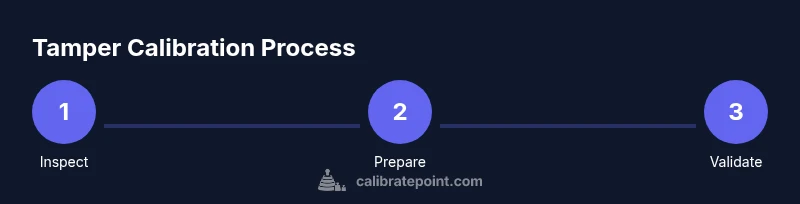
- 1
Inspect and verify the tamper
Check the tamper for visible damage, verify the serial or ID matches the certificate, and confirm the certificate date is current. Any mismatch or damage requires revalidation or replacement before use.
Tip: Expired or mismatched certificates invalidate calibration integrity. - 2
Prepare the workspace
Clear the bench, ensure a flat, clean reference surface, and stabilize the ambient conditions. Wipe surfaces with lint-free cloth and ensure no dust or residues can affect contact.
Tip: Create a controlled environment to reduce drift due to temperature or humidity changes. - 3
Position the sample and tamper
Place the sample on the reference surface, aligning the tamper squarely with the sample plane. Ensure the sample is centered and free of tilt or edge contact that could skew results.
Tip: Centering prevents uneven load distribution and improves repeatability. - 4
Set the calibration parameter
Input the designated compression force or displacement from the calibration protocol. Lock the setting before engaging the tamper to avoid drift during the test.
Tip: Double-check the parameter against the certificate before proceeding. - 5
Apply the compression
Engage the tamper and apply the compression with a steady, controlled motion. Maintain alignment during the dwell time specified in the protocol, then release gradually to avoid rebound.
Tip: Avoid sudden bursts of force that can produce transient, non-representative readings. - 6
Record the measurement
Capture the resulting reading in the log, noting the time, operator, device ID, ambient conditions, and any deviations observed. Repeat as required by the protocol to demonstrate repeatability.
Tip: Use consistent units and timestamp entries for traceability. - 7
Validate with standards
Cross-check the result against standard weights or reference materials within the usable tolerance. If the reading falls outside, investigate possible misalignment, surface contamination, or calibration drift.
Tip: If out of tolerance, stop and re-evaluate the setup before proceeding. - 8
Cleanup and document
Remove residues, clean the tamper, and return it to its storage case. Update the calibration record with any notes about the procedure, environmental conditions, and maintenance performed.
Tip: Document any anomalies to support future audits.
Questions & Answers
What is a calibrated tamper?
A calibrated tamper is a device with a known compression force or displacement used to consistently compact samples during calibration tasks. It supports repeatable, traceable measurements.
A calibrated tamper is a tool with a known compression force to ensure consistent sample packing.
How do I verify calibration before use?
Check the calibration certificate for validity, inspect the tamper for damage, and perform a quick test with certified reference weights to confirm the results fall within tolerance.
Check the certificate, inspect the tamper, and test with reference weights.
What safety precautions should I follow?
Wear appropriate PPE, keep fingers clear of moving parts, and work on a stable surface to prevent slips or accidental releases.
Wear PPE and keep hands clear of moving parts.
How often should tampers be recalibrated?
Follow the manufacturer's guidance and your organization’s policy; typically this means a regular annual check and after any major service.
Recalibrate on a defined schedule, usually annually or after major service.
Can I substitute with a non-calibrated tamper?
Substituting with a non-calibrated tamper is not recommended for calibration tasks; use a calibrated device or a validated alternative.
No, use a calibrated tamper or a validated substitute.
Watch Video
Key Takeaways
- Verify calibration before every use.
- Maintain a clean, stable workspace for repeatable results.
- Document results for traceability and audits.
- Recalibrate on schedule and when maintenance occurs.