How to calibrate the given pipette
Learn a step-by-step, practical method to calibrate the given pipette using gravimetric checks, with emphasis on traceability, documentation, and reliable results.


By the end of this guide you will be able to calibrate the given pipette accurately using a gravimetric method, verify the delivered volumes, and document results for traceability. According to Calibrate Point, a disciplined calibration process reduces systematic error and improves measurement reliability in routine lab work. You will need a balance, distilled water, calibration weights, and clean technique.
Why calibrate the given pipette matters
Accurate pipetting is foundational to reliable lab work. The Calibrate Point team emphasizes that even small biases in delivered volume can accumulate across experiments, compromising data integrity and reproducibility. By calibrating the given pipette, you establish a traceable baseline that supports consistent sample preparation, reagent dosing, and downstream analyses. Regular calibration also helps you catch aging springs, worn seals, or dirty tips before they skew results. In quality-controlled environments, calibration is part of a documented QA program and a requirement for method validation.
This is not a one-time checkbox; it is a routine quality control activity that protects the validity of every experiment that relies on precise liquid handling. In practice, practitioners who commit to regular calibration report fewer anomalous results and greater confidence in order-of-operation steps.
Understanding pipette tolerance, volumes, and specifications
Pipettes come in several volume ranges and accuracy classes. A typical transfer tool is specified by a nominal volume (for example, 20 µL, 200 µL, or 1000 µL) and an accuracy tolerance defined by the manufacturer. When calibrating, you are not just checking the nominal value but the actual delivered volume under realistic conditions. Consider factors such as tip type, dispenser mechanism, and temperature – all of which influence precision. Calibrate Point analysis shows that robust practice accounts for these variables and yields results that are traceable to standard references. Your goal is to determine whether the pipette remains within specification across the intended range, and to document any adjustments if necessary.
Grasping these fundamentals helps you design a calibration plan that matches your lab’s needs and the criticality of measurements.
Gravimetric vs volumetric calibration: two common approaches
In gravimetric calibration, you measure the mass of water delivered by the pipette and convert that mass to volume using water density at the measured temperature. In volumetric calibration, you use an automated or manual measurement device to compare the delivered volume directly to a reference volume. Gravimetric methods offer strong traceability to SI units and are widely used in laboratories that require high accuracy. Calibrate Point analysis shows gravimetric checks are widely adopted for high-accuracy pipette calibration, while volumetric checks can serve as a quick screening tool or cross-check. Whichever approach you choose, ensure your method includes proper mass balance, temperature measurement, and recordkeeping.
For many labs, gravimetric calibration is the preferred default because it ties liquid handling to mass, which remains a robust, widely accepted traceability path.
Preparing the test environment and instrument condition
Calibration should occur in a controlled environment where draft-free conditions, stable temperature, and clean surfaces are maintained. Temperature affects water density and therefore volume calculations. Let your pipette and water come to ambient temperature before starting, and avoid calibrating in drafts or near heat sources. Inspect the pipette for damage, ensure the plunger operates smoothly, and use fresh tips of the correct size. Maintain a clean bench, and place a dedicated weigh boat on a calibrated balance. Consistency in technique reduces variability between operators, an important factor highlighted by Calibrate Point's guidance.
A stable setup minimizes drift and helps you capture repeatable results across multiple trials. It also reduces the likelihood of outlier values caused by transient air movements or tip inconsistencies.
Tools and materials you’ll need (essentials first)
Gather items: an analytical balance or high-precision microbalance, Class E2 calibration weights or better, clean weigh boats, distilled water, a temperature sensor, calibrated pipette tips, a stable stand, a lab notebook or calibration log, and a clean workspace. If your lab uses automated systems, you may substitute a certified gravimetric rig, but ensure it is calibrated and traceable. Record the measured ambient temperature and note any deviations in room conditions. Having all essentials in reach minimizes interruptions and improves data quality.
Having the right tools ensures your measurements are trustworthy and your results defensible under audit. Always verify the calibration status of weights and balance before starting.
Step-by-step overview of gravimetric calibration (high-level)
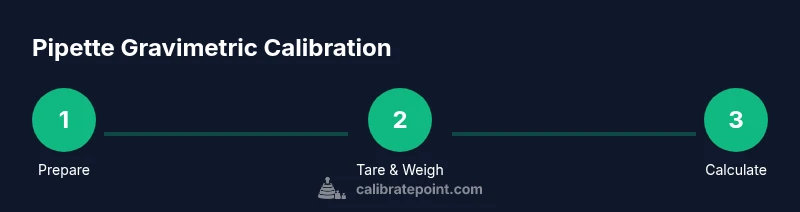
Begin by taring the empty weigh boat and recording the baseline mass. Next, aspirate the target volume with the pipette, dispense into the weigh boat, and weigh the combined mass. Repeat across a set of representative volumes to evaluate linearity. Calculate the delivered volume from mass using water density at your temperature. Compare against the nominal values and decide whether adjustments are required. Document all measurements with timestamps and instrument identifiers, and note any observations about the pipette’s performance.
This high-level overview primes you for executing the detailed, step-by-step protocol that follows and helps you understand the data you’ll generate during calibration.
Calculating density, temperature, and corrections
Water density changes with temperature, so you must correct volume calculations accordingly. Use a density table or a reference calculator to convert mass to volume precisely. If your lab has a temperature-compensated calculator, include the current room temperature reading. For most mid-range pipettes, the density correction is small but essential for high-accuracy work. Calibrate Point underscores the importance of traceability: every volume is tied to a mass measurement, which traces back to weight standards and density data. Keep the density source current and cite it in your calibration record.
Documenting the temperature and density corrections ensures you can defend your results and re-create calculations later. If a discrepancy arises, revisit the density correction step first.
Recording, reporting, and traceability
Create a calibration report that lists instrument ID, operator, date, ambient conditions, target volumes, measured masses, calculated volumes, percent differences, and any adjustments. Use a consistent table format and refer to your laboratory’s QA policies. Attach the calibration certificate or certificate of analysis for the weights used. Ensure the report is accessible, searchable, and auditable. This discipline provides confidence to your team and helps with external audits or regulatory reviews. Calibrate Point emphasizes a robust documentation habit as part of professional calibration practice.
A well-kept record supports continuous improvement and demonstrates compliance with quality standards. Your team will benefit from having a clear, organized history of calibration results for each pipette.
Common pitfalls and troubleshooting tips
Even experienced technicians encounter issues during pipette calibration. Watch for sticky plungers, worn seals, or contaminated tips, which distort volumes. Avoid air bubbles in the transfer, and ensure tips are pre-wet when using viscous liquids. If results drift between trials, verify balance calibration, check for environmental fluctuations, and repeat measurements to confirm. Always re-tare after changes in tip or volume. When in doubt, revalidate with a known-good reference pipette to corroborate results. Your goal is repeatability and defensible data. Calibrate Point’s guidance reminds you that a small safeguard now prevents large downstream errors.
Troubleshooting should be methodical: confirm equipment readiness, isolate variables, and document any deviations in your CAL log for future reference.
Maintenance, calibration frequency, and next steps
Calibration is not a one-off event. Establish a schedule based on usage, criticality of measurements, and regulatory requirements. For high-demand labs, monthly checks with more rigorous testing can prevent drift. For routine tasks, quarterly calibration with a three-point volume test may suffice. Include a process for instrument maintenance and timely replacement of worn components. Finally, plan a recheck after any major service, tip changes, or physical impact. Adhere to your QA policy and consult your calibration logs to determine when the next cycle is due. Calibrate Point would advocate a proactive approach to calibration that supports long-term reliability.
With a disciplined cadence, you can sustain instrument performance and reduce the risk of non-compliant results. Regular review of the calibration history helps you anticipate when a pipette may need maintenance or replacement.
Quick guide for the novice: what to do next
If you’re starting from scratch, prioritize environmental control, access to a precise balance, and a clear recording template. Practice the basic weighing steps with a trial setup before moving to formal volumes. As you gain experience, you’ll be able to execute calibrations more quickly and with fewer repeat measurements. Always align your procedure with your laboratory’s QA policies and industry best practices.
Tools & Materials
- Analytical balance or high-precision microbalance(precision 0.1 mg or better)
- Class E2 calibration weights (certified)(traceable to SI units)
- Clean weigh boats or microplates(for mass measurements)
- Distilled water(at calibration temperature (e.g., 20°C) for density correction)
- Calibrated pipette tips(correct size for the pipette being tested)
- Pipette stand or holder(stability during measurement)
- Temperature sensor or thermometer(for ambient temperature recording)
- Calibration logbook or software(to document results and traceability)
- Alcohol wipes or lint-free tissue(for cleaning tips and air block prevention)
Steps
Estimated time: 60-90 minutes
- 1
Prepare calibration environment
Set up in a draft-free, temperature-stable area. Verify all equipment is clean and within calibration. Pre-heat the area and instrument if required by your protocol, and ensure you have access to the calibration log. This initial setup reduces early drift and improves data reliability.
Tip: Close doors and minimize air movement during weighing to prevent buoyancy errors. - 2
Tare the balance and prepare weigh boats
Place empty, calibrated weigh boats on the balance and tare to zero. Record the baseline mass before introducing any liquid. Confirm the balance reads zero with the weigh boat only. This step ensures that subsequent masses reflect only the material delivered by the pipette.
Tip: Double-check the tare value before each trial to avoid systematic mass offsets. - 3
Pre-wet the pipette tip and prepare volumes
If your test includes multiple volumes, rinse and pre-wet the tip with a small amount of test liquid to reduce droplet variability. Select representative volumes that cover the pipette’s intended range (for example, low, mid, and high within the specification).
Tip: Pre-wetting improves drop consistency and reduces evaporation effects at small volumes. - 4
Aspirate and dispense into the weigh boat
Draw the target volume, avoid creating bubbles, and dispense into the weighed boat on the balance. Do not leave the tip in the boat after dispensing to prevent residual liquid from altering mass. Execute each transfer smoothly for repeatable results.
Tip: Keep the pipette vertical during aspiration and dispensing to minimize systematic error. - 5
Weigh the water mass for each test volume
Weigh the weigh boat with the delivered water and record the total mass. Repeat for at least three trials per volume to assess repeatability. Use the average mass for calculations when possible. This mass will be converted to volume using density at the measured temperature.
Tip: Use three replicates per volume to quantify variability. - 6
Calculate delivered volume and compare to nominal
Convert the measured mass to volume using water density at the measured temperature. Compare the calculated volume to the pipette’s nominal value and compute the percent difference. Note any deviations and assess whether the pipette remains within an acceptable tolerance.
Tip: Document the density source and temperature used for traceability. - 7
Document results and plan next steps
Summarize results in the calibration log, including instrument ID, operator, date, and condition. If volumes are outside tolerance, determine whether adjustments or service are required and schedule a recheck after any corrective actions. Archive results for audit readiness.
Tip: Attach photographs of setup and calibrated weights to the record for verification.
Questions & Answers
What is pipette calibration and why is it important?
Pipette calibration verifies that a pipette delivers the correct volume. It is essential for quantitative accuracy, reproducibility, and traceability in experiments that rely on precise liquid handling. Regular calibration helps catch wear or technique-related bias before it affects results.
Pipette calibration checks delivery accuracy to ensure measurements are trustworthy.
How often should a pipette be calibrated?
Calibration frequency depends on usage, criticality of measurements, and regulatory requirements. High-use or high-stakes work often benefits from monthly or quarterly checks, while routine tasks may need biannual or annual verification. Always align with your QA policy.
Set a regular schedule based on how critical the pipette is to your work.
Can I calibrate using a volumetric method instead of gravimetric?
Yes, volumetric calibration compares delivered volume directly to a reference volume, often with automated systems. Gravimetric methods are widely used for their strong traceability to SI units. Choose the method that best fits your lab’s constraints and documentation requirements.
You can use either gravimetric or volumetric methods depending on your setup.
What if my pipette is out of tolerance?
If a pipette fails calibration, retire the unit from use until it is serviced or recalibrated by qualified personnel. Document the failure, investigate potential causes, and initiate corrective actions as required by your QA policy.
If it’s out of tolerance, don’t use it until it’s fixed.
Do I need to weigh water at a specific temperature?
Yes. Temperature affects water density, which changes the derived volume. Record ambient temperature and apply density corrections to ensure accurate volume calculations.
Temperature matters because water density changes with temperature.
What records should I keep after calibration?
Keep a calibration report with instrument ID, operator, date, ambient conditions, volumes tested, masses measured, calculated volumes, and any adjustments. Include density sources and the table or software used for calculations.
Keep a complete, auditable record of every calibration.
Watch Video
Key Takeaways
- Calibrate regularly to maintain pipette accuracy
- Use gravimetric methods for traceable, SI-based results
- Document results thoroughly for traceability and audits
- Follow a consistent, documented cadence to prevent drift
- Calibrate Point’s verdict: adopt this protocol to ensure reliable, defensible data