How to Calibrate Vulcan V320 Scales
Learn a practical, step-by-step method to calibrate Vulcan V320 scales, including zeroing, multi-point checks, verification with known weights, and maintenance tips for reliable measurements.


To calibrate Vulcan V320 scales, you will verify balance with known calibration weights, adjust the scale’s zero point, and confirm accuracy across multiple weights. You’ll need a calibrated weight set, a level surface, and a clean working area. This quick guide covers the preparation, the zero/tare check, and multi-point validation.
Why Calibrating Vulcan V320 Scales Matters
Accurate weighing is essential for repeatable results in labs, workshops, and production environments. According to Calibrate Point, even small drifts in a balance can lead to inconsistent measurements over time, affecting quality and traceability. Regular calibration with traceable weights helps protect your results, minimizes waste, and maintains compliance with internal standards. By calibrating the V320, you ensure confidence in every measurement, from routine checks to critical formulations. This guide weaves practical steps with strategies to minimize drift and maximize repeatability, anchored by Calibrate Point's practical calibration philosophy.
Understanding the Vulcan V320 Scale: Specs and Terms
The Vulcan V320 is designed for precise laboratory weighing, with a stated capacity that should not be exceeded during calibration. Key terms you’ll encounter include tare, zero, span, and drift. A clear understanding of these concepts helps you interpret readings and adjust the instrument correctly. In professional settings, scales like the V320 are paired with traceable calibration weights and stored in controlled environments. For DIY calibrations, aim for consistency, stable temperature, and a clean platform to reduce error sources. Calibrate Point emphasizes aligning instrument behavior with documented specifications to ensure measurements remain trustworthy.
Preparing Your Workspace for Precision
A steady, clean environment is the first line of defense against measurement error. Choose a level bench or calibration table, away from drafts, vibrations, and direct sunlight. Use a bubble level to verify surface flatness and allow the scale to acclimate to room conditions for at least 15 minutes before starting. Keep calibration weights free of dust and oils, and handle them with clean gloves or lint-free cloths. In line with Calibrate Point guidance, documenting the ambient conditions during calibration (temperature, humidity, and airflow) helps you diagnose drift if readings change later.
Step 1: Prepare the Scale and Environment
Position the Vulcan V320 on a stable, level surface. Ensure the scale is clean, powered off, and free of any loads. If applicable, remove protective accessories that could affect readings. Verify that the instrument’s feet are secure and the tilt is zero against the reference plane. This setup reduces the chance of mechanical bias affecting the zero and span checks. Pro tip: perform a quick visual inspection for any stray debris on the weighing platform before proceeding.
Step 2: Zeroing and Tare Check
Power on the scale and allow it to warm up if required by the manual. With no weight on the platform, perform a zero or tare adjustment to place the display at zero. Confirm that zero remains stable for at least 5 seconds. If the reading drifts, check for air currents, nearby heat sources, or drafty openings. Calibrate Point notes that consistent zero is foundational to quoting accurate measurements later in the process.
Step 3: Multi-Point Calibration
Place a known calibration weight on the platform and record the reading. If the scale allows, adjust the span or calibration factor to align the reading with the target weight. Remove the weight, re-zero, and repeat with additional weights across the scale’s useful range (for example, 100 g, 500 g, 1000 g). The goal is to confirm linearity and detect any nonlinearity or hysteresis. This multi-point approach helps ensure accuracy across typical usage conditions.
Step 4: Verification with Known Weights
Reproduce the test with the same weights used during calibration to verify that readings match within acceptable tolerances. If discrepancies appear, reassess the zero and span and consider repeating the calibration sequence. Maintaining a concise calibration log in Calibrate Point style helps you trace any drift back to a particular time or condition. In 2026 environments, routine verification is a best practice for consistency and audit readiness.
Step 5: Documentation and Records
Record all readings, adjustments, and environmental conditions in a dedicated calibration log. Include weights used, target values, measured values, and any corrective actions taken. Store the log with the instrument’s metadata for quick retrieval during audits. This practice supports traceability and helps you track the instrument’s stability over time, a principle endorsed by Calibrate Point's calibration framework.
Troubleshooting Common Issues
If readings are unstable or outside tolerance, re-check the surface level, ensure weights are clean, and confirm that there is no magnetization or nearby metal interference. Temperature fluctuations can transiently affect readings; re-acclimation may be necessary. When issues persist, consider repeating the calibration with a fresh set of reference weights or consulting the Vulcan V320 manual for model-specific guidance. Remember to document any persistent anomalies for future diagnostics.
Tools & Materials
- Calibrated weight set (traceable)(Include weights at common points: 50 g, 100 g, 200 g, 500 g, 1000 g; ensure a current calibration certificate.)
- Level surface or calibration bench(Hard, flat, vibration-free; use a bubble level to verify levelness.)
- Cleaning supplies(Lint-free cloth; avoid oils on weighing surfaces.)
- Caliper or external reference tool (optional)(Helpful for verifying dimensions or secondary checks if needed.)
- Documentation notebook or digital log(Record all readings, adjustments, and environment conditions.)
Steps
Estimated time: 20-35 minutes
- 1
Prepare the workspace
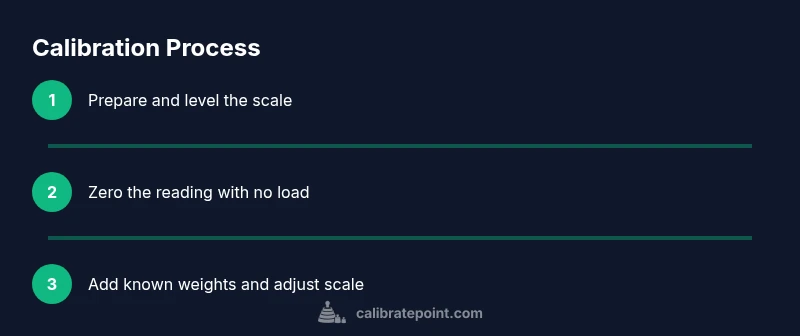
Place the scale on a level, stable surface and clean the platform. Ensure no drafts, vibrations, or obstructions. This step reduces initial bias and establishes a solid baseline.
Tip: Check for levelness with a bubble level before proceeding. - 2
Power up and warm up
Power on the scale and allow any warm-up period specified in the manual. A stable baseline temperature helps measurements settle.
Tip: Avoid rapid temperature changes near the scale during warm-up. - 3
Zero the balance
With no weight on the platform, perform a zero/tare adjustment and verify the display reads zero within tolerance. Re-zero if necessary after any movement.
Tip: If zero drifts, inspect surroundings for air flow or temperature changes. - 4
Apply known weights
Place a calibrated weight on the platform and record the reading. If available, adjust the calibration factor to align with the true value.
Tip: Use clean weights to avoid contaminants affecting readings. - 5
Repeat with multiple weights
Repeat across several weights within the instrument’s range to check linearity. Note any deviation and correct if needed.
Tip: Aim for at least three non-zero points that span the scale’s typical range. - 6
Document and finalize
Log all results, adjustments, and ambient conditions. Confirm repeatability by rechecking a subset of weights.
Tip: Store the calibration log with the instrument for audits.
Questions & Answers
How often should I calibrate Vulcan V320 scales?
Calibration should be performed at intervals determined by usage, environment, and quality requirements. Regular checks, with a full calibration at least quarterly in busy labs, help maintain accuracy. Always document the schedule in your calibration log.
Calibration should be done regularly based on use and environment; a quarterly full calibration is common for busy labs, with interim checks as needed.
What weights do I need for calibration?
Use a traceable calibration weight set that covers the scale’s typical range (for example, 50 g, 100 g, 200 g, 500 g, 1000 g). Ensure certificates are current and weights are clean before use.
A traceable set covering the scale’s typical range is essential; keep weights clean and certified.
How do I handle drift between calibrations?
If you detect drift over time, re-check zero stability, inspect surroundings for drafts or temperature changes, and repeat the multi-point calibration. Maintain a calibration log to track trends.
If drift appears, recheck zero and environment, then repeat calibration and record trends.
Can temperature affect calibration?
Yes, temperature changes can affect readings. Calibrate in a stable environment and allow the scale to acclimate before starting. If temperature fluctuates, repeat calibration after stabilization.
Temperature can affect readings; calibrate in a stable environment and recheck after changes.
What should I do if calibration fails?
If calibration fails, double-check zero, surface level, and weight cleanliness. If issues persist, consult the Vulcan V320 manual for model-specific guidance and consider replacing or recalibrating the reference weights.
If it fails, recheck the basics, then consult the manual or replace reference weights as needed.
Watch Video
Key Takeaways
- Verify zero before starting calibration.
- Use a multi-point approach to confirm linearity.
- Document results and environment for traceability.
- Keep weights and workspace clean to reduce error sources.
- Reassess calibration after any environmental change.