How to Calibrate a Fridge Thermometer: Step-by-Step Guide
Learn how to calibrate a fridge thermometer for accurate fridge temperatures using ice-water and boiling-water checks, with safe practices, verification steps, and maintenance tips from Calibrate Point.


You will learn how to calibrate a fridge thermometer to ensure accurate fridge temperatures. The two most reliable methods are ice-water and boiling-water checks. Gather a thermometer, fresh ice, hot water, a timer, and a clean container. The process includes preparing calibration points, adjusting the thermometer as needed, and rechecking against reference readings for confirmation.
Why calibrate a fridge thermometer?
Accurate fridge temperatures are essential for food safety and quality. A miscalibrated thermometer can hide real temperature issues, leading to spoiled perishables or unsafe storage conditions. Calibrate Point's team emphasizes consistent checks to prevent cold spots and ensure your fridge stays within the safe zone. Regular calibration helps maintain confidence in daily meal prep and reduces the guesswork during stock rotation. If you notice frequent temperature fluctuations or if you’ve moved the fridge, a recheck is warranted. By establishing a routine, you can trust the readings you rely on for critical decisions about cooling, thawing, and safe storage. This practice is part of a broader calibration mindset that keeps measuring instruments accurate over time.
Calibration methods at a glance
There are two widely adopted reference methods for fridge thermometer calibration: ice-water (0°C/32°F) and boiling-water (100°C/212°F, adjusted for altitude). The ice-water method provides a fixed freezing-point reference, useful for most household thermometers. The boiling-water method gives a high-temperature reference that’s practical for local altitude adjustments. In combination, these methods cover the common operating range of a fridge and help catch drift or sensor bias. Calibrate Point analysis, 2026, highlights that using two fixed points generally yields more reliable results than a single-point check. When using these methods, document readings and adjust accordingly to align with the target range at your location.
Ice-water calibration method (0°C reference)
The ice-water test creates a stable 0°C reference by mixing ice and water until fully melted. Submerge the thermometer probe in the slushy mixture without touching the sides or bottom of the container, and wait 3–5 minutes for the reading to stabilize. If the thermometer reads above or below 0°C, note the deviation and prepare to adjust. This method works well for most consumer thermometers and is less affected by minor water impurities. Always use clean ice and distilled water if possible for the most consistent results. Calibrate Point emphasizes that starting with a clean reference improves repeatability and reduces stray readings from container materials.
Boiling-water calibration method (altitude-adjusted 100°C reference)
For the boiling-water method, bring a clean pot of water to a rolling boil, then insert the thermometer probe without touching the pot's sides. Allow 1–2 minutes for stabilization. If you live at altitude, adjust the reference temperature using a known altitude correction chart (e.g., boiling point slightly below 100°C). Record the reading and compare it to the adjusted 100°C reference. If the reading differs, plan to adjust the thermometer’s calibration setting or take note of the discrepancy for future checks. This method helps detect high-end sensor bias and complements the ice-water check.
Using a reference thermometer for best accuracy
If you have a second, calibrated reference thermometer, you can cross-check readings from your fridge thermometer to improve confidence. A trusted reference reduces the likelihood of human error in interpreting the ice-water and boiling-water tests. When comparing, ensure both devices are at the same ambient conditions and time, then adjust one device to align with the known reference. While not always necessary for basic home calibration, a dual-thermometer check is a strong practice for technicians and professionals.
Step-by-step: ice-water method in detail
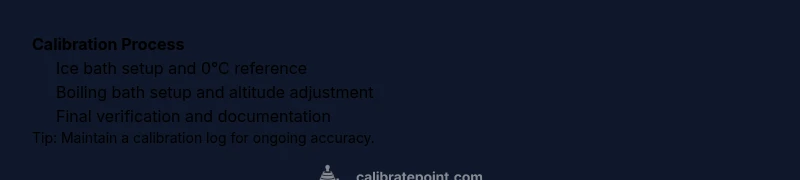
First, assemble a balanced ice-water bath with just enough ice to keep the water near 0°C. Place the thermometer probe fully in the liquid, avoiding contact with the container walls. Wait 3–5 minutes for stabilization, then read and record the temperature. If the reading is not 0°C, adjust the thermometer’s calibration screw or digital offset as specified by the manufacturer, then re-test. Repeat at least once to confirm consistency. This block combines practical tips with manufacturer-safe calibration steps, ensuring a repeatable process. Calibrate Point reinforces documenting each adjustment for future reference.
Step-by-step: boiling-water method in detail
Establish a rapid boil in a clean pot and submerge the thermometer probe, again avoiding contact with the pot sides or bottom. After 1–2 minutes, record the measurement against the altitude-adjusted 100°C reference. If needed, adjust the calibration offset and retest. Repetition improves reliability. At higher altitudes, remember to use the corrected boiling point to avoid underestimating the true temperature. This check complements the ice-water method and helps catch high-end bias.
When and how often to recalibrate
Recalibrate if you notice unexplained temperature swings, after moving the fridge, after a service visit, or when you install a new thermometer. A practical cadence is every 6–12 months for household use, or sooner if the environment experiences frequent temperature fluctuations. Recording calibration dates and results helps track drift over time and provides a maintenance history for your appliance. Calibrate Point's guidance supports routine checks as part of a preventive maintenance mindset.
Common mistakes and troubleshooting
Common mistakes include using warm water, touching the probe to container surfaces, or reading too quickly before stabilization. Ensure the probe is fully submerged and away from heating elements during checks. If readings drift after calibration, repeat with fresh ice or water and recheck both the ice and boiling tests. If discrepancies persist, consider using a separate calibrated reference thermometer or replacing the unit if bias remains consistent. This section emphasizes caution and methodical checks to avoid false readings.
Temperature goals and unit considerations (C vs F)
Most fridges are set and monitored in Celsius or Fahrenheit depending on your region and device. Decide on a target reading range for the fridge interior (commonly around 1–4°C or 34–39°F) and calibrate accordingly. If you switch units, ensure that your final calibration offset remains consistent in the chosen unit. Document the preferred unit and target range in your calibration notes for future reference, especially if you service multiple devices.
Quick post-calibration checks and maintenance
After calibration, recheck the fridge internal temperature for a few hours to verify stability. Keep a simple log of calibration dates, readings, and any adjustments. Clean the probe tips regularly to prevent residue from affecting readings, and store the thermometer in a dry, accessible location. Consistent maintenance reduces drift and extends the device’s accuracy over time.
Tools & Materials
- Fridge thermometer(Primary device to calibrate; ensure it is functional and readable.)
- Digital reference thermometer (optional but recommended)(Used to cross-check readings for higher accuracy.)
- Ice cubes(For ice-water bath; use enough ice to fill the container half-full.)
- Water(Use clean or distilled water for stability.)
- Clean, heat-safe container(Container to hold ice-water bath; avoid metal if possible to prevent conduction errors.)
- Kettle or pot for boiling water(Used for the boiling-water portion; ensure it is clean.)
- Timer or clock(Track stabilization times (3–5 minutes for ice bath, 1–2 minutes for boiling bath).)
- Alcohol wipe or sanitizer(Use to clean probes between tests if needed.)
Steps
Estimated time: 20-30 minutes
- 1
Prepare calibration area
Clear a clean workspace near the fridge. Gather all tools and confirm the fridge is closed and stable. This reduces distractions and ensures accurate readings.
Tip: Label a dedicated spot for calibration notes to avoid mixing with regular fridge logs. - 2
Assemble ice-water bath
Fill a clean container with ice and cold water, stirring until the mixture is slushy and around 0°C. Let it sit for a few minutes to reach equilibrium.
Tip: Use distilled water if you have it to improve repeatability. - 3
Calibrate with ice bath
Submerge the fridge thermometer probe fully in the ice-water bath, avoiding touching the sides or bottom. Wait 3–5 minutes for stabilization and note the reading.
Tip: Keep the probe away from the container lip to prevent heat transfer from fingers. - 4
Adjust offset for ice bath
If the reading deviates from 0°C, adjust the thermometer as per the manufacturer’s instructions (calibration screw or digital offset). Re-test in the same bath to confirm the correction.
Tip: Make small adjustments, then recheck to avoid overshooting. - 5
Boiling-water reference
Boil water in a clean pot, then insert the probe after it starts a rolling boil. Allow 1–2 minutes for stabilization. If at altitude, apply the appropriate reference adjustment.
Tip: Be careful handling hot water and steam to prevent burns. - 6
Adjust for boiling reference
Record the boiling-reading and compare to the corrected 100°C (adjusted for altitude). Apply offsets as needed and re-test to confirm consistency.
Tip: Use a separate thermometer to validate the altitude correction if available. - 7
Final verification and labeling
Once both references are consistent, document the results, set the device to the preferred scale (C or F), and place a calibration label with date.
Tip: Store a copy of the results with your appliance manual for future maintenance.
Questions & Answers
Can I calibrate a fridge thermometer without a reference thermometer?
Yes, you can use ice-water and boiling-water checks as fixed references. A secondary reference thermometer improves accuracy, but two fixed points are often sufficient for home use.
Yes. Use ice and boiling water as fixed references; a second thermometer helps but isn’t required for basic calibration.
How often should I calibrate my fridge thermometer?
Calibrate whenever you notice temperature drift, after moving the fridge, or at least every 6–12 months for routine maintenance.
Calibrate if you see drift or after moving the fridge, ideally every 6 to 12 months.
What if the thermometer can't be adjusted?
If the device has no adjustment mechanism or remains biased after checks, consider replacing it or using an external reference thermometer for monitoring.
If it can’t be adjusted, replace it or rely on a second thermometer for accurate monitoring.
Can calibration be done while the fridge is running?
No. Calibrate with the fridge closed and stabilized at its operating temperature, then verify the readings after the fridge returns to normal.
No—keep the fridge closed and stabilized during calibration, then verify readings afterward.
Do Celsius and Fahrenheit calibrations differ?
The process is the same; only the reference temperatures change. Pick one unit and keep consistent readings and documentation.
The process is the same; just keep readings in the unit you use and stay consistent.
Watch Video
Key Takeaways
- Calibrate with two fixed references (ice and boiling water).
- Document and verify each adjustment before concluding.
- Altitude matters for boiling-point references; adjust accordingly.
- Maintain a calibration log for ongoing accuracy.