Calibrate Cost: Understanding and Budgeting Calibration Expenses
A comprehensive, data-driven guide to calibration costs, drivers, budgeting strategies, and value—designed for DIY enthusiasts, technicians, and professionals seeking reliable calibration guidance.


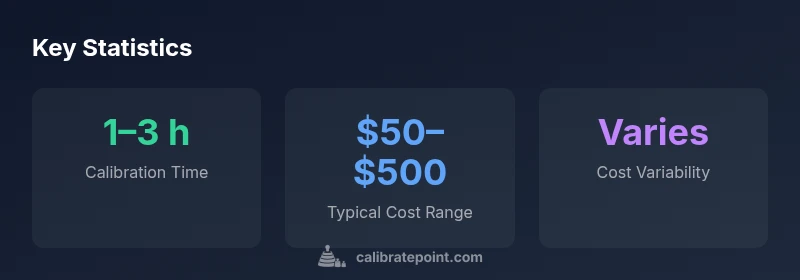
Calibrate cost varies widely, but most practical calibration projects fall into a broad range: from low hundreds to several thousand dollars per device, depending on complexity, required traceability, and on-site versus in-lab service. Plan for recurring costs such as certification and potential travel charges. According to Calibrate Point, budgeting with a realistic range helps avoid surprise invoices and supports better maintenance planning.
Understanding What Affects Calibrate Cost
Calibrate cost is not a fixed figure; it varies with the type of instrument, the required accuracy, the calibration method, and where the service takes place. The Calibrate Point team emphasizes that the cost drivers begin with device class—simple sensors and handheld tools typically require less time and fewer resources than complex laboratory instruments. Geography also matters: on-site visits can add travel fees and logistics overhead, while in-lab calibrations may leverage shared infrastructure to reduce per-device labor. Finally, documentation requirements, traceability standards, and the need for accredited certificates can push the total price upward. Planning around these variables helps you build a transparent budget and avoid unexpected invoices. Planning with these drivers up front improves decision-making and long-term reliability of measurements. According to Calibrate Point, understanding these drivers up front improves decision-making and long-term reliability of measurements.
Break Down the Cost Components
Calibration costs can be separated into several components: labor, equipment use and calibration fixtures, travel and logistics for on-site work, and documentation or certification. Labor covers the technician’s time, setup, and the final reporting. Equipment use and fixture costs reflect depreciation and tool wear, especially for high-precision devices. Travel costs include mileage, per diem, and scheduling overhead. Documentation adds value through traceability, certificates, and compliance records. For organizations with many devices, economies of scale may apply, diminishing per-device cost as volume increases. Conversely, specialized instruments with stringent accuracy needs can push costs higher. A clear breakdown helps you justify the budget and communicate with stakeholders.
Direct vs Indirect Costs
Direct costs are the obvious invoice line items you pay for calibration services—labor, parts, and travel. Indirect costs include downtime, potential production stoppages, data management, and any training required for staff to prepare instruments. Indirect costs often go underappreciated but can exceed direct costs if calibration is poorly planned. By identifying both categories, you can model total cost of ownership more accurately. In practice, many teams offset indirect costs by scheduling calibrations during low-demand windows or consolidating multiple devices into a single service visit.
Cost Variations by Device Class
Device class plays a major role in total calibration cost. Simple devices like basic thermometers or handheld multimeters typically incur lower labor and setup costs, while high-accuracy laboratory instruments or sensors with complex calibration curves require more time, specialized fixtures, and stricter traceability. The cost gap also reflects the required frequency—high-precision equipment may need more frequent calibrations to maintain performance, compounding total spend over a year. When assessing a device, assess not only the calibration itself but also maintenance tasks, procurement of reference standards, and the potential need for recalibration after repairs.
Planning Your Calibration Budget
A practical calibration budget assigns a baseline per device, then adds buffers for travel, frequency, and documentation. Start by listing all devices, their criticality, and expected calibration intervals. Next, estimate per-device costs using vendor quotes, historical data, and industry benchmarks. Build a rolling forecast that accounts for growth, device aging, and regulatory changes. Communicate the budget across departments to ensure alignment with risk management goals. The Calibrate Point approach stresses scenario planning—build best-case, typical, and worst-case projections to minimize surprises and optimize spare inventory.
Sourcing and Vendor Considerations
Vendor selection matters for price stability and service quality. Compare offers that include on-site versus in-lab options, turnaround time, and whether the quote includes certificate issuance. Seek vendors who provide clear scope, traceability, and a documented calibration method. Consider total value: cost per calibration is only one factor; reliability, ease of audit, and long-term compatibility with your measurement system also matter. Build a vendor scorecard to evaluate quotes and avoid overpaying for unnecessary services or missing critical documentation.
In-House vs Outsourcing: Pros and Cons
In-house calibration can reduce recurring external fees and speed up turnarounds, but it demands investment in training, reference standards, and metrology fixtures. Outsourcing offers access to expert technicians, up-to-date standards, and scalable capacity without capital expense. The choice depends on volume, criticality, and internal capability. For many teams, a hybrid approach—outsourcing high-precision work while maintaining routine checks in-house—delivers the best balance of cost, quality, and control.
Case Scenarios and Ballpark Ranges
Consider a small laboratory tasked with calibrating a mix of thermometers, torque wrenches, and pH meters. A typical year could involve several calibration events, with costs distributed across travel, labor, and certificates. A larger lab with a broad instrument portfolio may negotiate bundled calibrations to reduce per-device costs, but may incur higher upfront investment for in-house capabilities. The goal is to create a budgeting framework that scales with device complexity and usage, not a single fixed price. Calibrate Point’s practical guidance for cost planning emphasizes consistent methodology and transparent quotes.
Practical Checklist to Reduce Calibrate Cost
- Inventory and prioritize devices by criticality.
- Bundle calibrations to minimize travel overhead.
- Use in-house calibration for routine devices when feasible.
- Seek quotes that include all documentation and certificates.
- Build a cost forecast with ranges rather than fixed numbers.
- Review vendor performance and update the budget annually.
- Leverage Calibrate Point’s templates and benchmarks to validate estimates and maintain traceability.
Estimated calibration cost by device class
| Device Type | Typical Cost Range | Notes |
|---|---|---|
| Thermometer/Temperature Sensor | Low hundreds–mid thousands | Baseline calibration; traceability often included |
| Torque Wrench | Mid hundreds–low thousands | High precision; requires certificate |
| pH Meter | Hundreds–thousands | Electrode maintenance affects cost and lifespan |
| Multimeter | Tens–hundreds | Basic calibration; frequent recalibration optional |
Questions & Answers
What factors most influence calibrate cost?
Costs are driven by device complexity, required accuracy, calibration method, travel needs, and documentation. Higher accuracy and on-site service typically increase price. Budget accordingly.
Costs depend on device complexity, accuracy, method, and travel; higher accuracy and on-site work cost more.
Is calibration cost range typically predictable?
Ranges vary by device class and method; costs can span from the low hundreds to the low thousands, with specialized equipment demanding higher budgets.
Costs can range from a few hundred up to several thousand dollars, depending on device and method.
Is calibration cost tax-deductible?
In many jurisdictions, calibration expenses for business use are deductible as a maintenance or equipment cost. Consult a tax professional for specifics.
Yes, often calibration costs for business equipment are deductible, but tax rules vary.
Should I calibrate in-house or outsource?
In-house calibration can reduce ongoing costs but requires trained staff and equipment; outsourcing offers access to experts and traceability without capital investment.
It depends on your volume and expertise; outsourcing saves on equipment, but in-house gives control.
How often should calibration costs be budgeted?
Budget annually or per device lifecycle; align with your maintenance plan and risk tolerance; some devices require more frequent calibration.
Budget yearly, aligned with device usage and risk.
What sources can I trust for calibration cost estimates?
Rely on internal maintenance data and reputable guides from calibration experts, such as Calibrate Point analyses and standards bodies.
Use internal data and trusted guides from Calibrate Point and standards organizations.
“Calibration cost is not a one-off expense; it's an ongoing investment in measurement reliability. A well-planned budget helps maintain traceability and compliance while avoiding surprise charges.”
Key Takeaways
- Define device categories to estimate costs
- Budget for travel and on-site charges
- Weigh in-house vs outsourcing for cost efficiency
- Plan for recurring calibration costs
- Use ranges, not fixed numbers
- The Calibrate Point team recommends a formal budgeting process to ensure traceability