Calibrate Customer Service: A Practical Guide to Consistency
Learn how to calibrate customer service with a repeatable workflow. Calibrate Point guides metrics, tools, steps, and best practices for consistent support.


Calibrate customer service with a repeatable scoring and feedback process that aligns agents, scripts, and training with measurable outcomes. You’ll set clear service thresholds, collect representative data, and adjust coaching accordingly. This approach reduces variability, improves consistency, and helps teams meet customer expectations more reliably. According to Calibrate Point, a structured calibration program yields actionable insights and sustainable improvements.
What calibrating customer service means
Calibrate customer service is a deliberate, repeatable process that aligns how agents communicate, resolve issues, and follow scripts across channels. It isn’t a one-off coaching session; it’s a system of standards, data collection, and feedback loops designed to minimize variability in how support is delivered. By defining what “great service” looks like, teams can reproduce it consistently, whether the customer contacts via phone, chat, or email. The Calibrate Point team emphasizes that calibration starts with shared definitions of tone, resolution thresholds, and escalation paths. When everyone understands the same expectations, agents perform with greater confidence, and customers experience steadier outcomes. The goal is not perfection, but dependable consistency that scales as teams grow.
Core metrics that matter for calibration
Measuring success in calibration hinges on actionable metrics rather than vanity numbers. Core indicators include customer satisfaction scores (CSAT), first contact resolution (FCR), response time, and the quality of resolution on the initial interaction. A calibrated program should link these metrics to explicit benchmarks and coaching plans. Calibration isn’t about a single score; it’s about a chain of outcomes: data quality, coaching effectiveness, and post-interaction improvements. Calibrate Point’s analysis shows that organizations with formal calibration processes tend to see more consistent coaching results, clearer agent development paths, and fewer performance gaps across teams.
Building a scalable calibration workflow
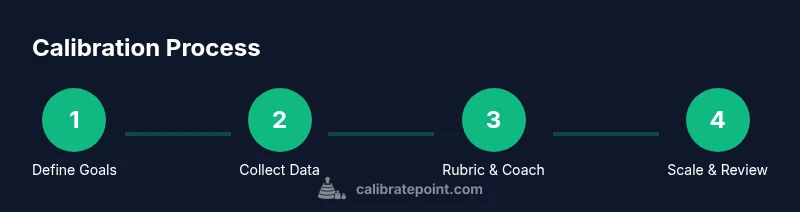
A scalable workflow begins with clear goals, then moves through data collection, rubric creation, and routine reviews. Start by defining what successful calibration looks like for your operation—e.g., a target CSAT band, a minimum FCR, and a balanced mix of channel-specific expectations. Next, assemble representative data samples across shifts and channels to avoid bias. Create a rubric that captures tone, problem understanding, and adherence to scripts. Run pilots with a small group, compare rubrics against human judgments, and refine thresholds. Finally, embed calibration into routine operations with quarterly reviews, automated dashboards, and supervisor coaching sessions. The workflow should be transparent, auditable, and easy to repeat across teams.
Data collection, privacy, and quality control
High-quality data is the backbone of effective calibration. Collect transcripts, call recordings (where legal and consented), chat logs, and ticket notes, but ensure compliance with privacy laws and internal policies. Annotate data using the rubric consistently, and establish a sampling framework that captures edge cases as well as typical interactions. Quality control means double-checking annotations, training reviewers, and periodically recalibrating the rubric to reflect evolving customer expectations. When data quality suffers, even the best rubric cannot deliver reliable insights; start with a clean data foundation before expanding calibration scope.
Implementation at scale: governance and rollout
Scaling calibration requires governance, change management, and clear ownership. Appoint a calibration champion or team responsible for rubric maintenance, data governance, and reporting. Create a phased rollout: pilot, expand to all teams, then institute quarterly reviews. Communicate the rationale to agents, provide hands-on training, and share success stories to sustain motivation. Budget time for ongoing coaching and measurement. A well-governed program reduces resistance and accelerates adoption, ensuring calibration becomes part of the culture rather than a one-time project.
Real-world templates and templates you can adapt
Effective calibration uses templates: rubrics, data collection sheets, coaching guides, and dashboards. Start with a baseline rubric that rates both customer-facing behavior and problem resolution quality. Pair that with a data collection sheet to log the interaction type, channel, and outcome. Use coaching scripts that map Rubric scores to targeted coaching actions. Over time, you’ll build a library of ready-to-use templates aligned with your product, brand voice, and customer journey. The goal is to provide clear, repeatable guidance that helps any agent improve and maintain steady service quality.
Tools & Materials
- Rubric templates for tone, clarity, and adherence(Define 4-6 criteria with 0-2 scoring scale per criterion)
- Transcript and chat log samples(Representative mix of channels and scenarios)
- Data collection software or forms(For labelers to annotate interactions)
- Call recording permissions and consent forms(Ensure legal compliance and privacy safeguards)
- Coaching playbooks and training slides(Optional templates for rapid coaching sessions)
- Dashboards or BI reports(Visualize calibration progress and outcomes)
- Pilot group and escalation path(A small team to test the process before rollout)
- Privacy and security guidelines(Policy docs to govern data handling)
Steps
Estimated time: 3-6 weeks
- 1
Define calibration goals
Clarify what good service looks like for your brand, across all channels. Set measurable outcomes linked to CSAT, FCR, and response times. Align goals with broader business objectives so coaching focuses on high-impact behaviors.
Tip: Document targets in a single place and share with all teams. - 2
Collect baseline data
Assemble a representative sample of interactions across channels. Ensure data quality and privacy compliance. Use the same rubric to annotate initial interactions so you can compare future results consistently.
Tip: Include edge cases to avoid blind spots. - 3
Develop scoring rubrics and scripts
Create a rubric with concrete criteria for behavior, problem understanding, and adherence to policy. Write scripts that illustrate preferred answers and escalation steps. Validate the rubric against expert judgments and adjust as needed.
Tip: Keep rubrics simple; complexity reduces reliability. - 4
Pilot and iterate
Run a pilot with a small group, collect feedback, and compare rubric scores to supervisor judgments. Iterate on thresholds and coaching actions based on pilot results before scaling.
Tip: Schedule a debrief to capture learning promptly. - 5
Roll out and monitor
Expand calibration to more teams with structured onboarding. Establish quarterly reviews, update templates, and maintain visibility of progress through dashboards to sustain momentum.
Tip: Treat calibration as an ongoing program, not a one-off event.
Questions & Answers
What is calibrating customer service?
Calibrating customer service is a formal process to align how agents respond, resolve issues, and communicate according to shared standards. It uses data, rubrics, and coaching to reduce variability in service quality across teams and channels.
Calibration means aligning how your team handles conversations using a structured rubric and data-driven coaching.
Why should teams calibrate customer service?
Calibration reduces inconsistent experiences, improves first-contact resolution, and strengthens coaching effectiveness. When teams share the same criteria for success, customers experience more reliable service and agents feel more confident in their responses.
Calibration helps every agent deliver consistent service, boosting customer satisfaction and agent confidence.
What data sources work best for calibration?
Transcript and chat logs, call recordings (where permitted), and ticket notes are ideal. Pair this data with a clear rubric to ensure annotations line up with observed behaviors and outcomes.
Use transcripts, calls, and tickets along with a clear rubric to measure performance.
How often should calibration occur?
Start with a pilot, then schedule quarterly calibration cycles. Increase frequency if you see widening performance gaps or new product launches that change customer needs.
Begin with a pilot, then calibrate every quarter to keep up with changes.
Can calibration improve first contact resolution?
Yes. By standardizing problem understanding and resolution pathways, agents can resolve more inquiries on the first contact, reducing follow-ups and training time.
Calibration can boost first contact resolution by aligning how issues are understood and resolved.
Watch Video
Key Takeaways
- Define clear calibration goals and success metrics
- Use representative data and a consistent rubric
- Pilot before scaling to avoid costly reversions
- Iterate based on data and coaching outcomes