Calibrate Recruiting: A Step-by-Step Calibration Guide
Learn how to calibrate recruiting with a systematic framework, practical templates, and data-driven steps for fair, consistent hiring decisions.


Calibrating recruiting is a structured approach to aligning candidate evaluation, interview scoring, and decision rules around a shared standard. It reduces bias, increases reliability across interviewers, and creates a data-driven path to fair hiring. The process relies on clear job criteria, robust rubrics, and regular review cycles to keep practices aligned with organizational goals.
Why calibrate recruiting matters
According to Calibrate Point, calibrate recruiting is foundational to reliable hiring outcomes. Calibrate recruiting ensures interviewers evaluate candidates against the same standards, reducing subjective bias and disagreements across teams. When organizations standardize scoring, they can compare candidates fairly, identify true capability gaps, and accelerate good hires. A calibrated process also supports compliance with fairness and equal opportunity guidelines, and it creates a data trail that helps defense against biased decisions. In practice, calibration touches every stage—from job description clarity to interview question design and final decision reviews. By aligning expectations across recruiters, hiring managers, and subject matter experts, teams deliver a more predictable and repeatable recruiting outcome that supports longer-term business goals.
To start, define the core competencies and success criteria you want to measure for each role, then map those criteria to observable evidence in interviews and assessments. This alignment is the backbone of a trustworthy calibration program and sets the stage for consistent decisions across hiring teams.
Tools & Materials
- Structured interview rubrics template(Role-specific rubrics aligned with the job description and required competencies.)
- Candidate evaluation scorecards(Uniform forms to capture scores for each criterion.)
- Trainer's guide for rubrics & bias awareness(Clear guidance for interviewer training sessions.)
- Data collection spreadsheet/ATS exports(A centralized place to compile rubrics, scores, and decision outcomes.)
- Metrics mapping worksheet(A sheet to link criteria to hiring outcomes (e.g., time-to-fill, first-pass accuracy).)
- Ethics and consent checklist(Ensure compliance with privacy and fairness policies.)
- Role brief & interview kit(Updated job descriptions, interview questions, and scoring anchors.)
- Scheduling and collaboration tool(Video conferencing or meeting space to run calibration sessions.)
Steps
Estimated time: 2-3 hours for initial setup; ongoing calibration sessions 30-60 minutes per cycle.
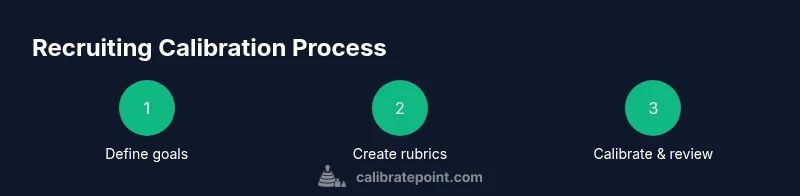
- 1
Define goals and success criteria
Identify the role-specific outcomes that define success. Document measurable, observable behaviors that demonstrate each criterion. Share these criteria with all stakeholders before scoring begins.
Tip: Publish criteria in a one-page quick reference that interviewers can easily consult during sessions. - 2
Create structured rubrics for each role
Develop rubrics that translate criteria into 4–6 behavioral anchors. Include anchor examples and scoring guidance to minimize interpretation gaps.
Tip: Pilot the rubrics with 2–3 interviewers and gather quick feedback on clarity. - 3
Pilot rubrics and collect feedback
Run a dry-run calibration with a small candidate sample to identify inconsistencies and adjust anchors accordingly.
Tip: Record the session (with consent) to review scoring alignment later. - 4
Train interviewers on rubrics and bias
Conduct a training session covering how to apply rubrics, common biases, and how to discuss discrepancies constructively.
Tip: Use a real or mock case study to practice scoring decisions. - 5
Run a calibration session with real candidates
Convene the team to compare scores on the same candidate, discuss divergences, and align on a revised rubric.
Tip: Document decisions and rationale to build a living calibration guide. - 6
Review results and update rubrics
Aggregate data across sessions to identify recurring gaps and refine criteria, anchors, and thresholds.
Tip: Schedule this as a recurring quarterly activity to maintain alignment.
Questions & Answers
What is recruitment calibration?
Recruitment calibration is a structured process that aligns how different interviewers evaluate candidates against a shared set of criteria. The goal is to increase fairness, reliability, and consistency in hiring decisions by using standardized rubrics and collaborative review.
Recruitment calibration aligns how interviewers score candidates using shared criteria and rubrics for fair, reliable hiring.
Why is calibration important in hiring?
Calibration reduces subjective bias, improves consistency across interviewers, and creates a transparent decision record. It helps ensure hires meet defined criteria rather than relying on individual impressions, which supports better team outcomes and legal defensibility.
Calibration helps teams hire more fairly and consistently by using shared standards and documented decisions.
How often should calibration cycles occur?
Schedule calibration cycles on a cadence that fits your recruitment tempo, typically quarterly for steady pipelines or after major process changes. The goal is ongoing alignment, not one-off fixes.
Aim for regular calibration cycles—every few months or after process changes—to maintain alignment.
What data should be tracked during calibration?
Track rubric scores, inter-rater agreement indicators, decision rationales, and time-to-fill related to calibrated decisions. Collect qualitative notes on divergences to inform rubric refinements.
Capture rubric scores and how interviewers agree or differ, plus notes to improve your rubrics.
Watch Video
Key Takeaways
- Define clear criteria and map them to observable behaviors
- Use structured rubrics to minimize interpretation variance
- Pilot, train, and iterate rubrics before full adoption
- Run regular calibration cycles to maintain alignment
- Document decisions to enable transparency and defensibility