Calibration vs Verification: A Practical How-To for 2026
Learn the difference between calibration and verification, when to perform each, and a practical, step-by-step approach to maintain accurate, traceable measurements across instruments.


Calibration sets a device to a reference standard, and verification checks ongoing performance against defined criteria without adjustment. Together, they establish traceability, ensure measurement accuracy, and support regulatory compliance. This quick answer highlights the definitions, practical roles, and the value of applying these processes consistently before proceeding into the detailed, step-by-step guidance.
What calibration and verification mean
Calibration and verification are two linked but distinct activities that protect the integrity of measurements. Calibration is the process of aligning a device's output with a known reference standard, typically involving adjustment to bring readings within a specified tolerance. This means the instrument's results become traceable to recognized standards, enabling comparisons across time, places, and teams. Verification, by contrast, is a performance check: you assess whether an instrument's current results meet predefined acceptance criteria without changing its settings. When done properly, verification confirms that the device still operates within expected limits between calibration events.
Understanding when to calibrate and when to verify matters because both activities influence data quality and decision-making. Calibration addresses systematic bias and scale drift that accumulate over time; verification catches drift or degradation in real time, serving as a gatekeeper before critical measurements are taken. In practice, many laboratories schedule regular calibrations for core reference instruments and perform verification checks more frequently for field devices or tools in high-variance environments. This approach supports regulatory compliance, quality assurance, and customer confidence. The Calibrate Point team notes that a robust calibration program should tie to a documented measurement plan, include traceable standards with known uncertainties, and maintain audit trails for every adjustment or decision. In short, calibration and verification work together to preserve accuracy, enable comparison, and reduce risk across manufacturing, healthcare, and research settings.
Why calibration and verification matter in practice
According to Calibrate Point, active calibration and verification programs underpin trust in measurements across industries. In manufacturing, miscalibration can lead to oversized parts, increased waste, and costly recalls; in healthcare, small bias can affect patient outcomes; in research, it undermines reproducibility. Verification acts as a safety check between calibrations, catching drift due to temperature changes, component wear, or environmental stress. A strong program reduces uncertainty by maintaining consistent measurement conditions, ensuring instruments perform within defined tolerances, and supporting compliance with ISO, FDA, or other standards.
Beyond compliance, calibrated and verified instruments save time and money. Well-documented calibration records speed audits, reduce the need for retrospective corrections, and improve supplier confidence. For technicians, clear procedures and traceable references reduce the cognitive load of decisions and minimize subjective judgments. The practical takeaway is simple: you should implement a schedule that matches risk, usage frequency, and the consequences of measurement error. Calibrate Point analysis shows that teams who separate calibration and verification responsibilities—from planning through data capture—tend to run smoother operations and experience fewer last-minute surprises. In short, calibration and verification are not box-ticking tasks; they are essential controls that protect product quality, safety, and performance.
How to decide between calibration and verification
Choosing between calibration and verification hinges on three core questions:
- Is there detectable bias or drift that could bias results over time?
- Will decisions depend on measurements being traceable to a standard?
- What are the consequences of a measurement error for the end product or process?
If bias drift is suspected or documented, scheduling calibration is prudent. If the goal is to confirm current performance without making adjustments, verification is appropriate. Risk assessment should guide frequency: high-risk applications may require more frequent calibration, with verification checks sprinkled in as quick, interim assessments. A practical rule is to pair calibration with a formal measurement plan and to run verification checks before critical tests or batch productions. Calibrate Point recommends documenting the rationale for each action, including reference standards used, environmental conditions, and operator identity, so audits are straightforward and defensible.
Tools and materials you need (for calibration and verification)
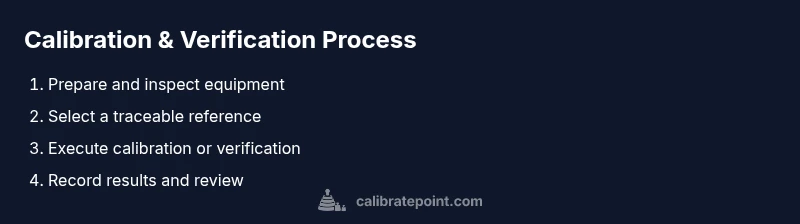
Step-by-step: overview of the process
Best practices for traceability and records
Real-world example: calibrating a digital caliper
Tools & Materials
- Reference standard or artifact(A traceable standard with known value)
- Calibration instruments (e.g., micrometer, dial gauge, gauge blocks)(At least one appropriately rated instrument for the task)
- Calibration certificate/record-keeping system(For traceability and audits)
- Cleaning supplies (lint-free cloth, isopropyl alcohol)(Prepare surfaces and standards without introducing residues)
- Temperature control or thermometer(Stabilize environment to reduce drift)
- Calibration software or data sheets(Capture results and calculations)
- Storage container or case(Protect tools and standards between uses)
- Adjustment tools (screwdrivers, wrenches)(Only if the device design permits adjustments)
Steps
Estimated time: 60-120 minutes
- 1
Prepare the workspace
Clear the bench, ensure lighting is adequate, and verify environmental stability. Gather the reference standard, instruments to be calibrated, and required documentation. This baseline setup reduces interruptions and improves measurement confidence.
Tip: Verify the reference standard is sealed and traceable before handling. - 2
Inspect and clean the equipment
Inspect surfaces for damage, clean all contact areas with lint-free cloth, and remove residues that could affect readings. Dirty interfaces can introduce false readings and skew results.
Tip: Use lint-free wipes and avoid harsh solvents on sensitive surfaces. - 3
Select a suitable reference standard
Choose the reference that matches the instrument's measurement range and uncertainty requirements. A poor match can hide bias or exaggerate drift.
Tip: Check the standard’s own calibration certificate before use. - 4
Perform the calibration adjustment
If the instrument allows adjustment, perform it following the manufacturer’s procedure until readings align with the reference within tolerance.
Tip: Document the exact adjustment values and dates for traceability. - 5
Run verification checks
Record readings against acceptance criteria to confirm performance is within tolerance. This step validates ongoing reliability without changing settings.
Tip: Keep a side-by-side log of pre- and post-adjustment readings. - 6
Document results and archive
Capture all data in a dedicated log, noting instrument ID, operator, environment, and standard used. Store results securely for audits and future reference.
Tip: Back up digital records and maintain a clear, searchable archive.
Questions & Answers
What is the difference between calibration and verification?
Calibration aligns a device to a reference standard, typically with adjustment. Verification checks current performance against acceptance criteria without adjusting the device.
Calibration aligns readings to a standard; verification checks current performance against criteria without changing settings.
How often should I calibrate equipment?
Frequency depends on risk, usage, and instrument criticality. Establish a schedule as part of a written quality plan and adjust based on performance data.
Calibration frequency depends on risk and how critical the instrument is.
Can verification replace calibration?
Verification cannot fully replace calibration when a known bias or drift exists. Use verification to confirm ongoing performance between calibrations.
Verification checks performance, but calibration is needed if drift or bias is detected.
What qualifies as a reference standard?
A reference standard is a device or artifact with known, traceable values and documented uncertainty. It should be certified and stored under controlled conditions.
A reference standard has a known value and a clear calibration certificate.
Why keep calibration records?
Records provide traceability, support audits, and demonstrate compliance with standards and customer requirements.
Keeping records helps prove measurements are reliable and auditable.
Is environmental stability important for calibration?
Yes. Temperature, humidity, and vibration can affect readings. Control or account for these factors during both calibration and verification.
Environment can change readings, so manage conditions during tests.
Watch Video
Key Takeaways
- Document calibration plans and traceability for every device
- Use verification as a risk‑based between-calibration check
- Keep detailed, timestamped records for audits
- Schedule based on risk, usage, and consequence of errors