Calibration Review Process: A Practical Guide
Learn a practical calibration review process with clear steps, data integrity, and documented governance to ensure instrument accuracy, traceability, and audit readiness.


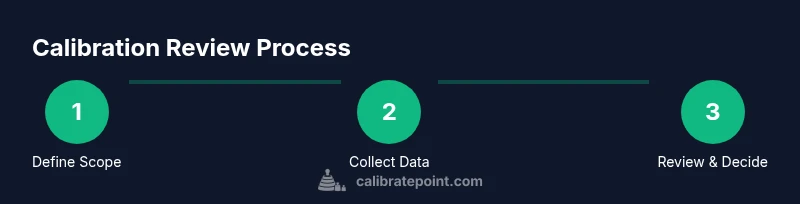
The calibration review process is a structured, repeatable method for verifying instrument accuracy over time. It combines data collection, trend analysis, and formal documentation to establish a defensible record of performance. According to Calibrate Point, the goal is to ensure traceability, demonstrate compliance with internal standards, and provide a clear path for corrective action when drift or faults arise. The process defines scope, acceptance criteria, ownership, and timelines to support audits and continuous improvement.
What is the Calibration Review Process?
The calibration review process is a structured, repeatable method for verifying instrument accuracy over time. It combines data collection, trend analysis, and formal documentation to establish a defensible record of performance. According to Calibrate Point, the goal is to ensure traceability, demonstrate compliance with internal standards, and provide a clear path for corrective action when drift or faults arise. In practice, teams define scope, set acceptance criteria, and assign responsibility for each task. The process typically spans measurement sessions, data consolidation, statistical checks, and review decisions. A well-designed review reduces surprises during audits and helps maintenance staff plan proactive calibrations. Throughout, keep the focus on reproducibility, repeatability, and auditable records. If you are new to calibration reviews, start with a written policy that translates broad quality goals into concrete steps, roles, and documentation templates. As you build experience, you can tailor steps for different instrument families while preserving core principles.
Defining scope, objectives, and acceptance criteria
Before touching instruments, articulate the purpose of the review. Is it a routine quarterly check, a response to observed drift, or a compliance-driven audit? Establish the scope (which instruments, which parameters) and the acceptance criteria (tolerances, reference standards, and data quality requirements). Document these decisions in a policy or plan so every team member understands when to escalate or approve actions. The definition phase should also identify required references (traceability chains, calibration intervals, and environmental controls) and the owners responsible for each outcome. Clear scope reduces rework and makes the later review steps more efficient. In practice, align these elements with your organization’s quality system and ISO/IEC 17025 or similar standards to strengthen credibility.
Data collection, traceability, and reference standards
Accurate data is the backbone of any calibration review. Gather measurement results from calibrated instruments, environmental readings, and any auxiliary data (e.g., temperature, humidity, vibration). Ensure data traceability by recording instrument IDs, serial numbers, lot numbers for reference standards, and calibration dates. Use standardized templates or software to capture data consistently. Reference standards should be traceable to an international or national standard; document their certificates and calibration intervals. If data quality is questionable, flag it early and rerun measurements under controlled conditions. Calibrate Point emphasizes maintaining an auditable trail: attach timestamps, operator IDs, and notes about ambient conditions. This foundation supports reliable trend analysis, helps you detect drift signs, and provides evidence during audits.
Method validation, acceptance criteria, and decision rules
Define how you will compare current performance to the baseline and what constitutes a pass or fail. Use agreed-upon methods, calculation formulas, and decision rules that align with the instrument’s measurement model. Apply statistical checks where appropriate (e.g., repeatability, bias, linearity) and document the criteria for accepting, retesting, or adjusting the instrument. Part of this block is deciding whether results are acceptable as-is, require a scheduled recalibration, or warrant immediate action. Include contingencies for out-of-tolerance results, such as environmental remediation or procedural changes. Document the rationale for each decision to support traceability and future reviews.
Documentation, records management, and audit readiness
Documentation drives trust in the calibration review process. Store all data, certificates, calibration reports, and review memos in a centralized, accessible repository. Use version control so updates are tracked and previous states remain retrievable. Include a summary of findings, action items, due dates, and responsible owners. Prepare an executive summary for management and a detailed technical appendix for auditors. Ensure all data are legible, unaltered, and time-stamped. When audits occur, you should be able to demonstrate that each instrument has a documented review path, and that any corrective actions were executed with evidence of verification.
Roles, governance, and decision rights
Assign clear roles: who defines scope, who collects data, who reviews results, and who approves actions. Establish governance to resolve conflicts between operations staff and quality personnel, with escalation paths for unresolved issues. Define responsibilities for maintaining calibration records, updating procedures, and communicating changes. Rotating responsibilities is acceptable, but ensure handoffs are documented. The success of a calibration review depends on accountability, training, and ongoing oversight from senior technicians or quality managers. Calibrate Point recommends periodic governance reviews to keep the policy aligned with evolving standards.
Challenges, pitfalls, and mitigation strategies
Even well-planned reviews encounter hiccups. Common challenges include incomplete data, inconsistent data formats, missing certificates, and ambiguous acceptance criteria. Mitigate by using standardized templates, pre-review checklists, and mandatory data validation steps. Establish data quality gates before the review goes to approval. Another pitfall is over-calibration: chasing tiny drifts can consume resources without meaningful gains. Set practical thresholds and use risk-based prioritization to allocate time effectively. Ensure environmental controls are monitored and documented, since temperature and humidity can influence readings.
Implementation plan and next steps
Translate theory into action with a phased rollout. Start with a pilot in one instrument family, collect feedback, adjust templates, and train staff. Expand to adjacent families once the pilot demonstrates value. Create a timetable with milestones for data collection, phase reviews, and management sign-off. Finally, integrate the calibration review process into your broader quality system so it becomes part of routine operations rather than a one-off effort. Schedule a follow-up review after the next calibration interval to confirm sustained performance and to refine criteria as needed.
Tools & Materials
- Calibration reference standards (traceable to recognized standards)(Include certificates; note expiry dates and lot numbers where applicable)
- Instrument-specific reference instruments(Ensure compatibility with the instrument under review)
- Data capture tools (digital logger, calibration software or standardized spreadsheets)(Use templates to ensure consistent data entry)
- Calibration certificates and previous reports(Maintain full traceability history)
- Environment monitoring equipment (temperature/humidity loggers)(Important for data quality and interpretation)
- Notepad or digital notebook(For on-site observations and quick notes)
- Access credentials to calibration management system(Ensure proper access controls and audit trails)
- Safety gear as required by instrumentation(Follow site safety protocols)
Steps
Estimated time: Estimated total time: 3-6 hours
- 1
Define scope and objectives
Clarify which instruments and parameters are in scope and what constitutes success. Document tolerances, reference standards, and data quality requirements. Assign ownership for approvals and action items to ensure accountability.
Tip: Create a one-page scope sheet to keep everyone aligned from the start. - 2
Gather baseline data and references
Collect current performance data, calibration dates, and environmental conditions. Verify reference standards are traceable and certificates are up-to-date. Record instrument IDs and operator details for traceability.
Tip: Use a single data template to prevent format mismatches later. - 3
Review performance deviations
Compare current results to baselines and reference values. Apply predefined decision rules to decide pass/fail/retire. Note any anomalies and potential root causes for follow-up.
Tip: Flag any data gaps immediately and pause the review if needed. - 4
Identify corrective actions
If deviations exceed criteria, determine whether re-calibration, adjustment, or environmental corrections are required. Assign owners and due dates for each action.
Tip: Prefer non-destructive actions first (recalibration) before adjustments. - 5
Validate actions with reference standards
Re-test after corrective actions using the same reference standards. Confirm that the instrument meets acceptance criteria after changes.
Tip: Document all test conditions and any environmental changes during this step. - 6
Document results and traceability
Summarize findings, decisions, and evidence in the calibration records. Attach certificates, timestamps, and operator IDs to ensure complete traceability.
Tip: Include a concise executive summary for quick reviews. - 7
Review and approvals
Route the review to the appropriate authority for sign-off. Ensure governance rules are followed and escalation paths are clear for unresolved issues.
Tip: Use automated workflows to minimize bottlenecks. - 8
Archive and monitor
Store the finalized review in an accessible repository. Set reminders for next calibration and plan periodic audits to check continued compliance.
Tip: Schedule the next review during the current one to maintain momentum. - 9
Continuous improvement
Periodically reassess procedures, templates, and criteria. Update training and documentation to reflect lessons learned and evolving standards.
Tip: Incorporate feedback from audits to refine the process.
Questions & Answers
What is the purpose of a calibration review process?
It provides a formal method to verify instrument accuracy, ensure traceability, and document corrective actions, reducing drift risks and supporting audits.
A calibration review process helps verify accuracy, keep records, and prepare for audits.
How often should calibration reviews be performed?
Frequency depends on risk, usage, and regulatory requirements. Set a plan in your policy and adapt it as instruments or environments change.
Frequency depends on risk and regulatory needs; tailor it to your setup.
Who should own the calibration review process?
Assign a governance lead (often from quality or instrumentation) and designate data managers, reviewers, and approvers.
Appoint a governance lead and clear data handlers.
What data should be collected during a calibration review?
Collect instrument IDs, reference standards, measurement results, environmental data, and the corresponding certificates and timestamps.
Record instrument, standards, results, environment, and timestamps.
How are out-of-tolerance results handled in the review?
Flag immediately, determine root cause, decide on remediation, re-test, and update records with the corrective actions taken.
Flag, diagnose, remediate, re-test, and document actions.
Watch Video
Key Takeaways
- Define scope and criteria upfront.
- Capture complete, traceable data for every instrument.
- Apply clear decision rules and document evidence.
- Maintain auditable records and governance.
- Plan for continuous improvement and audits.