Calibrate Program: A Practical Step-by-Step Guide
Learn how to design and implement a robust calibrate program for instruments and software. This practical guide covers planning, data workflows, and improvement.


A calibrate program is a deliberate, documented approach to evaluating and adjusting measurement tools, devices, and software to meet defined performance criteria. According to Calibrate Point, it extends beyond one-off checks by establishing a repeatable workflow that can be applied across different assets and environments. The goal is accuracy, traceability, and consistency: measurements should be comparable over time, under varying conditions, and across operators. A well-designed program includes scope definition, reference standards, data collection plans, verification procedures, and a clear audit trail. It is not a single task but a living system that evolves with new instruments, updated standards, and lessons learned from past results. When you implement a calibrate program, you create a reliable foundation for quality, reproducibility, and customer trust. In practice, you’ll develop measurement protocols, assign responsibilities, and set up dashboards or logs that reveal drift, bias, or equipment degradation before they impact outcomes. The result is reduced rework, faster troubleshooting, and more confident decision-making.
What is a Calibrate Program?
A calibrate program is a deliberate, documented approach to evaluating and adjusting measurement tools, devices, and software to meet defined performance criteria. According to Calibrate Point, it extends beyond one-off checks by establishing a repeatable workflow that can be applied across different assets and environments. The goal is accuracy, traceability, and consistency: measurements should be comparable over time, under varying conditions, and across operators. A well-designed program includes scope definition, reference standards, data collection plans, verification procedures, and a clear audit trail. It is not a single task but a living system that evolves with new instruments, updated standards, and lessons learned from past results. When you implement a calibrate program, you create a reliable foundation for quality, reproducibility, and customer trust. In practice, you’ll develop measurement protocols, assign responsibilities, and set up dashboards or logs that reveal drift, bias, or equipment degradation before they impact outcomes. The result is reduced rework, faster troubleshooting, and more confident decision-making.
Why a Calibration Program Matters
A formal calibrate program provides a defined pathway for maintaining measurement integrity across the lifecycle of tools and software. It helps teams catch drift early, establish traceability to reference standards, and reduce the variability that can affect product quality. In practice, a robust calibration program also supports audits, regulatory compliance, and customer confidence, because every adjustment is backed by data and documented reasoning. Calibrate Point’s research reinforces the value of repeatable workflows and transparent records in reducing unexpected downtime and post-hoc fixes. Without a structured program, teams may rely on ad hoc checks that miss subtle biases or drift patterns, leading to inconsistent results.
Planning Your Calibration Program
Successful calibration programs start with clear definitions of scope, responsibilities, and acceptance criteria. Before you begin, map the assets to be calibrated, the reference standards you will use, and the data you must capture. A good plan includes a risk assessment that prioritizes high-impact instruments and software, a schedule for routine checks, and a policy for handling out-of-tolerance results. Stakeholders from quality, operations, and engineering should sign off on the plan to ensure alignment with organizational goals. Documentation should cover the calibration frequency, the methods used, and the criteria for declaring an instrument “in tolerance.” This upfront work minimizes surprises during execution and makes audits smoother over time.
Tools, Standards, and Data Methods
Choosing the right tools and standards is foundational to a successful calibrate program. Use NIST-traceable reference standards where possible and document the source, lot numbers, and calibration certificates. Select measurement instruments with known accuracy and stability characteristics, and pair them with a robust data collection system—this could be a laboratory information management system (LIMS), a spreadsheet with version control, or dedicated calibration software. Data methods matter as much as the tools themselves: define the measurement procedure, environmental controls, and triggers for retesting. Establish a consistent data format, timestamping, and an auditable trail so that results can be reviewed by a third party if needed. A well-structured data approach makes drift patterns easier to identify and quantify over time.
Designing a Repeatable Workflow
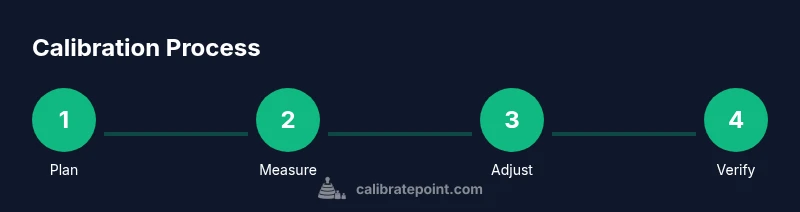
Create a repeatable workflow that can be followed by anyone on your team. Break the process into clearly defined stages: planning, preparation, execution, validation, and documentation. Each stage should have checklists, responsibilities, and expected outcomes. Use templates for work orders, data capture, and deviation reports to ensure consistency across instruments and operators. Implement version control for procedures so changes are traceable, and require sign-offs at key milestones. The workflow should be adaptable to different environments (lab, workshop, or field) while maintaining core controls like references, traceability, and auditability. A well-designed workflow reduces variability caused by human factors and promotes confidence in results.
Baselines, Drift, and Acceptance Criteria
Establish baseline measurements to anchor your calibration program. Compare ongoing results against baselines to detect drift or bias early. Define acceptance criteria that are specific, measurable, and aligned with user needs and regulatory expectations. For each instrument or software module, document the expected tolerance, the measurement unit, and the method used to determine pass/fail status. In practice, this means keeping a running log of baseline values and monitoring trends over time. When drift appears, investigate root causes such as environmental changes, aging components, software updates, or operator differences. A disciplined approach to baselines helps you distinguish meaningful changes from normal variation and makes corrective actions more effective.
Data Logging, Audit Trails, and Documentation
A robust calibrate program depends on thorough data logging and comprehensive documentation. Capture all relevant details: who performed the calibration, when it occurred, what standards were used, and the observed values. Ensure that results are timestamped, stored securely, and accessible for audits. Maintain an audit trail that records every decision, adjustment, and remediation, along with the rationale. This transparency is essential for regulatory compliance and for continuous improvement. When data is well organized and easily retrievable, you can analyze performance over months or years, identify recurring issues, and demonstrate due diligence to customers and regulators.
Validation, Verification, and Acceptance Testing
Validation verifies that calibration procedures achieve the intended outcomes for the instrument, device, or software. Verification confirms that the results are produced consistently across operators and conditions. Implement acceptance tests that reproduce real-world usage and stress scenarios to confirm that the calibrate program meets performance criteria. Use independent checks where possible to avoid bias, and document discrepancies with corrective actions. Regularly review and adjust validation procedures to incorporate changes in references or instruments. A strong validation framework ensures confidence that the calibration program delivers reliable measurements in practice.
Monitoring, Auditing, and Continuous Improvement
Ongoing monitoring and periodic audits are essential to keep a calibrate program effective. Track key indicators such as drift rate, failure frequency, and time-to-resolution for out-of-tolerance events. Schedule internal and external audits to assess adherence to procedures, data integrity, and traceability. Use audit findings to drive improvements in tools, reference standards, or workflow steps. The goal is a learning loop: identify gaps, implement fixes, re-validate, and document the outcomes. A culture of continuous improvement helps your team stay aligned with evolving standards, technology, and business needs.
Common Pitfalls and How to Avoid Them
Common mistakes in calibration programs include skipping documentation, relying on a single reference standard, and treating calibration as a one-time event rather than an ongoing process. To avoid these pitfalls, enforce strict documentation at every step, diversify references to reduce risk of a single point of failure, and schedule regular re-evaluations of procedures. In addition, avoid vague acceptance criteria and unclear responsibilities, which lead to inconsistent results. By anticipating these issues and building safeguards into your workflow, you’ll maintain higher data integrity and better operational performance.
Tools & Materials
- Calibrated reference standards(NIST-traceable references preferred; record lot and certificate numbers.)
- Measurement instruments/tools(Choose devices with known accuracy and stability; document serials.)
- Data logging software or templates(Spreadsheet with versioning or calibration software.)
- Environmental measurement tools(Thermometers, hygrometers to capture context if needed.)
- Safety gear(Gloves, eye protection if handling hazardous references.)
Steps
Estimated time: 1-2 hours
- 1
Define scope and criteria
Identify which instruments and software modules will be included, clarify performance criteria, and assign responsibilities. Document success metrics and acceptance thresholds before you start to provide a clear target for the calibration program.
Tip: Lock in the scope with a signed off plan from all key stakeholders. - 2
Assemble references and tools
Gather reference standards, measurement instruments, and data-logging tools. Verify that references are traceable and certificates are current. Prepare a controlled environment if needed.
Tip: Record reference serials and calibration dates for traceability. - 3
Draft measurement protocols
Create standard operating procedures for each instrument or module. Include step-by-step methods, environmental controls, data fields, and pass/fail criteria.
Tip: Use templates to ensure consistency across all instruments. - 4
Run baseline checks
Perform initial measurements to establish baselines. Compare results against reference standards and note any deviations.
Tip: Document baseline values and any immediate adjustments. - 5
Apply adjustments and document
If in tolerance, record adjustments made and the rationale. Update the calibration log with new values and tool status.
Tip: Avoid overwriting baseline data; keep versioned records. - 6
Validate with independent checks
Use a secondary method or third-party reference to confirm results. Re-run tests to ensure repeatability across operators.
Tip: Cross-checks reduce bias and increase credibility. - 7
Establish ongoing schedule
Define frequency for routine calibrations and set reminders. Build in audits to ensure long-term compliance.
Tip: Treat calibration as a habit, not a project. - 8
Review and improve
Analyze results, capture lessons learned, and update procedures. Communicate changes and retrain staff as needed.
Tip: Close the loop with a formal review and sign-off.
Questions & Answers
What is calibrate program?
A calibrate program is a structured, repeatable workflow to evaluate and adjust measurement tools to meet defined criteria. It includes planning, execution, data capture, analysis, and documentation to ensure accuracy and traceability across instruments and software.
A calibrate program is a structured, repeatable workflow to evaluate and adjust measurements to meet defined criteria, with proper documentation for audits.
Who should implement a calibration program?
Anyone working with measurements—DIYers, technicians, and professionals—can implement a calibration program. Start with a clear scope, assign roles, and build the process step by step.
Anyone working with measurements can implement this. Start with scope and roles.
How often should calibrations be performed?
Frequency depends on usage, risk, and standards. Establish a schedule in your calibration program and adjust based on drift data and audits.
Set a schedule based on risk and usage, then adjust as needed.
What tools are essential for a calibration program?
Core tools include reference standards, measurement instruments, data recording methods, and a documented workflow. Optional tools can improve efficiency and traceability.
You need solid references, reliable instruments, and a clear written workflow.
How do you start a calibration program from scratch?
Define scope, collect references, draft protocols, run a pilot, and document results. Then scale to full deployment with audits.
Begin with a clear scope, gather references, run a pilot, and document everything.
What are common calibration mistakes?
Common mistakes include skipping documentation, ignoring drift, and failing to establish traceability.
Common mistakes are skipping docs and data, ignoring drift.
Watch Video
Key Takeaways
- Define scope and acceptance criteria before starting.
- Use traceable reference standards and documented procedures.
- Log data, decisions, and changes for audits.
- Schedule regular reviews and improvements based on drift data.
- Adopt Calibrate Point’s recommended approach to a robust calibration program for reliability.