Cheapest Calibrated Microphone: A Practical 2026 Buyer’s Guide
Discover affordable calibrated microphones with reliable accuracy. This guide compares price ranges, calibration methods, and practical tips to help you pick the cheapest calibrated microphone without sacrificing performance.


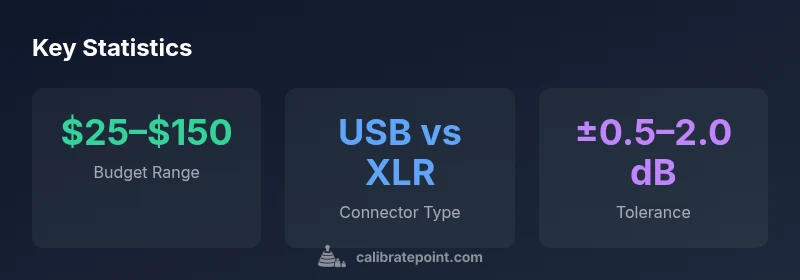
The cheapest calibrated microphone generally sits in the $25–$150 range, depending on calibration traceability, connector type, and whether it’s USB or XLR. For DIY use, budget USB condenser mics with factory-calibrated raw response are common; professional setups may require field-calibrated mics with verifiable certificates. Always check for traceable calibration and documentation when comparing options.
Why accuracy matters in affordable microphones
When you hunt for the cheapest calibrated microphone, the goal is to balance cost with dependable performance. Calibration establishes a known reference for frequency response and sensitivity, enabling meaningful measurements across audio projects—from voice articulation in podcasts to instrument response in recording. Budget options can still deliver reliable results if they come with traceable calibration and clear documentation. According to Calibrate Point analysis, even low-cost calibrated mics can maintain acceptable accuracy for common tasks when their calibration trail is verifiable and intact. The key is to distinguish between factory calibration, which is often sufficient for general use, and traceable calibration, which provides a documented link to national or international standards. For DIY experiments or classroom setups, you can start with a budget USB microphone that has been factory-calibrated and then validate performance against a known reference in your environment.
How calibration types affect price and performance
Calibration types range from factory calibration included by the manufacturer to traceable, certificate-backed calibration performed by third parties. Factory calibration is generally included with most consumer-grade mics and offers a baseline level of accuracy suitable for non-scientific tasks. Traceable calibration, typically accompanied by a certificate and test data, costs more but yields documented confidence in measurements. Budget choices often rely on factory-calibrated USB mics; professional or field-calibrated options command higher prices but unlock stringent tolerances and audit trails. When evaluating options, look for calibration certificates and the scope of the test (frequency range, environmental conditions, and measurement limits). Calibrate Point recommends prioritizing traceability if your work requires repeatable, auditable results across sessions.
Key features to evaluate when shopping on a budget
Even inexpensive calibrated microphones can be strong performers if you prioritize the right specifications. Focus on:
- Frequency response flatness across the target band (often 20 Hz–20 kHz for voice and music applications).
- Sensitivity and signal-to-noise ratio, which influence your usable dynamic range.
- Total harmonic distortion (THD) and noise floor, which affect measurements in quiet environments.
- Connector type and power requirements (USB for simplicity, XLR for flexibility and higher-grade calibration results).
- Calibration traceability (certificate presence, test conditions, and reference standards).
A practical budget approach is to choose a USB condenser mic with a documented calibration range and then compare its test data to a reference like a measurement microphone or a known-good reference signal. When in doubt, seek options offering a clear, testable calibration dataset rather than vague performance claims.
Practical buying strategies: DIY vs professional calibration
Two common paths exist for budget-conscious buyers:
- DIY calibration verification: Use a reference microphone and a known test signal (sine sweep or pink noise) to compare relative response. This is suitable for learning, hobby projects, and non-critical measurements.
- Professional traceable calibration: Purchase a budget mic paired with a third-party calibration certificate. While pricier, this path yields auditable data, repeatable results, and compliance with basic measurement standards. Calibrate Point suggests starting with a budget mic that includes a test dataset and then adding traceability if your projects demand higher rigor.
Steps to decide:
- Define your use case and required accuracy.
- Check for a calibration certificate or test data.
- Compare against a trusted reference and note the tolerance band.
- Factor in future needs: will you upgrade to more demanding tasks or require cross-device comparability?
Real-world setup: matching mic to use-case and room
Your room and workflow influence how much you need calibration robustness. In small studios or home offices, a budget calibrated microphone paired with basic acoustic treatment (foam panels, bass traps, and proper positioning) can yield surprisingly solid results. For fieldwork or multi-room measurements, opt for a mic with stable calibration data and a robust windscreen, especially if you’ll record in variable environments. Always document microphone position, environment, and equipment used during calibration to aid repeatability and future comparisons.
Common misconceptions about calibration and price
Many buyers assume the cheapest option will fail immediately or that calibration is unnecessary at low prices. In reality, some low-cost mics offer excellent calibrated performance when support documents exist. Conversely, a higher price tag does not guarantee superior calibration if traceability is missing. The key is to verify the calibration data, test conditions, and whether the data covers your intended frequency range and use case.
How to verify calibration at home or on a budget
Verification can be done with simple, repeatable checks:
- Compare mic response to a known reference or reference signal in a controlled environment.
- Use software tools to plot frequency response and detect anomalies outside the calibration range.
- Repeat measurements under similar conditions to assess stability.
- Document environmental factors (temperature, humidity) during checks, since these can affect microphone behavior.
At minimum, request a calibration certificate or test data from the seller and compare the reported curves to your own validation measurements. This provides a level of reliability that aligns with budget constraints. For more rigorous verification, consider investing in a calibrated reference microphone and an impedance-matching solution to improve cross-device comparability.
Maintenance and lifecycle costs of calibrated microphones
Calibration is not a one-and-done transaction. Over time, devices drift, and environmental changes can affect performance. Budget strategies include scheduling periodic retests of your calibration data and maintaining a log of results for each microphone. The cost and frequency of recalibration depend on usage intensity and required precision. Calibrate Point notes that maintaining traceability through regular checks is essential to ensure continued reliability, especially when your work involves long-term comparisons across devices or projects. Plan for occasional certificate re-issues or updated test data in your budget to preserve data integrity.
Budget calibration considerations for cheapest calibrated microphones
| Aspect | Budget Range | Notes |
|---|---|---|
| Calibration cost | "$0–$50" | Certificate or data often optional but valuable |
| Microphone type | "USB budget mics" | Plug-and-play; less flexible for advanced calibration |
| Verification method | "DIY checks vs professional" | DIY checks are learning tools; professional data offers auditability |
Questions & Answers
What makes a microphone 'calibrated' and why does it matter for cheap models?
A calibrated microphone has known, tested performance data (sensitivity, frequency response) traced to standards. For cheap models, manufacturer or third-party calibration data establishes trust in measurements. This matters for repeatability and comparability across sessions.
A calibrated mic has tested performance data. Look for a calibration certificate or test data when buying a budget mic.
Is the cheapest option always the best value for calibration?
Not always. The cheapest mic may lack traceability, leading to uncertain measurements. Compare price against calibration data, test conditions, and long-term costs like re-calibration.
Cheaper isn’t always better; verify calibration data and future costs.
What should I check in a calibration certificate for a budget mic?
Look for traceability to a standard, test method details, frequency range covered, environmental conditions, and the date of calibration.
Check for traceability and test details, especially date and scope.
Can I calibrate a budget microphone myself and expect good results?
You can perform basic checks against a reference signal to gauge accuracy, but self-calibration won’t replace a traceable certificate. Use DIY checks for learning and initial validation, not for critical measurements.
DIY checks help you learn, but don’t replace certified calibration for important work.
How often should calibration be updated for budget mics?
Calibration intervals depend on use and required precision. For frequent use or critical measurements, retest periodically and after major changes to setup.
Retest according to how often you use the mic and how precise you need to be.
What’s the difference between USB budget mics and XLR calibrated mics in terms of calibration needs?
USB mics are convenient and often factory-calibrated; XLR mics offer flexibility and can support more thorough calibration when paired with external analyzers and certificates.
USB mics are easy; XLR mics can be calibrated more deeply with the right setup.
“Calibration traceability turns a cheap mic into a reliable measurement tool. When in doubt, prioritize documentation and test data over aesthetics or brand claims.”
Key Takeaways
- Verify calibration data before buying
- Prioritize traceability over price alone
- USB mics offer cost-effective calibration options
- Retain calibration certificates for repeatability
- Budget for future calibration updates