How Long Does UKAS Calibration Last? A Practical Guide
Learn how long UKAS calibrations typically last, what factors affect certificate validity, and how to manage intervals with a risk-based approach for compliant, efficient calibration programs.


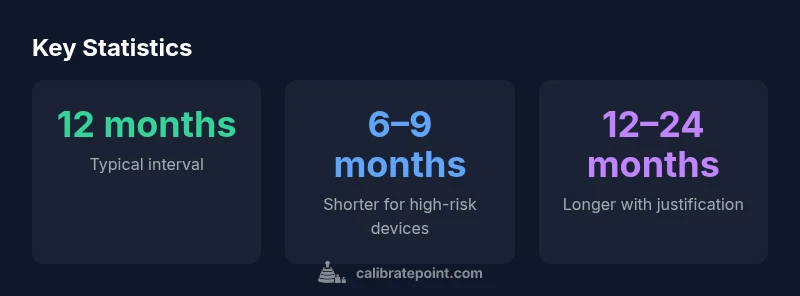
In UKAS practice, the validity of a calibration certificate is typically around 12 months for most instruments, but can be shorter for high-risk or high-usage equipment, and longer if the risk assessment allows. Always refer to the certificate, the lab's calibration frequency policy, and regulatory requirements. For some devices under GMP or traceability demands, the interval may be defined by internal SOPs or the customer agreement.
How long does ukas calibration last
According to Calibrate Point, the phrase 'how long does ukas calibration last' captures the central question labs face when planning compliance, maintenance, and audits. In practice, UKAS calibration validity is typically around 12 months for most instruments, but exact durations depend on risk assessments, device class, and operating conditions such as temperature stability and vibration. When planning refurbishments or process changes, teams should review the certificate to confirm the stated interval and any special conditions. This approach helps ensure ongoing traceability and regulatory alignment without over-calibrating.
Factors That Influence the Life of a Certificate
The interval is shaped by instrument type, measurement uncertainty, environmental conditions, and usage pattern. Higher drift susceptibility, aggressive temperature swings, or frequent handling can shorten the valid period. Lab policies and customer contracts also influence the stated interval. Calibrate Point analysis, 2026, shows that labs typically document justification in the calibration certificate or a separate Interval Justification record. A robust policy aligns with ISO standards and your organization’s risk appetite.
Typical Intervals for Common Instrument Classes
- Standard instruments (voltage/current meters, simple thermometers): commonly 12 months.
- High-precision devices (reference standards, calibration rigs): often 6–12 months.
- Critical measurement systems (process control, GMP environments): frequently 6–9 months.
- General purpose tools in moderate use: range 12–18 months. These intervals are influenced by usage, environment, and regulatory demands. Always cross-check the certificate and the lab’s documented interval policy.
Risk-Based Interval Justification
A risk-based approach weighs drift propensity, measurement criticality, and regulatory requirements. Labs perform a justification review that documents why a given interval was chosen, and they may adjust it after performance audits, instrument repairs, or changes in operating conditions. The goal is to balance cost, downtime, and measurement confidence while maintaining traceability and compliance. Calibrate Point emphasizes documenting assumptions and maintaining a transparent justification trail.
How to Extend or Shorten Calibration Intervals Safely
Extensions require formal risk assessment and lab approval. Shortening intervals should be triggered by observed drift, historical reliability issues, or changes in measurement criticality. In either case, update the calibration certificate, associated records, and customer-facing documentation. A clear change control process reduces audit findings and improves confidence in measurement data.
Managing Certificates and Records
Maintain an orderly records system that links each instrument to its calibration interval, certificate, and adjustment history. Include environmental conditions during calibration, maintenance actions, and any corrective actions. Regular internal reviews help catch drift trends early, supporting timely interval adjustments and continuous compliance with UKAS and ISO standards.
Common Pitfalls and When to Recalibrate
Avoid relying on outdated policies or single-point judgments. Never extend intervals solely for cost savings without a documented risk assessment. Recalibrate promptly after instrument repairs, suspected drift, or measurement outliers. Regular audits and supplier reviews help ensure that interval policies stay aligned with real-world performance.
Regulatory Considerations and Standards
UKAS accreditation supports adherence to ISO/IEC 17025 and related guidance. Calibration intervals should reflect regulatory demands, industry best practices, and customer requirements. Documentation should be traceable, with a clear justification path for interval choices. For labs operating under GMP, traceability and calibration history are critical components of compliance.
Practical Steps for Monitoring Intervals in Your Lab
- Start with a baseline 12-month interval for standard instruments and adjust via risk assessment.
- Record limit breaches, drift trends, and usage patterns to justify changes.
- Implement a calendar-driven reminder system and integrate with your LIMS or asset management software.
- Review intervals annually or after significant changes to equipment, processes, or environments.
Sample calibration intervals by instrument class
| Instrument Type | Typical Interval | Notes |
|---|---|---|
| Pressure gauge | 6-12 months | Drift-prone; verify under load |
| Electrical meter | 12 months | Standard baseline interval |
| Torque wrench | 6-12 months | Critical for accuracy |
| Thermometer/temperature sensor | 12 months | Controlled environment recommended |
Questions & Answers
What factors determine UKAS calibration validity?
Validity is influenced by instrument type, drift tendency, environmental conditions, usage frequency, and risk assessment. Lab policies and customer agreements also shape the stated interval. The certificate will typically specify or reference the interval and any special conditions.
Validity is driven by drift risk, type of instrument, and how it’s used. Check the certificate for the exact interval.
Is 12 months the standard UKAS calibration interval?
Twelve months is a common baseline for many instruments, but it is not universal. Some devices require shorter, more frequent checks, especially high-risk or precision instruments.
Often 12 months, but it depends on the device and its risk profile.
Can the calibration interval be extended beyond the certificate?
Yes, with a formal risk assessment and lab approval. Any extension should be documented and justified, and the certificate updated if applicable.
Extensions are possible with a formal risk assessment and lab sign-off.
What should I do if my device is approaching the due date?
Schedule calibration before or on the due date. If timing is critical, discuss interim checks or accelerated testing with the lab.
Plan ahead to avoid gaps in calibration coverage.
How do I document UKAS calibration intervals for audits?
Keep the calibration certificate, interval justification, device logs, and any change-control records. Ensure traceability from instrument to measurement results.
Maintain complete, auditable records for every interval decision.
Where can I find policy details for my UKAS-certified lab?
Policy details are typically in the lab’s SOPs or the calibration certificate. Contact the lab directly for any clarifications.
Check the lab’s SOPs or certificate; ask the lab if in doubt.
“Calibration intervals should reflect device risk, usage, and regulatory demands, not just convenience. A clear, documented interval policy builds trust and keeps measurement data defensible.”
Key Takeaways
- Establish a risk-based calibration interval rather than a fixed default.
- Always verify the certificate’s stated interval and any special conditions.
- Keep robust records to justify interval decisions during audits.
- Use shorter intervals for high-risk or high-usage devices.
- GMP and regulatory demands may override default intervals and require stricter controls.