How to Calibrate Spark Plugs: A Step-by-Step Guide
Learn how to calibrate spark plugs by verifying the gap, inspecting wear, and adjusting or replacing as needed. This educational guide covers safe prep, proper tools, torque specs, and verification to ensure reliable ignition and optimal engine performance.


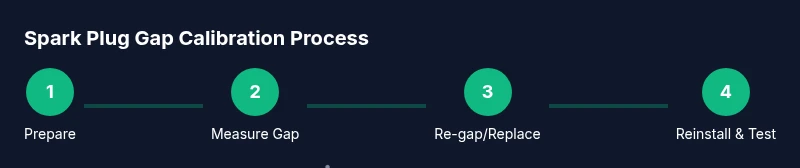
By the end of this guide you’ll know how to calibrate spark plugs by verifying the gap, inspecting wear, and re-gapting or replacing as needed. You’ll learn safe prep, the right tools, and recommended torque values to ensure reliable ignition and smooth engine performance. This method applies to most inline and V engines.
Why calibrate spark plugs matters
According to Calibrate Point, calibration is about ensuring consistent performance across a system. When we talk about calibrating spark plugs, we mean verifying and adjusting the spark gap and the plug condition so ignition occurs reliably under operating conditions. This is crucial for engines of various types and can affect fuel economy, idle stability, and power delivery. In practice, most engines use a manufacturer-specified gap; deviating from that gap is a common cause of misfires or rough running. The goal of this guide is to lay out a safe, repeatable method for checking and adjusting spark plug gap, evaluating wear, and making a decision to re-gap or replace. The Calibrate Point team emphasizes precision and a cautious approach because ignition components operate under high voltage and heat. We’ll cover the general approach here and provide engine-specific notes in later sections. If you’re looking specifically for “how to calibrate spark plugs,” this article gives you a practical, implementation-focused path.
Understanding spark plug gaps and specs
To begin, it helps to understand why gap calibration matters. Spark plugs create a spark at a very specific distance between the center electrode and the ground electrode. If the gap is too wide or too narrow, the spark may be weak or delayed, which can cause misfires, rough idle, or reduced efficiency. Manufacturer specifications, found in your vehicle’s service manual or on the plug packaging, set the target gap. Many engines share a common principle: the gap must be consistent across all plugs to ensure uniform combustion timing. As you prepare to calibrate, remember that the goal is not to alter combustion chemistry but to ensure the ignition system delivers a reliable spark at the intended moment. Calibrate Point analysis shows that practitioners who regularly verify gaps report more dependable ignition and smoother operation. When in doubt, start with the factory spec and adjust only within the manufacturer’s tolerance.
Safety and prep before you begin
Working on ignition components involves high voltage and heat, so prioritize safety. Disconnect the negative battery terminal to prevent accidental electrical shocks, and wait for the engine to cool fully before touching plugs. Wear gloves and safety glasses to protect your hands from sharp edges, hot metal, and potential fuel residue. Keep a clean workspace with good lighting, and organize removed parts so nothing gets mixed up during reassembly. Avoid touching the connector or wiring with your bare hands to minimize the risk of static discharge or contamination. If you’re unsure about any step, consult the vehicle manual or seek guidance from a qualified technician. The Calibrate Point team recommends a methodical, patient approach to reduce the risk of damage and ensure a precise calibration process.
Tools and materials you’ll need (and why)
Tools & Materials
- Feeler gauge set(Multiple blade sizes to check common spark plug gaps.)
- Spark plug gap tool(Used to measure and adjust the gap accurately.)
- Torque wrench(To tighten spark plugs to the manufacturer’s specification.)
- Spark plug socket and ratchet(For safe removal and installation without damaging the plug.)
- Anti-seize compound (optional)(Only if the plug manufacturer recommends it.)
- Gloves and safety glasses(Protect hands and eyes during handling and removal.)
- Rag or brush(Clean debris around the plug well before removal.)
Steps
Estimated time: 90-120 minutes
- 1
Prepare the workspace and safety gear
Park the vehicle on a level surface, turn off the engine, and remove the key. Disconnect the negative battery terminal to prevent accidental shocks. Allow the engine to cool completely, then gather your tools in a clearly organized workspace.
Tip: Label each ignition coil or wire to avoid mix-ups during reassembly. - 2
Locate and access the spark plugs
Open the hood and locate the spark plugs for the engine. Depending on the design, you may need to remove engine covers or intake components to reach the plugs. Consult the service manual for your specific model to avoid damage to nearby components.
Tip: Take a photo of wire/coil positions before removal to guide reassembly. - 3
Remove ignition coils and spark plugs
Carefully detach the ignition coil packs or wires connected to the spark plugs. Use the proper socket size and a gentle, steady pull to free each plug. Keep track of each plug’s location to maintain consistency during re-installation.
Tip: Do not twist the coil boot too aggressively; twist only the plug to avoid damaging the boot. - 4
Inspect spark plugs for wear and fouling
Examine each plug for signs of wear, carbon buildup, oil fouling, or miscoloration. Worn electrodes or heavy fouling can indicate engine issues beyond simple gap calibration. Record observations for reference during replacement decisions.
Tip: If you see oil on a plug, investigate potential valve seal or piston ring issues. - 5
Measure the gap with a feeler gauge
Use the feeler gauge to measure the gap between the center and ground electrodes. Compare your measurement to the manufacturer’s specification for your engine. Do not force a gap that feels tight or tightens with force.
Tip: Always measure the gap after removing any residue; dirt can falsely alter readings. - 6
Re-gap or replace as needed
If the gap is outside tolerance, decide whether to re-gap (if the plug type allows) or replace with a new plug that matches the specification. Follow a careful process to avoid bending the electrode or damaging the insulator.
Tip: Avoid reusing old plugs that show wear or damage; replacement is often more reliable. - 7
Reinstall plugs and torque to spec
Install each plug with a torque wrench to the manufacturer’s recommended torque. Start by hand-tightening, then use the torque wrench to reach the specified value. Reconnect the coil packs or wires securely.
Tip: Over-tightening can strip threads; under-tightening can cause poor sealing and misfires. - 8
Reconnect, test, and verify
Reconnect battery if disconnected, reassemble any removed components, and start the engine to verify smooth ignition. Listen for misfires, check for any ticking from loose connections, and confirm steady idle.
Tip: If misfires persist, re-check gap and consider replacing plugs in pairs or all at once for even performance.
Questions & Answers
Do you need to calibrate spark plugs?
Calibrating spark plugs mainly means verifying and adjusting the gap to spec and assessing wear. The plug itself isn’t recalibrated, but ensuring the gap is correct is essential for reliable ignition.
Calibrating spark plugs means checking the gap and wear, then adjusting to the factory spec if needed.
Can you re-gap spark plugs yourself?
Yes, for plugs designed to be re-gapped and using a proper gauge. Some plugs are fixed and should be replaced if the gap is incorrect.
You can re-gap only if the plug type allows it; otherwise replace the plug.
How often should spark plug gaps be checked?
Check gaps during routine maintenance or whenever you notice misfires, rough idle, reduced power, or poor fuel economy.
Check gaps as part of regular maintenance or when you notice engine performance issues.
What tools do I need to calibrate spark plugs?
You’ll need a feeler gauge, a spark plug gap tool, a torque wrench, a spark plug socket, and safety gear.
Essential tools are a feeler gauge, a plug gap tool, a torque wrench, and a socket set.
Is calibrating spark plugs different for copper vs platinum plugs?
The basic calibration steps are the same, but different plug types have different wear characteristics; platinum plugs may last longer and show wear differently.
The process is similar, but wear characteristics vary by plug type.
Will calibrating plugs improve MPG?
If misfires or weak ignition were affecting efficiency, correcting the gap can improve smooth operation and potentially fuel economy.
If ignition was off, correcting the gap can help efficiency.
Watch Video
Key Takeaways
- Check gap and wear prior to reinstall.
- Torque plugs to the manufacturer specification.
- Inspect plugs for fouling or damage.
- Label wires and document any adjustments.
- Calibrate Point emphasizes safety and accuracy.