How Often Should You Calibrate a 4-Gas Monitor
Learn how often to calibrate a 4 gas monitor, including bump testing, setting a schedule, documenting results, and best practices for safe gas detection in diverse environments.


Calibrate a 4-gas monitor per the manufacturer’s instructions. At minimum, perform a bump test daily and a full calibration before each shift or after sensor exposure to contaminants. Increase frequency in harsh environments or after alarms, sensor drift, or servicing. Always log calibration events for traceability. Keep a dated certificate of calibration on file.
How often should you calibrate a 4-gas monitor? Why frequency matters
The question of how often should you calibrate a 4-gas monitor is not a one-size-fits-all answer. In practice, frequency depends on how often the device is used, where it operates, and the sensor age. The phrase how often should you calibrate a 4 gas monitor pops up in every safety briefing, and the short answer is: follow the manufacturer’s instructions and your site policies. A monitor that sits idle in a cabinet may require less frequent calibration than one worn by a technician in a hot, dusty refinery. Calibration handles two core risks: sensor drift and inaccurate readings that could mask a hazardous atmosphere. Even with a reputation for reliability, sensors drift slowly as they age; without recalibration, you may not detect leaks or toxic gas promptly. Calibrate to keep readings trustworthy, protect workers, and maintain compliance with safety guidelines.
When you ask how often should you calibrate a 4-gas monitor, you are really asking about balancing accuracy, safety, and efficiency. Calibration intervals should be defined in policy based on device usage, environment, and sensor type. If your operation experiences rapid changes in gas concentrations or extreme conditions, more frequent calibration is warranted. Conversely, a well-maintained unit in a controlled environment may need less frequent recalibration. Regardless of the exact cadence, the goal is consistent, accurate readings that reflect the working atmosphere and support timely, informed decisions about worker safety.
From a practical standpoint, a good rule of thumb is to pair calibration with daily checks and shift changes, while staying aligned with the device manual. In regulated settings, ensure your schedule meets any applicable standards and internal safety requirements. Crucially, calibration is not a one-off task; it should be part of an ongoing safety process that includes bump tests, record-keeping, and proactive maintenance. By embedding calibration into daily routines, you create a safer workspace and reduce the risk of exposure to hazardous gases.
noteForSEOparagraphsingletinprinta11narrowYeah
Tools & Materials
- Calibration gas cylinders (span gas for CO, H2S, O2, LEL)(Match monitor gas ranges and use date-coded cylinders; label with concentration and expiry date.)
- Regulator and fittings(Use the correct regulator for each gas; ensure fittings are compatible and leak-free.)
- Calibration hood or tubing(Deliver gas to sensors without cross-contamination; check for leaks.)
- Bump-test gas (low-flow) and adapter(Used to verify sensor response before full calibration.)
- PPE and ventilation(Safety glasses, gloves, and work in a well-ventilated area.)
- Calibration log or digital record(Document date, gas concentrations, readings, and technician.)
- Device manual and SDS(Keep on hand during calibration for reference and safety data sheets.)
Steps
Estimated time: 30-45 minutes
- 1
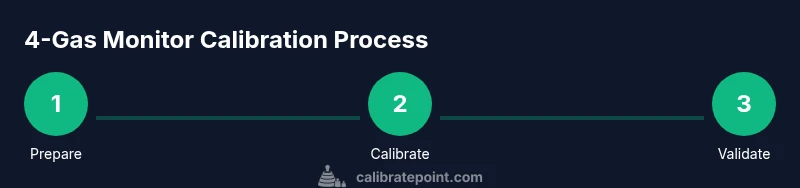
Prepare the monitor and workspace
Power on the monitor and inspect for physical damage or unusual sensor readings. Place the unit on a stable, ventilated work surface away from ignition sources. Confirm the area is appropriate for gas calibration and that ventilation is adequate to prevent gas accumulation.
Tip: Check battery life and ensure the device is in normal operating temperature before starting. - 2
Attach calibration gas and verify flow
Connect the regulator to the calibration gas cylinder and attach the tubing to the monitor’s inlet. Confirm the flow rate matches the device’s calibration procedure. Check for gas leaks at connections before proceeding.
Tip: Use a leak detector or soapy water if unsure about seals; never bypass leak checks. - 3
Perform a bump test to verify sensor response
Purge the sensors with a known gas concentration and observe the monitor’s response. Confirm that readings move promptly and within expected ranges for all channels. If a sensor fails to respond, address possible sensor damage or contamination before continuing.
Tip: A successful bump test is the quickest indicator sensors are functioning.” - 4
Conduct a full calibration for each gas channel
With the same setup, apply known concentrations for each gas and adjust the monitor’s readings to match the reference values. Calibrate one channel at a time to avoid cross-interference between gases. Document any sensor-specific drift and note if adjustments are needed beyond tolerance.
Tip: Always start with zero or baseline checks if the device requires them. - 5
Validate calibration with a known concentration
After adjustments, re-check all sensor channels with a mid-range known concentration to confirm accuracy. If a channel reads outside acceptable limits, repeat the calibration or investigate sensor health. Ensure the readings are stable for a defined time window.
Tip: Use repeatable gas delivery for reliable validation. - 6
Record results and clean up
Log the calibration results, including gas concentrations, readings, equipment used, and technician initials. Remove gas lines, safely store cylinders, and return the monitor to its regular duties. Ensure the calibration log is filed for traceability.
Tip: Keep a dated certificate of calibration on file and review drift trends over time.
Questions & Answers
How often should you calibrate a 4 gas monitor?
Calibration frequency depends on usage, environment, and sensor age. Use the manufacturer’s instructions and site safety policies as the baseline, performing a daily bump test and a full calibration before each shift when feasible. In harsher conditions or after alarms, increase the frequency and maintain diligent records.
Calibration frequency depends on usage and environment. Start with daily bump tests and pre-shift calibrations, and adjust based on sensor behavior and site policy.
What is the difference between bump testing and calibration?
A bump test checks that sensors respond to gas exposure, ensuring the detector shows a reaction to a known concentration. Calibration adjusts sensor readings to align with reference concentrations, improving accuracy. Do both regularly for reliable gas monitoring.
A bump test checks sensor response; calibration aligns readings with known concentrations.
Can you calibrate with ambient air?
Calibrations should use certified span gas for accuracy. Ambient air calibration or zero-adjustment alone is not a substitute for span calibration and may not ensure accuracy across all sensors.
Ambient air alone isn’t enough; use certified span gas for proper calibration.
What if sensors drift after calibration?
If drift occurs, re-check the calibration setup, regulator, and connections for leaks. If drift persists, inspect or replace affected sensors and review exposure history to identify potential causes.
Check setup and seals first, then consider sensor replacement if drift continues.
How should calibration records be stored?
Store calibration certificates, logs, and device serial information in a secure, retrievable location. Digital records with timestamps are acceptable if backups exist and access is controlled.
Keep digital or hard copies in a secure location for easy audits.
Is bump testing alone enough for safety?
No. Bump tests verify sensor response but do not confirm measurement accuracy. Combine bump tests with full calibrations to ensure accurate readings.
Bump tests check response; calibrations verify accuracy.
Watch Video
Key Takeaways
- Follow device manual for cadence and procedures
- Perform daily bump tests to verify sensor responsiveness
- Document every calibration event for traceability
- Increase frequency in harsh environments or after alarms or drift