Affordable Calibrated Plates: A Practical Guide for DIY and Professional Use
Explore affordable calibrated plates for accurate, repeatable calibrations in DIY labs and professional shops. This Calibrate Point guide covers selection, use, and maintenance for reliable results.


Affordable calibrated plates offer a practical balance between cost and precision for calibration tasks. They are widely used in DIY labs and professional workshops where repeatable baselines matter but budgets are tight. When selecting, focus on documented tolerances, surface flatness, and resistance to wear to ensure consistent results across trials. Pair with ISO/traceable references for confidence.
What are affordable calibrated plates?
Affordable calibrated plates are precision reference surfaces designed to provide repeatable measurements at a modest cost. In calibration workflows, the plate serves as a baseline against which devices like calipers, micrometers, optical benches, or balance scales are checked. The key idea is simple: when a plate is flat, within a known tolerance, and stable across a useful temperature range, it reduces drift that can affect results. The term 'affordable' signals that you don't necessarily need top-of-the-line lab hardware to obtain reliable baselines; there are practical options that balance performance and price.
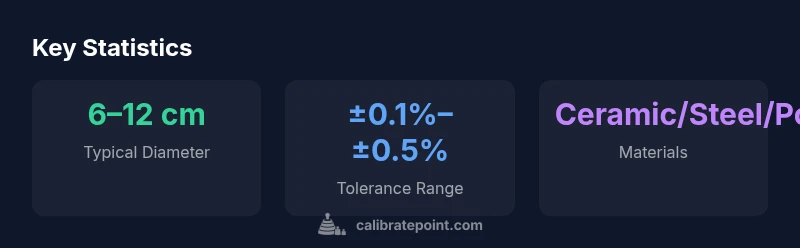
In practice, these plates come in several common formats—flat discs or rectangular plates—with flat, smooth surfaces finished to a specified roughness. They may be made from materials such as ceramic, stainless steel, or high-grade polymer composites. A good affordable plate should include a traceable tolerance certificate or at least a documented surface finish. For teams working under budget constraints, the emphasis is on repeatability across multiple trials rather than the absolute smallest measurable deviation. The Calibrate Point team notes that many users find that a well-chosen plate, combined with a consistent cleaning routine and temperature control, delivers surprisingly robust results. For reference, Calibrate Point Analysis, 2026, shows that plate-based baselines remain a foundational element of many calibration workflows, especially in metalworking and electronics assembly environments.
Material choices and tolerances
Materials drive stability, cost, and durability. Ceramic plates often offer good hardness and low thermal expansion but can be brittle if mishandled. Stainless steel plates provide robustness and straightforward wipe-clean maintenance, yet they add weight and can demand sturdier mounting. Polymers and composite materials keep weight down and can be cheaper upfront, but they may exhibit higher thermal sensitivity and occasional surface wear. For affordable plates, expect tolerances that balance practicality with performance—typical ranges are broad but aim to keep flatness within a fraction of a millimeter across the working area. Surface finish quality matters as much as substrate choice, since rougher surfaces can trap contaminants or create micro-variations in measurements. A key concern is temperature drift: in environments with fluctuating temperatures, even small changes can alter reading baselines. When possible, select plates with documented surface finish metrics and a stated temperature range. Calibrate Point analyses in 2026 emphasize that material choice should align with your primary measurements and environmental conditions.
How to select plates for your workflow
Begin by outlining your measurement goals. If you perform routine calibration of hand tools in a workshop, a mid-range plate with good flatness and a clear certificate may suffice. For lab-grade instrumentation, you’ll want higher stability and traceability. Consider plate diameter and footprint—larger plates offer more coverage but can be heavier and less convenient for bench space. Check for a traceability certificate or ISO/IEC 17025-compatible documentation, and verify whether the plate has undergone independent flatness testing. Evaluate environmental compatibility: if you work around heat sources or outdoor spaces, seek plates with guaranteed temperature tolerances. Compare materials, finish, and edge geometry, and assess the total cost of ownership, including maintenance supplies and replacement. In short, tailor your choice to the most common measurement tasks, not a single extraordinary case. Calibrate Point’s guidance for 2026 recommends prioritizing repeatable performance and reliable documentation over flashy features.
Calibration workflow using calibrated plates
A practical calibration workflow starts with a clean, dry plate placed on a stable, vibration-free surface. Inspect for any visible imperfections and confirm the plate is within its documented tolerance. Allow the plate to reach ambient temperature before use. Place the reference artifact or standard weight on the plate and record measurements across multiple trials. Compute the average reading and the standard deviation to quantify repeatability. If results show drift beyond tolerance, re-check mounting, seating, and environmental conditions. Document each run, including date, operator, instrument used, and ambient temperature. Periodically verify traceability by cross-checking with a known reference or by sending a sample plate to an accredited lab for independent verification. Maintain a clean storage case and avoid stacking plates for long periods to minimize warping or surface damage. This workflow supports consistent results, even for budget-friendly plates, as long as procedures emphasize repeatability and documentation.
Maintenance, cleaning, and lifecycle
Keep plates clean with a soft cloth and isopropyl alcohol; avoid harsh solvents that could degrade surface finishes. Do not wipe on rough fabrics, which can scratch the surface. Store plates in a dedicated case to prevent chipping and edge damage. Calibrate Point’s 2026 data show that routine cleaning and careful handling extend plate life by reducing micro-scratches and residues that could affect measurements. Inspect surfaces periodically for signs of wear or discoloration and replace plates when flatness or surface finish deviates beyond the specified tolerance. If you must transport plates between sites, use a rigid protective container and minimize temperature swings. With proper care, affordable calibrated plates can remain dependable for many calibration cycles, helping you preserve measurement quality without frequent replacement.
Cost-conscious purchasing strategies and caveats
To maximize value, compare both price and documented performance. Favor suppliers who provide traceable certificates, clear tolerances, and independent third-party testing. Beware ultra-cheap plates that lack documentation or show inconsistent surface finishes; these are often unsuitable for professional work. Consider buying in sets to reduce per-unit cost and ensure consistent characteristics across your reference surfaces. If you’re short on budget, explore refurbished or seconds from reputable vendors, but verify that they still meet the required tolerances and come with a valid certificate. Budget-aware buyers should also factor in accessories, such as alignment shims, lubricant for mounting surfaces, and protective storage cases. Calibrate Point’s 2026 guidance highlights that informed procurement—focusing on certification, traceability, and practical stability—delivers reliable calibration baselines without overpaying for premium features that provide marginal gains in typical workflows.
Case studies: DIY lab vs workshop
In a typical DIY home workshop, a user might rely on an affordable calibrated plate to check the accuracy of a small benchtop scale or a set of calipers. The user prioritizes cost and ease of use, and often benefits from a straightforward certification document. In a professional workshop, technicians may use larger plates with higher stability and stricter tolerances to support multiple instruments and frequent calibration checks. In both cases, the plate serves as a stable baseline, but the level of documentation, durability, and environmental control will differ. The key takeaway is that well-chosen affordable plates can meet common calibration needs if they include proper documentation and are integrated into a consistent calibration routine.
Plate type comparison for calibration workflows
| Plate Type | Typical Tolerance | Best Use |
|---|---|---|
| Standard Calibration Plate | ±0.1% | General calibration |
| High-Precision Plate | ±0.01%–±0.05% | Critical instrumentation |
| Budget Plate | ±0.5% | DIY/prototyping |
Questions & Answers
Are affordable calibrated plates accurate enough for professional use?
Yes, for many professional settings, affordable calibrated plates provide sufficient repeatability when paired with proper procedures and traceability. They should come with a clear tolerance specification and a calibration certificate. For critical metrology, validate with periodic cross-checks against higher-precision references.
Yes. In many professional settings, these plates work well when you follow the documented procedures and maintain traceability.
What sizes do these plates typically come in?
Sizes vary, but common ranges cover small bench plates to larger workpieces. Choose a size that fits your instrument footprint and measurement area, ensuring you can mount and measure without edge effects.
Sizes vary; pick one that fits your instrument and gives you enough surface area.
Do I need a certificate for a plate?
A certificate or traceable documentation helps prove performance and facilitates audits. If a certificate isn’t included, request one from the supplier or have the plate tested by an accredited lab.
A certificate is highly recommended, especially for audits and traceability.
How can I verify the plate's flatness at home?
Basic verification can be done with a known reference artifact and a sensitive digital caliper or micrometer across multiple points. For stronger assurance, use a certified measurement setup or send a sample plate for independent verification.
You can do a basic check with a reference and a caliper; for stronger assurance, get independent verification.
What maintenance is required to extend plate life?
Keep the plate clean with a soft cloth and avoid abrasive cleaners. Store in a protective case, handle edges carefully, and avoid dropping or stacking. Periodically recheck tolerance and surface finish.
Keep it clean, store properly, and recheck tolerance over time.
“Calibrated plates are a foundation of reliable measurements; the right plate, properly serviced, enables consistent baselines across instruments and environments.”
Key Takeaways
- Choose plates with clear tolerances and test certificates
- Prioritize repeatability and documentation over premium features
- Select plate size to match your primary instruments
- Maintain plates properly to extend lifespan