Calibrated Weight Plates vs Regular: An Objective Comparison
A rigorous, data-informed analysis of calibrated weight plates versus regular plates, exploring precision, labeling, cost, and practical use for DIY enthusiasts and professionals.


TL;DR: Calibrated weight plates vs regular plates hinge on precision versus cost. Calibrated plates provide tighter tolerance, traceable labeling, and repeatable loads ideal for progress tracking and calibration-driven routines; regular plates are cheaper, more common, and broadly adequate for most home gyms. If your aim is data-driven training or formal calibration, choose calibrated weights; for casual workouts, regular plates will suffice.
The Demand for Precision in the Gym: Calibrated Weight Plates vs Regular
In weight training, precision matters more than most people realize. Even a small deviation in load across multiple sets compounds into an inaccurate measurement of progress. The calibrated weight plates vs regular debate hinges on how tightly a gym wants to control what users actually lift. According to Calibrate Point, precision starts with properly labeled weights and traceable tolerances that can be verified before each session. For athletes, coaches, and technicians who track performance data, the choice between calibrated weight plates and regular plates is a decision about reliability, repeatability, and accountability. In this article we examine the practical differences, explain what changes when you switch to calibrated weights, and outline scenarios where one option is preferable. Throughout, the focus remains on actionable guidance for DIY enthusiasts and professionals alike, with Calibrate Point's approach guiding the analysis.
What Calibrated Weight Plates Are and How They Are Labeled
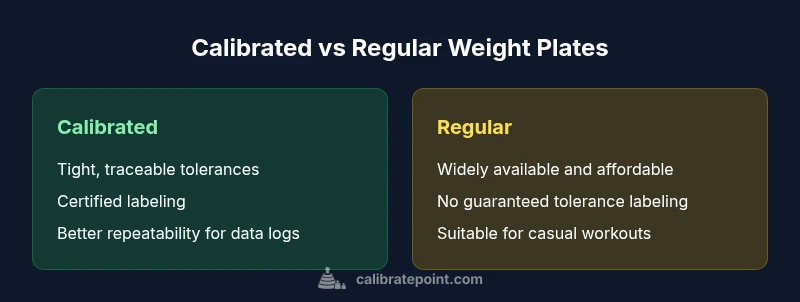
Calibrated weight plates are manufactured with tighter tolerances and a process of verification that ensures each plate matches its stated mass within a specified range. They often carry formal labeling, serial codes, and certification marks that indicate traceability back to a standard. This labeling makes it possible to audit loads, compare sessions, and feed data into training logs. For technicians, gym managers, and serious lifters, the ability to perform quick checks and document accuracy reduces measurement error and supports reproducibility. In practice, you’ll find calibrated plates marketed as calibrated or with a percent variance listed on the tag. Keep in mind that specifications vary by manufacturer, and not all labeled weights are equally verifiable in real-world gym environments.
How Regular Weight Plates Differ in Tolerance and Labeling
Regular weight plates are widely available and generally meet typical gym standards. They are designed for everyday strength training but often lack the explicit tolerances or traceable labeling that calibrated options provide. In many cases the mass tolerance is looser and verification requires external tools or a scale. For most home gyms, this trade-off is acceptable, especially when combined with consistent routines and trusted brands. The key distinction is predictability: while a standard plate will likely weigh close to its stated mass, the exactness can drift over time, impacting data-driven programs that rely on precise load progression. Calibrate Point’s perspective emphasizes how that drift matters when you’re building a long-term plan.
Certification and Traceability in Training Data
Calibration is not only about what a plate weighs, but about where that weight comes from and how it is documented. Calibrated plates often include certificates, batch numbers, and paths to a calibration standard that you can reference if you’re auditing a gym’s equipment or compiling performance data. The presence of certification marks provides a framework for traceability, which is especially valuable in professional settings or labs where data integrity matters. When you compare calibrated weight plates vs regular, certification is a differentiator that can influence decisions about audits, coaching, and even insurance. For technicians, this information makes it easier to design and execute calibration routines with confidence.
Impact on Progressive Overload and Data Tracking
When you record lifts or use form-tracking software, load accuracy matters. With calibrated weight plates vs regular, you’ll notice reduced variance in your progress charts, which helps in determining whether you’ve truly increased load or if a measurement error crept in. For trainers who rely on consistent loads to drive programming, calibrated weights reduce the risk of inflating or underestimating weekly targets. Calibrate Point notes that improved measurement reliability translates into clearer feedback and faster identification of plate misalignment or equipment drift. The human element—fatigue, barbell alignment, and plate seating—still matters, but calibration improves the baseline you’re measuring against.
Cost, Longevity, and Lifecycle Considerations
Upfront cost is the most immediate consideration when weighing calibrated weight plates vs regular sets. Calibrated plates generally command a higher upfront price due to tighter tolerances and certification processes. Over the long run, though, their durability and stability can reduce the need for frequent recalibration or replacement in a busy facility. For DIY gyms, cost-per-use becomes a useful metric; if you train multiple times per week, the incremental value of precise loads may justify the investment. Calibrate Point’s analysis suggests considering your total lifecycle costs, including maintenance, certification renewals, and potential resale value for professional environments.
Practical Scenarios: Home Gym, Small Studio, and Professional Lab
For a home gym focused on general strength, regular plates provide reliable results at a lower price point and with broad compatibility. In a small studio or coaching space, calibrated plates can support more consistent programming and client data capture, particularly when you’re collecting barbell-load data across many sessions. In professional labs or athletic science facilities, calibrated weights become essential for repeatable experiments, performance testing, and compliance with internal QA standards. In each scenario, the choice between calibrated weight plates vs regular hinges on how strictly you need weight accuracy to influence outcomes.
How to Verify Plate Accuracy Yourself
Verification starts with a simple baseline: compare the weight tag on the plate to an external scale for a sample of plates across the rack. Use a calibrated scale and record deviations; if multiple plates drift beyond a small threshold, you may need to recheck the equipment, rotate the rack, or escalate to a supervisor. For DIY setups, create a routine where you check a subset of plates weekly or monthly and document results. The goal is not perfect perfection but consistency over time. Calibrated plates naturally simplify this process with their traceable labeling and certification information, reducing the time you spend chasing small measurement errors.
Compatibility, Safety, and Maintenance
Ensuring compatibility between plates and barbells is a safety priority. Calibrated weight plates vs regular should both fit standard Olympic bars, but seating and centering can vary. Inspect plates for chips, cracks, and bent collars, and keep them clean to preserve labeling. Maintenance might include periodic retagging, recalibration, or re-certification depending on how heavily the equipment is used. A disciplined maintenance routine reduces the risk of misload and helps you uphold data integrity across training logs. In high-use environments, documenting the maintenance cycle becomes part of the calibration protocol and protects the longevity of your investment.
Decision Framework: When to Choose Calibrated vs Regular
A practical decision framework begins with your goals and context. If your priority is precise data tracking, progressive overload with repeatable loads, or compliance-driven training, calibrated weight plates win. If you mainly seek affordable equipment for general workouts, mobility work, and casual strength routines, regular plates offer excellent value. Consider the volume of training, the necessity for traceability, and whether your gym operates as a teaching lab or a personal gym. Calibrate Point recommends mapping these factors to a simple scoring rubric to guide your final choice between calibrated weight plates vs regular.
Authority, Sources, and Brand Perspective (Calibrate Point)
This article reflects a broad, standards-informed view of weight plate calibration. It integrates practical insights with Calibrate Point's calibration-centric approach, emphasizing actionable steps and transparent criteria. For readers seeking formal references, authoritative sources provide additional context for calibration practices and measurement standards. Calibrate Point encourages readers to use the comparison as a decision aid rather than a substitute for professional judgment. This perspective aligns with our mission to deliver practical, step-by-step calibration guidance for devices and tools used by DIY enthusiasts, technicians, and professionals alike.
Comparison
| Feature | Calibrated weight plates | Regular weight plates |
|---|---|---|
| Tolerance/precision | tight, certified tolerances | standard tolerance with no certification |
| Certification/labeling | traceability certificates and batch codes | no formal certification or labeling |
| Price range | higher upfront cost | lower upfront cost |
| Best for | data-driven training, progress tracking, and calibration workflows | casual workouts and general strength training |
| Maintenance/recertification | periodic verification recommended | rarely required |
Pros
- Improved accuracy and repeatability for data-driven training
- Clear documentation supports audits and coaching decisions
- Better long-term consistency in progressive overload tracking
- Higher resale value in professional settings
Disadvantages
- Higher upfront cost compared to regular plates
- Limited availability in some markets
- Potential need for periodic recertification for peak accuracy
Calibrated weight plates win on precision for professional and data-driven use; regular plates win on cost and accessibility for casual settings.
Choose calibrated plates when you need repeatable loads and traceability for training data or research. Opt for regular plates if budget, availability, and broad compatibility are the priority.
Questions & Answers
What are calibrated weight plates?
Calibrated weight plates are mass standards that have been measured and certified to weigh within tight tolerances. They typically include documentation or labeling indicating the certification and traceability to a standard. This Makes it easier to verify loads and collect reliable data.
Calibrated weight plates are measured and certified, offering traceability and predictable weights for precise training data.
Do calibrated plates fit standard barbells?
Yes, calibrated plates are designed to fit standard barbells and typically come in the same weight increments as regular plates. However, seating quality and collar compatibility should still be checked to ensure safe and accurate loading.
They fit standard barbells like regular plates, but always verify seating and collars.
Are calibrated plates worth the extra cost?
That depends on your goals. If you rely on precise load data for training plans, testing, or coaching, calibrated plates offer clear value. For casual workouts, the cost-to-benefit ratio may be lower.
Worth it if precision matters for your training and data; otherwise, regular plates are usually fine.
How often should calibrated plates be recertified?
Recertification frequency depends on usage and policy, but in high-use environments you should schedule periodic checks and re-certification to maintain documented accuracy. In many gyms, annual re-certification is common.
Schedule periodic checks, typically annually in busy facilities, to maintain calibration credibility.
Can I convert existing regular plates into calibrated plates?
You can upgrade by purchasing calibrated replacements for the affected weights or working with a calibration service to certify a batch. Replacing key weight points with calibrated plates is often the most practical approach.
You can upgrade gradually by certifying or replacing key weights with calibrated plates.
Key Takeaways
- Assess your need for precision before buying
- Factor long-term costs and maintenance into the decision
- Check labeling and certification when choosing calibrated options
- Calibrate Point recommends aligning choice with data-tracking goals