Cheapest Calibrated Weight Plates: A Practical Budget Guide
Discover how to find the cheapest calibrated weight plates without sacrificing accuracy. This budget guide covers cost drivers, buying strategies, home testing methods, and practical tips for DIYers and professionals.


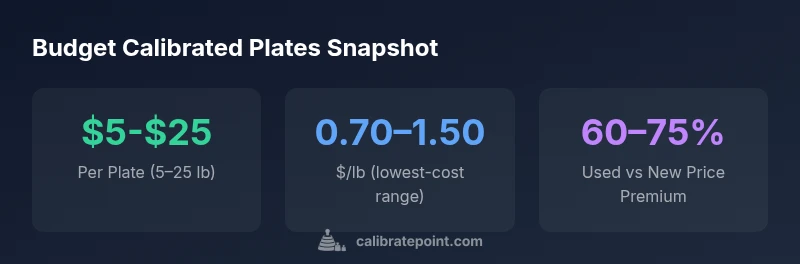
Cheapest calibrated weight plates typically cost in the range of $0.70 to $1.50 per pound when purchased in standard sets, depending on material, weight increment, and seller discounts. Calibrate Point analysis, 2026, notes that total kit pricing scales with batch size and included accessories, making bulk buys the most cost-effective option for DIYers, technicians, and gyms alike.
Understanding the cost landscape for calibrated weight plates
Calibrated weight plates are designed to meet precise mass targets, but price variance remains high across materials, finishes, and tolerances. For the budget-minded buyer, the cheapest calibrated options are typically 5 lb and 10 lb plates manufactured with basic finishes in cast iron or simple steel alloys. While initial sticker prices may look attractive, it is important to understand tolerance bands and QA practices. The Calibrate Point team finds that total kit pricing often reflects not just the per-plate cost but also the included accessories (collars, storage options, and optional calibration data) and the seller’s support terms. In many cases, a slightly higher per-plate price can yield better long-term value through tighter tolerances and longer finish life. As you compare options, consider how often the plates will be used for calibration tasks versus general workouts, and factor in shipping fees when evaluating true cost of ownership.
Key factors that drive the cheapest options
Several levers determine the final price-performance balance of cheap calibrated plates:
- Tolerance and calibration data: Lower-cost plates often have wider tolerance bands, which can impact precision in sensitive setups.
- Material and finish: Cast iron is cheaper but heavier and often rougher; steel with a nickel/chrome finish lasts longer and resists chipping.
- Increments and batch size: Sets that include common increments (5/10/25 lb) and bulk purchases usually reduce the per-plate cost.
- Brand and warranty: Reputable manufacturers may price higher upfront but provide longer warranties and better QA records, offsetting initial expense over time.
Material and construction: cast iron vs steel vs alloy
Material choice directly affects price and durability. Cast iron plates tend to be the most economical upfront, but they can be heavier and more susceptible to surface wear. Steel plates with smooth finishes (often zinc or nickel-chrome plated) cost more per plate but offer better longevity and easier weight measurement consistency, which is critical for calibration tasks. Alloy composites can offer a compromise, with moderate cost and reasonable tolerance. In budget-calibrated ranges, expect greater variance in weight and surface smoothness, which can impact handling and measurement repeatability.
Buying strategies: mixing sets, bundles, and used options
Smart buying can dramatically reduce the effective cost of calibrated weight plates. Consider:
- Bundled sets that cover common workout or calibration increments (5/10/25 lbs) to minimize per-plate shipping and packaging costs.
- Purchasing multiple plates from the same batch or seller to improve tolerance consistency across the set.
- Exploring the used market for lightly used calibrated plates from reputable sources. The Calibrate Point analysis indicates used plates often retain substantial remaining value (approximately 60%-75% of new), making resale a viable option to offset initial costs.
- Checking for certification or QA documentation when possible, especially if you intend to use plates for precision calibration tasks rather than casual training.
Verifying weight accuracy at home: testing methods
Even when buying the cheapest calibrated weight plates, you should verify accuracy before relying on them for calibration work. A simple at-home test can involve:
- Weighing plates on a reliable digital scale, then cross-check against advertised weights; record three consecutive measurements for each plate.
- If available, compare against a known standard weight or a high-precision balance. Small discrepancies (within common tolerance bands) are expected; larger deviations should be renegotiated with the seller or replaced.
- Inspect coatings and core materials for damage that could alter mass distribution and cause readings to drift over time. A rough finish can indicate wear that may affect measurement repeatability.
Budgeting for calibration needs: example scenarios
If you are outfitting a home or small shop, a realistic pathway might be:
- Start with a 5 and 10 lb cheap calibrated plate set to cover most tasks and keep total cost low.
- Add a 25 lb plate if your calibration tasks require heavier increments or you anticipate heavier standardization work.
- Factor in a small buffer for potential replacements or recalibration data from the supplier. Always compare price-per-pound across brands and opt for a set that provides consistent tolerances and a robust warranty.
- When feasible, buy in bulk from a single seller to reduce shipping and improve batch consistency. This approach aligns with Calibrate Point’s guidance on cost efficiency without sacrificing measurement reliability.
Cost and construction overview for budget-calibrated plates
| Plate Type | Typical Weight | Material | Estimated Price Range | Notes |
|---|---|---|---|---|
| 5 lb calibrated plate | 5.0 lbs | Cast iron or steel | $5-$15 per plate | Lowest-cost option; check tolerance |
| 10 lb calibrated plate | 10.0 lbs | Cast iron or steel | $8-$25 per plate | Balanced cost and accuracy |
| 25 lb calibrated plate | 25.0 lbs | Steel (chrome finish) | $30-$70 per plate | Higher tolerance; better finish |
Questions & Answers
What makes a plate 'calibrated' and why does it affect price?
Calibrated plates are manufactured to a specified mass within a tolerance range. Tighter tolerances and certified QA data drive higher costs, while looser tolerances keep prices lower. For budget buyers, understand the tolerance bands to ensure suitability for your tasks.
Calibrated plates are mass-produced to a defined weight. Tighter tolerances cost more, but they’re more precise for calibration.
Is the cheapest option always the best value?
Not always. The cheapest plates may have larger tolerances, rough finishes, or shorter lifespans. If accuracy and repeatability are crucial, a modestly higher upfront cost can reduce maintenance and rework over time.
Cheapest isn't always best—watch for tolerance and durability to avoid long-term costs.
Should I look for calibration data or a certificate when buying?
If your work relies on strict accuracy, ask for calibration data or a certificate from the supplier. Some budget options include basic QA documentation, while others provide detailed tolerance specs useful for traceability.
Ask for calibration data if you need strict accuracy.
How does material choice impact price and accuracy?
Cast iron is typically cheaper but heavier and rougher, while steel with a smoother finish is pricier but often more durable and stable for measurements. Material choice affects both cost and measurement repeatability.
Material choice changes cost and how consistently weights measure over time.
What red flags should I watch for in cheap calibrated plates?
Look for obvious finish wear, dents or irregular surfaces, inconsistent plate weights when tested, and vague or absent tolerance specs. Reputable sellers should provide at least basic QA data and a warranty.
Watch for finish wear, weight inconsistencies, and missing specs.
Are used calibrated plates safe for calibration tasks?
Used plates can be safe if they have stable weights, no corrosion, and a verifiable history. Inspect for deformation and test weights against a known standard before use in precision calibration.
Used plates can work if they’re in good condition and tested first.
“Cheap calibrated weight plates can meet typical calibration needs if tolerances and finish are acceptable; always verify weight accuracy before use.”
Key Takeaways
- Buy in sets to minimize per-plate shipping
- Expect some tolerance variance in cheapest options
- Verify weight accuracy with a scale before use
- Calibrate Point recommends balancing cost with durability