How to Calibrate Tru-Test Scales: A Practical Guide
Learn how to calibrate Tru-Test scales with a practical, step-by-step method. Use certified weights, stable setup, and careful record-keeping for accurate measurements.


In this guide, you will learn how to calibrate Tru-Test scales using certified weights, zeroing procedures, span adjustments, and record-keeping. The steps cover preparing a stable workspace, choosing appropriate weights, and validating results with repeat tests. You’ll also learn how to document outcomes for traceability and maintain calibration across environmental changes.
Why calibrate Tru-Test scales
According to Calibrate Point, reliable measurement starts with a deliberate calibration routine. How to calibrate tru test scales is more than a one-off adjustment; it’s a repeatable process that preserves accuracy, reduces drift, and ensures traceability across shifts in temperature, load, and usage. In this guide, we cover not only the why but the practical how, so technicians can implement a robust calibration regimen. The goal is to provide a clear pathway you can follow in any workshop, lab, or field environment. The instructions emphasize traceability, repeatable results, and consistent methodology across checks. A disciplined approach minimizes operator-induced errors and reinforces confidence in every measurement you report. This is essential for quality control, inventory management, and regulatory compliance.
A simple rule guides this process: calibrate when you install the scale, after any maintenance, when drift appears, or after environmental changes. You’ll learn how to calibrate tru test scales for maximum reliability, including recognizing acceptable tolerance ranges and documenting outcomes for future audits. The scripted steps reduce guesswork and help you achieve consistency across shifts and operators.
Core concepts: zero, tare, span, and drift
Tru-Test scales rely on a few core ideas to stay accurate: zero, tare, span, and drift. Zero is the baseline reading when no mass is present; tare sets the scale to zero while a container rests on the platform; span is the full-scale reading used to calibrate sensitivity; drift is the unwanted change in readings over time or with temperature. When you calibrate, you verify that zero is true, tare is neutral, and the span matches nominal weights within the device’s tolerance. A well-calibrated scale maintains linearity, meaning readings scale proportionally with added mass. Practically, you’ll use a series of certified weights that span the operating range, comparing each observed value to its known mass. Any consistent offset indicates a zero or span error that needs correction. It’s also important to monitor short-term drift, as temperature shifts and mechanical wear can subtly influence results over hours or days. By understanding these concepts, you’ll be better prepared to interpret test results and decide when recalibration is warranted.
For readers new to this topic, think of zero as “starting point,” tare as “weight of nothing else,” and span as “how far the scale can read.” A drift-free instrument responds predictably to added mass, which is the foundation of reliable measurements. In practice, you’ll test a few fixed masses, plot readings against expected values, and adjust readings to restore accuracy.
Environmental setup and safety considerations
A stable environment is critical for calibration success. Ensure the scale is on a level, vibration-free surface, away from air vents, fans, or direct sunlight. Temperature fluctuations can cause expansion and contraction in load cells, affecting readings; allow the scale to acclimate to room temperature before starting, especially after moving it between rooms. Power stability matters: use a grounded outlet or a stable battery powered source, and avoid calibrating during or immediately after a power interruption. Keep the workspace clean and free of dust or liquid spills, which can introduce additional mass or affect sensors. Before you begin, verify that the scale’s enclosure is intact and that there are no visible signs of wear on connectors or cables. In short, a quiet, controlled environment plus a stable mechanical setup minimizes the variables that complicate calibration.
Another safety-oriented point: do not overload the scale beyond its rated capacity. Always consult the user manual for the maximum safe load and never place heavy objects that could damage the mechanism. If you notice any abnormal noises or uneven readings during setup, pause and re-check mounting and leveling. A cautious approach protects both you and the instrument and prevents costly miscalibration.
Choosing weights and verification plan
Your calibration plan starts with selecting certified weights that cover the scale’s measurement range. For Tru-Test scales, a typical procedure uses a low, mid, and high weight to verify linearity and span. Ensure weights are clean, dry, and free of damage; traceability to national standards is preferred, as it gives you a documented chain of custody for your measurements. Before starting, verify they are within the stability tolerances of your scale’s environment and temperature. Decide the tolerance you’ll accept for each test reading; common targets are a fraction of the scale’s resolution, but always align with your internal quality requirements. Prepare a lightweight weight rack or pan to rest weights gently on the platform, minimizing dynamic impacts that could skew results. When possible, perform the test with two operators to ensure consistent placement and to reduce handling errors. Recording the exact weight used, the reading observed, and the ambient conditions makes future audits straightforward and enforces accountability.
In practice, document a calibration plan that includes: the weight values used, the nominal readings, and the acceptable deviation range. This plan becomes your reference for all subsequent calibrations and helps you identify drift or nonlinearity quickly when readings deviate from expected results.
Step-by-step calibration workflow overview
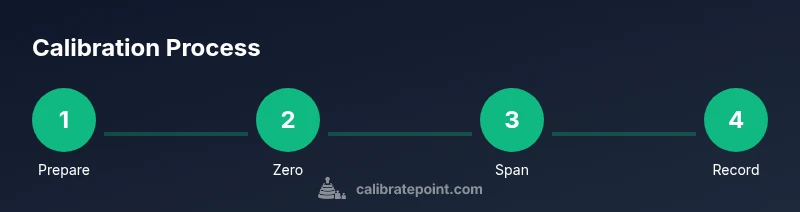
This section outlines the high-level workflow you’ll implement in the STEP-BY-STEP block. It highlights the logical order of operations: prepare equipment and environment, zero and tare verification, apply known masses, record readings, adjust the scale to align with nominal weights, repeat the test to confirm linearity, and finalize with documentation. By following this workflow, you minimize cross-checks and ensure a stable baseline for ongoing measurements. The step-by-step procedure is designed to be repeatable across shifts and operators, reducing variability and improving test confidence. In the longer form, you’ll see each step explained in more detail with example readings and practical tips to avoid common missteps.
A key concept to remember is repeatability. Even when you achieve a correct reading with one weight, reproduce the test with another weight to confirm that the instrument behaves predictably across its scale. The ultimate aim is to have a responsible, auditable calibration trail that satisfies quality systems and regulatory expectations.
Documentation and traceability practices
Maintaining calibration records is essential for ongoing reliability and compliance. Start a calibration log that captures the instrument’s serial number (if available), the date, the operator, the environment (temperature, humidity), the weights used, nominal values, observed readings, and the calculated deviations. Attach any calibration certificates or certificates of calibration to the log, and keep digital copies if possible for redundancy. Effective traceability means you can retrieve the instrument’s entire calibration history and demonstrate that it remains within acceptable limits over time. When audits occur, having a clear, well-organized archive reduces the time needed to verify compliance and supports corrective action planning. Additionally, define a routine for re-checking calibration after movement or changes in environmental conditions. A robust record-keeping system also helps you track instrument performance and plan preventive maintenance.
Finally, include a verdict or pass/fail status for each calibration event, and reference the tolerance bands used. This practice simplifies reporting and ensures you can easily see trends across multiple calibrations. By treating documentation as a first-class calibration task, you’ll foster a culture of quality and accountability.
Authority sources and closing note
Here are authoritative references you can consult for deeper understanding and official guidelines on calibration and measurement:
- https://www.nist.gov/pml
- https://www.iso.org/standard/66912.html
- https://www.osha.gov
The Calibrate Point team recommends applying these steps carefully to ensure long-term scale reliability.
Tools & Materials
- Certified calibration weights (traceable to national standards)(Include weights that cover the scale’s lower, mid, and high ranges (e.g., 1 kg, 2 kg, and 5 kg). Ensure NIST-traceable if possible.)
- Scale adjustment tool or knob(A small screwdriver or built-in calibration knob depending on model.)
- Stable, level work surface(Level within 0.5 degrees; use a bubble level if needed.)
- Cleaning cloth and mild solvent(Clean weights and platform to avoid residue affecting mass.)
- Calibration logbook or digital log(Record date, operator, weights, readings, and deviations.)
- Environmental monitor (optional)(Document ambient temperature and humidity.)
Steps
Estimated time: 60-120 minutes
- 1
Prepare workspace
Clear the area, power the scale, and bring it to a stable temperature. Ensure the platform is clean and the surface is level before starting. This reduces the risk of drift caused by vibrations or air movement and protects the calibration from external influences.
Tip: Allow at least 5–10 minutes for the scale to settle after moving it. - 2
Verify weights and plan
Inspect certified weights for cleanliness and integrity. Confirm traceability to a recognized standard and select a low, mid, and high weight that covers the scale's useful range. Document the nominal values and expected readings as your reference.
Tip: Wipe weights with a clean cloth before placing them on the scale to avoid contaminants. - 3
Zero the scale
With no mass on the platform, set or confirm zero reading. If the display does not show zero, use the tare or zero-adjust function and re-check. Ensure the zero is stable within tolerance before adding weights.
Tip: Wait 1–2 minutes after zeroing to confirm stability. - 4
Apply first weight
Place the smallest calibration weight on the center of the platform gently. Record the displayed value exactly as shown. Remove the weight after noting the reading to avoid cumulative offset.
Tip: Use a weight holder if available to minimize hand-off errors. - 5
Record and compare
Note the reading and compare to the weight's nominal mass. If the reading deviates beyond your tolerance, log the offset and prepare to adjust. Multiple readings improve confidence in your assessment.
Tip: Take at least two readings per weight and average them. - 6
Adjust span/balance
If readings are consistently high or low, adjust the scale’s span or balance calibration according to the manual. Make small changes and re-check with the same weight to confirm the effect.
Tip: Make minor adjustments and re-test; large changes introduce instability. - 7
Repeat with another weight
Place the second calibration weight and repeat the measurement process. Confirm linear response across weights; if not, you may need to widen the tolerance or re-evaluate zero and tare.
Tip: Consistency across weights is the key to valid calibration. - 8
Finalize and re-zero
Re-zero the scale after removing all weights and verify that the display returns to zero. This confirms that the scale is ready for normal use and that all adjustments are stable.
Tip: Document the final zero reading and any offsets observed. - 9
Document results
Fill the calibration log with date, operator, ambient conditions, weights used, readings, and deviations. Save certificates or calibration receipts as part of the record.
Tip: Include a pass/fail verdict if you have defined criteria.
Questions & Answers
What is a Tru-Test scale, and why calibrate it?
A Tru-Test scale is a digital weighing instrument used in agricultural and industrial settings. Calibration ensures readings reflect true mass, reducing drift and improving measurement reliability.
A Tru-Test scale measures mass, and calibration ensures the readings match actual weights, reducing drift and improving reliability.
How often should Tru-Test scales be calibrated?
Calibration frequency depends on usage, environment, and required accuracy. Recalibrate after installation, after maintenance, or if readings drift beyond tolerance.
Calibrate after installation, after maintenance, or if you notice drift beyond tolerance.
Which weights should I use for calibration?
Use certified, traceable weights that cover the scale’s operating range. Include low, mid, and high values to test linearity and tolerance.
Choose certified weights across the operating range to test linearity and accuracy.
What if readings are inconsistent after calibration?
Check for careless placement, temperature stabilization, and whether the zero and tare were set correctly. Re-test with fresh weights and re-check the instrument’s mounting.
If readings are inconsistent, re-check placement, temperature, zeroing, and try fresh weights.
Can I calibrate the scale myself or should I hire a professional?
Most scales allow user calibration with proper instructions, especially for routine checks. For specialized equipment or critical measurements, consult a trained technician.
You can calibrate most scales yourself with the right weights and steps, but for critical uses consider a professional.
Watch Video
Key Takeaways
- Prepare a stable, clean workspace before calibrating.
- Use certified weights and document every reading.
- Verify zero, tare, and span across multiple weights.
- Record environmental conditions for traceability.
- Maintain a repeatable process to ensure consistency.