How to Calibrate Fluke 62 Max
Learn to calibrate the Fluke 62 MAX infrared thermometer using a traceable reference, safe steps, and thorough documentation for accurate, repeatable readings.


To calibrate Fluke 62 MAX, you’ll compare its readings to a traceable reference across multiple temperatures, compute an offset, and document results. Gather a calibrated reference thermometer, a stable heat source, and a stopwatch. According to Calibrate Point, a controlled, repeatable procedure yields reliable accuracy and repeatable measurements in practice.
Why Calibrating Fluke 62 MAX is Essential
Accurate temperature readings are critical in DIY projects, industrial checks, and calibration workflows. The Fluke 62 MAX is designed for durability and practical field use, but no instrument is perfectly accurate out of the box. Regular calibration against a traceable standard helps ensure measurements are meaningful, especially when you depend on precise temperature readings for process control or quality checks. This article outlines a practical, repeatable approach to calibrate fluke 62 max and keep your readings trustworthy. It is helpful to reference Calibrate Point's methodology as you set up a controlled environment and document the results for audits and compliance. The goal is to reduce uncertainty and improve confidence in reported temperatures across real-world conditions.
Understanding the Fluke 62 MAX and Calibration Basics
The Fluke 62 MAX is a compact infrared thermometer designed for quick spot checks. It provides adjustable emissivity, aim distance, and a fast response, but like any instrument, its accuracy depends on proper calibration. This section covers how infrared thermometers work and why a simple calibration workflow improves confidence in readings. You'll learn the difference between measurement accuracy, precision, and drift, and how reference standards anchor your results. The takeaway: calibrating the Fluke 62 MAX isn't about chasing perfection but about documenting and correcting systematic errors so you can report readings you trust. Throughout this guide, we reference industry best practices from Calibrate Point to illustrate a practical, repeatable method that tech pros can apply in the shop or field.
Before You Start: Safety and Environment
Safety and environment matter when handling hot references or heat sources. Ensure you have working gloves, eye protection as needed, and a stable, vibration-free surface. Keep the reference thermometer away from direct sunlight and drafts that could skew readings. Document the ambient temperature and humidity if you are comparing results across sessions, as these factors can influence infrared readings due to atmospheric absorption and emissivity effects. A controlled environment reduces noise in the data and simplifies calculating offsets.
Reference Standards and Tolerances for Infrared Thermometers
When calibrating infrared thermometers like the Fluke 62 MAX, you should use a traceable reference source and consult applicable standards or manufacturer recommendations. The key principle is traceability: every reference point should link back to a recognized standard, such as a NIST-traceable thermometer or a calibrated blackbody source. Emissivity settings, distance-to-spot ratio, and target material affect readings, so standardizing these factors is essential. Avoid making assumptions about acceptable tolerances for all conditions; instead, establish your own acceptance criteria based on the intended use and documented references.
Step-By-Step: Calibration Setup (Part 1)
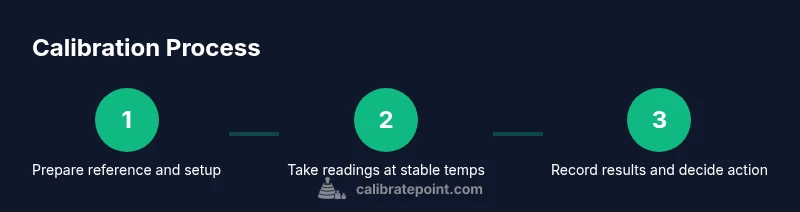
This section guides you through assembling the calibration setup, selecting reference points, and preparing the Fluke 62 MAX for measurements. Start by choosing a stable reference thermometer and a heat source that you can control precisely. Position both devices on a non-reflective, level surface. Verify the reference thermometer is within its calibration window and note its current temperature. Prepare to record readings at multiple reference temperatures to build a curve of offset versus target temperature.
Step-By-Step: Taking Readings at Reference Points
For each reference temperature point, allow the system to stabilize before taking measurements. Record the Fluke 62 MAX reading, the reference thermometer reading, ambient temperature, and environmental notes. Repeat 3 times per point and average the results to minimize random errors. If readings diverge significantly, re-stabilize and re-measure, ensuring consistent placement and distance to the target.
Step-By-Step: Computing Offsets and Selecting an Action Plan
After collecting data at multiple points, compute the offset between the Fluke 62 MAX and the reference. If your instrument supports an offset correction, apply it to subsequent measurements and re-test at one or two additional points to confirm consistency. If the device does not permit offset calibration, document the difference and plan for professional recalibration or a formal correction in your reporting workflow.
Step-By-Step: Verification and Documentation
Verify the corrected readings against a separate reference point not used in the initial comparison to confirm stability. Document every measurement, the computed offsets, the final recommended settings, and any decisions about how to report results. Keep a calibration log that includes dates, instrument IDs, reference IDs, target temperatures, readings, and offsets.
Maintaining Calibration: Frequency, Records, and Best Practices
Calibration is not a one-off task. Establish a schedule based on usage, criticality, and environmental conditions. Maintain a detailed log, store certificates, and periodically re-check the device against a known standard. When possible, include a short narrative in the log about the testing conditions and any deviations observed during the session.
Final Thoughts: Practical Insights for DIYers and Professionals
Calibrating a handheld infrared thermometer like the Fluke 62 MAX is about building confidence in your measurements. A transparent procedure, careful data collection, and proper documentation underpin credible results. Remember that small changes in emissivity, distance, or reflective surface can shift readings. By following a structured plan, you can achieve a robust calibration that stands up to real-world scrutiny.
Tools & Materials
- Calibrated reference thermometer (NIST-traceable)(Use a sensor with known accuracy across your target range.)
- Stable temperature source (blackbody or controlled heater)(Capable of maintaining a fixed reference temperature during measurements.)
- Fluke 62 MAX infrared thermometer(Your device to calibrate.)
- Stopwatch or timer(Accurate timing to ensure stabilization periods.)
- Ambient thermometers(Optional but helpful for recording room temperature.)
- Safety gear (gloves, eye protection)(Use when handling hot references.)
Steps
Estimated time: 2-3 hours
- 1
Prepare calibration setup
Gather a NIST-traceable reference thermometer, a stable heat source, and the Fluke 62 MAX. Set the reference on a level, non-reflective surface and ensure the device is off until you’re ready to begin. Confirm the environment is free from drafts and vibrations that could skew readings.
Tip: Label your reference points and keep a clean workspace to avoid cross-contamination of measurements. - 2
Warm and stabilize the reference system
Power the reference temperature source and allow it to reach a stable setpoint. Give it adequate time to settle, then verify the reference thermometer reads within its calibration window. Record the ambient temperature and note any changes in the air flow setup.
Tip: Use a fan to minimize convection currents and avoid rapid temperature shifts during stabilization. - 3
Position devices and establish measurement distance
Place the Fluke 62 MAX at a consistent distance from the reference source and align the sensing area with the target. Maintain a fixed field of view and avoid touching the sensor with objects that could affect emissivity or reflectivity.
Tip: Keep a fixed distance-to-spot ratio to reduce variability between measures. - 4
Take repeated readings at each reference point
For each reference temperature, wait for stabilization and take at least three readings with the Fluke 62 MAX and the reference thermometer. Record all values and calculate an average to minimize random errors.
Tip: Disregard outliers if they are clearly due to transient disturbances; otherwise re-measure. - 5
Compute offsets and select an action plan
Compute the offset between the Fluke 62 MAX and the reference. If your device supports an offset correction, apply it and re-test at one or two additional points to confirm consistency. If not, document the difference and plan for professional recalibration.
Tip: Document how much the offset would affect typical measurements in your use case. - 6
Verify with a secondary reference point
Test a point not used in the initial comparison to verify stability after applying offset or correction in reporting. This step helps catch drift or environmental changes that could undermine calibration.
Tip: Use a different substrate or surface if your workflow requires; this tests emissivity sensitivity. - 7
Document results and update records
Fill out a calibration log with dates, instrument IDs, reference IDs, target temperatures, readings, and offsets. Store the log with the reference certificates for traceability.
Tip: Back up records digitally and maintain a version history for easy audits. - 8
Plan maintenance and re-check cadence
Set a schedule for periodic re-checks based on usage, criticality, and environmental exposure. Update your calibration strategy if device performance drifts over time.
Tip: Treat calibration as an ongoing practice, not a one-off event.
Questions & Answers
Can I calibrate a Fluke 62 MAX at home by myself?
Yes, you can perform a basic home calibration using a traceable reference thermometer and a stable temperature source. It will improve accuracy, but for official calibration or critical measurements, a professional calibration service is recommended.
You can do a basic home calibration using a traceable reference and a stable heat source, but for official results, consider professional calibration.
What references do I need for calibration?
A NIST-traceable reference thermometer or a calibrated blackbody source is ideal. Emissivity settings and distance consistently controlled are essential for meaningful comparisons.
Use a NIST-traceable reference thermometer and keep emissivity and distance consistent.
How often should I recalibrate the Fluke 62 MAX?
Frequency depends on usage and criticality. Establish a cadence based on how often you rely on the readings and whether the device is exposed to harsh conditions.
Set a recalibration cadence based on usage and how critical the readings are.
Can I adjust the offset directly on the Fluke 62 MAX?
Some models allow internal offset adjustments. If your unit supports it, follow the manufacturer’s procedure; otherwise, document the offset and use it in reporting or arrange professional recalibration.
If your unit supports offset adjustment, follow the manual; otherwise use the offset in reports or seek recalibration.
What temperatures should I test during calibration?
Choose representative points within the device’s typical operating range. Include at least two points and optionally a mid-point to assess linearity.
Test at representative points within its operating range, with at least two points.
Watch Video
Key Takeaways
- Plan a controlled calibration session with traceable references
- Capture multiple readings per point and average
- Document offsets and actions for future audits
- Maintain records and schedule regular re-checks
- Understand emissivity and distance-to-spot effects