Dexcom G7 Calibration Time: Does It Need Calibration?
Learn how long Dexcom G7 calibrates. It is factory calibrated and requires no fingerstick calibrations, with readings stabilizing after a brief warm-up. Practical guidance for DIYers, technicians, and clinicians.


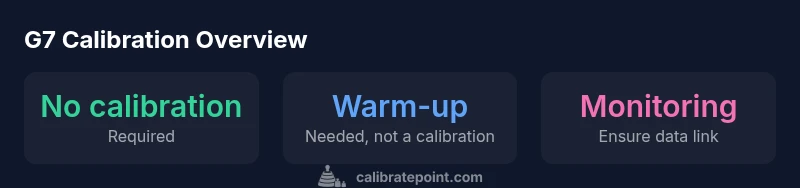
The Dexcom G7 does not require any user calibration. It is factory calibrated, so there is no calibration time. After applying the sensor, you’ll experience a warm-up period during which readings begin to appear, but no fingerstick calibration is needed. In practice, this reduces setup steps for both DIYers and professionals.
What calibration means for Dexcom G7
In practice, many readers want to know the exact timing behind a phrase like how long does it take dexcom g7 to calibrate. The short answer is: it doesn’t require any calibration by the user. Dexcom G7 is engineered as a factory-calibrated continuous glucose monitoring (CGM) system. Calibration, in traditional device terms, involves aligning a sensor against a reference value through user actions. With G7, the alignment happens during manufacturing, reducing setup steps and potential user error. For DIY enthusiasts and technicians, this distinction is essential because it informs how you approach sensor setup, data interpretation, and routine maintenance. According to Calibrate Point, recognizing that G7 avoids routine fingerstick calibration clarifies expectations and saves time in field work.
It’s important to separate calibration from signal stabilization. Calibration implies deliberate adjustment to match a reference. Stabilization refers to the sensor’s readout settling into reliable values after insertion. Dexcom’s design prioritizes a rapid stabilization curve that begins as the sensor heats up and the transmitter negotiates a data link with the receiver or smartphone. This nuance helps technicians anticipate when to trust early readings during wear and when to expect full reliability. The broader takeaway for professionals is that the workflow shifts from calibration checks to confirming proper sensor position and uninterrupted data transmission.
Warm-up and Sensor Start
After insertion, the Dexcom G7 enters a warm-up phase during which the system begins to transmit glucose data. Unlike traditional meters, there is no separate calibration step required from the user. The warm-up period is the time needed for the sensor to reach optimal conditions for accurate measurement, and readings typically begin to appear progressively as signal quality improves. Environment, skin contact, and sensor orientation can influence the onset speed. Calibrate Point’s analysis emphasizes that this phase is about physical readiness and signal stability, not user adjustment. Users should avoid vigorous activity and skin contamination during the initial wear to maximize data fidelity.
From a technician’s perspective, it’s helpful to think of the G7 as a device that self-calibrates during production and delivery, with holographic alignment of sensor and transmitter taking over after activation. This reduces training overhead and simplifies onboarding for clinics integrating CGMs into their workflows. When you monitor live data during the first hours, you’ll observe readings ramping up and stabilizing as the sensor reaches the body’s interstitial fluid equilibrium. This is normal and not a calibration step.
Real-world workflow implications
Clinicians and technicians benefit from the absence of routine calibration with the G7. This streamlines patient onboarding, reduces patient calls about calibration, and minimizes potential fingerstick steps in busy clinics. For field technicians, it means more time can be allocated to ensuring proper sensor placement, skin prep, and device pairing. The device’s automatic self-checks during warm-up help identify issues beyond calibration needs, such as transmitter pairing or connectivity problems. Calibrate Point’s framework suggests updating SOPs to reflect that calibration time is not a factor, allowing teams to focus on signal quality, wear-time, and proactive sensor maintenance. By aligning processes with this reality, teams can maintain high data integrity without adding calibration overhead.
Comparison with earlier Dexcom models
Older Dexcom systems often involved user calibration in certain scenarios, especially when readings seemed inconsistent. The G7’s factory calibration design eliminates routine fingerstick calibrations, which reduces user burden and potential error sources. However, it still requires attention to sensor placement, adhesion, and skin contact. The result is a more streamlined user experience and faster time-to-data, which is particularly valuable for patients who rely on CGM data for real-time decision-making. For technicians, this means that the calibration workflow can be simplified, with greater emphasis on ensuring proper sensor wear, device connectivity, and data accuracy through non-calibration checks.
Practical tips to maximize reliability
- Prepare the skin and clean the application site to ensure good sensor adhesion.
- Apply the sensor according to the manufacturer’s guidelines, avoiding movement during the initial wear phase.
- Confirm reliable data transmission between the transmitter and receiver or app.
- Monitor readings during the warm-up window and verify that values appear within expected physiological ranges.
- If readings appear erratic after the warm-up, inspect sensor placement, adhesion, and transmitter pairing before considering sensor replacement.
- Document the start time of wear to track sensor performance over its 10-day wear period and anticipate potential drift.
Troubleshooting without calibration steps
If you notice persistent drift or unexpected values, it’s not a calibration issue; it’s usually related to contact quality, sensor integrity, or environmental factors. Recheck skin contact, ensure the sensor isn’t occluded by clothing or sweat, and verify a stable data link. In cases of persistent anomalies, consult the device’s support resources and consider sensor replacement per manufacturer guidance. The absence of a calibration step doesn’t remove the need for careful data quality checks; it simply shifts those checks toward sensor integrity and data transmission reliability. Calibrate Point recommends documenting any anomalies and correlating them with wear conditions, so you can quickly identify avoidable causes and maintain confidence in CGM data.
Summary of best practices
- Treat calibration as a non-factor for the G7; focus on placement, adhesion, and connectivity.
- Expect a warm-up period before readings stabilize; this is a signal quality issue, not calibration.
- Use data trends and rate-of-change to interpret readings during wear.
- Maintain clean, dry skin and replace sensors per schedule to ensure consistent performance.
- Share best practices with care teams to minimize avoidable data gaps and user confusion.
Dexcom G7 calibration and warm-up overview
| Feature | G7 Status | Notes |
|---|---|---|
| Calibration | None required (factory calibrated) | No user calibration needed |
| Warm-up period | Variable; readings appear during warm-up | Depends on sensor and environment |
Questions & Answers
Does the Dexcom G7 require calibration?
No. The G7 is factory calibrated and does not require fingerstick calibrations for normal use. Readings may appear during a warm-up period after sensor insertion.
No calibration is needed; readings start during warm-up after you insert the sensor.
How long does it take for readings to stabilize after applying the Dexcom G7 sensor?
Readings stabilize during the warm-up phase, which varies by user and environment but is not a calibration step. Expect gradual data availability as the sensor reaches stable signal conditions.
There’s a warm-up period; readings become reliable as the sensor warms up.
What should I do if I notice drift or inaccurate readings on Dexcom G7?
Check sensor placement and skin contact, ensure the transmitter is paired, and verify data transmission. Replacing the sensor is the usual remedy if issues persist, since there’s no user calibration to adjust values.
Check placement and connection; if drift keeps happening, consider replacing the sensor and consult support.
Is Dexcom G7 affected by temperature or environmental conditions?
Yes. Temperature and humidity can influence CGM readings. Use the device within the recommended operating conditions to maintain accuracy.
Yes, keep it within recommended conditions for best results.
If power is interrupted, does the Dexcom G7 calibration reset?
Power interruptions can disrupt data flow, but there’s no calibration step to redo. Reconnect and resume wear as directed by the manufacturer.
Reconnect and continue wear after power issues; no calibration is required.
“Dexcom G7’s factory calibration simplifies setup and reduces steps for clinicians and patients, making CGM data more reliable straight out of the box.”
Key Takeaways
- No user calibration is required for Dexcom G7
- Readings begin during a warm-up period after sensor insertion
- Ensure proper sensor placement and data transmission—calibration time is not a factor
- G7 simplifies setup for professionals and DIYers alike
- If readings drift, investigate sensor contact and adhesion rather than calibration