Act Acknowledge Calibrate Transform: Practical How-To Guide
Learn a reliable, repeatable calibration workflow by acting, acknowledging baseline conditions, calibrating with precision, and transforming performance across tools and devices. This guide walks through steps, safeguards, and documentation for DIYers and professionals alike.


In this guide you will learn how to act, acknowledge, calibrate, and transform a tool or device to achieve reliable performance. You’ll verify baseline conditions, collect measurements, apply adjustments precisely, and validate results. Before you start, gather the calibration references, safety gear, and a clean workspace to ensure repeatable outcomes.
The Act-Acknowledge-Calibrate-Transform framework
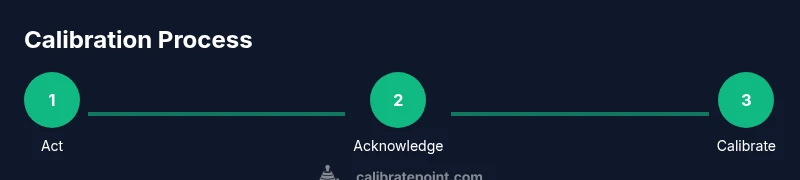
Calibrating anything—whether a precision instrument or a consumer tool—benefits from a clear, repeatable framework. The sequence act, acknowledge, calibrate, transform helps you structure every session so outcomes are traceable and repeatable. In practice, you begin by defining the objective (act), then you capture the current state and assumptions (acknowledge), perform targeted measurements and adjustments (calibrate), and finally verify results and apply the improvements (transform). According to Calibrate Point, starting with a clear action framework improves calibration outcomes and reduces guesswork across technicians and DIYers. This method supports consistent results, regardless of the device or skill level, and it builds a record you can audit later for quality control and continuous improvement.
In real-world settings, act means setting a precise goal and selecting the reference standard or tolerance you’ll use. Acknowledge requires documenting baseline readings, environmental conditions, and any known sources of error. Calibrate is where you perform measured adjustments and recheck frequently to avoid drift. Transform encompasses validating performance against the target specification and deploying the improvement as a standard practice for future sessions. The language is deliberately simple: you act with intent, acknowledge facts, calibrate with data, and transform practice into reliable outcomes.
The Act-Acknowledge-Calibrate-Transform mindset
The four steps are not a one-time ritual but a repeatable mindset. By framing calibration work with act, acknowledge, calibrate, transform, teams can track decisions and justify changes. This mindset reduces ambiguity, supports transparent decision-making, and makes it easier to train new technicians or DIY enthusiasts. When you adopt this model, you’ll find it easier to communicate changes, maintain calibration logs, and justify recalibration when drift emerges. The approach also aligns with broader quality management principles that emphasize evidence-based adjustments and documented validation.
What qualifies as a 'transform' in calibration
Transform means more than a one-off tweak. It implies an evidenced improvement that is retained and applied to future sessions. Transform could include updating calibration procedures, revising tolerance bands, creating checklists, or implementing automated validation scripts. The goal is to move from reactive tweaks to proactive, documented standards that sustain performance over time. When you can demonstrate that a transformation yields repeatable results, you’ve built a foundation for ongoing reliability and confidence in your tools.
Prerequisites for a successful session
Before you begin, assemble the right context: a clean, stable workspace; access to the device’s reference standards; appropriate personal protective equipment; and a method to record observations. It’s also essential to define success criteria and acceptance tolerances. Without clear criteria, you might calibrate to a moving target. By setting objective, verifiable goals upfront, you improve the odds of a successful transformation that endures beyond a single session.
Summary of outcomes you should expect
After completing the act-acknowledge-calibrate-transform cycle, you should have: a documented baseline, a validated adjustment record, a confirmed post-calibration reading within tolerance, and a formal log that supports traceability. This approach makes it easier to reproduce results, share procedures with teammates, and sustain performance over time. The key is to maintain discipline in measurement, documentation, and verification across every calibration task.
Tools & Materials
- Calibration reference standard(Traceable to a known standard; bring a spare if possible)
- Measuring instruments (calipers, micrometer, or laser gauge)(Selected based on device tolerance; ensure calibration of tools themselves)
- Personal protective equipment (safety glasses, gloves)(Protective gear as required by the task and environment)
- Clean workspace and lint-free towels(Reduce particulate contamination and measurement errors)
- Calibration logbook or digital notebook(Record readings, references, and actions for traceability)
Steps
Estimated time: Total time: 45-90 minutes
- 1
Prepare the workspace
Set up a clean, stable workspace with all tools within arm’s reach. Confirm environmental conditions (lighting, temperature if specified by the standard) and ensure your reference standard is ready. Document the initial state before touching the device.
Tip: Double-check that the device is powered off and unplugged if applicable. - 2
Check baseline conditions
Record initial readings and tolerances from the tool or device. Note any known sources of drift or error (e.g., temperature, vibration). This baseline will anchor all subsequent adjustments.
Tip: Use a secondary instrument to verify the first reading when possible. - 3
Select and verify the reference
Choose the appropriate calibration reference aligned with the target tolerance. Verify its own calibration status and documentation before proceeding.
Tip: If the reference is outside its own tolerance, replace or recalibrate it first. - 4
Apply controlled adjustments
Make incremental adjustments based on measured deviations. Record each adjustment and the corresponding reading to maintain a transparent trail.
Tip: Avoid large, sudden changes; small steps reduce overshoot and error. - 5
Re-measure and confirm
Take multiple measurements after each adjustment to confirm repeatability. Ensure readings cluster within the target tolerance range across trials.
Tip: Use the same measurement technique for consistency. - 6
Document results and plan follow-up
Summarize the final readings, adjustments, and acceptance status. Schedule a follow-up check or recalibration window if drift is likely.
Tip: Store a copy of the calibration log with device metadata.
Questions & Answers
What does the 'act' step require in calibration work?
Act defines the calibration objective and selects the reference standard. It sets the scope and acceptance criteria to guide every subsequent action.
Act defines what you’re aiming to achieve and which standard to use, guiding all steps.
Why is acknowledging baseline conditions important?
Acknowledging baseline readings helps you understand drift sources and build a repeatable measurement plan. It prevents guessing about device state.
Knowing the starting point helps you track progress and catch drift early.
How should I document calibration results?
Record readings, adjustments, references, and environmental factors in a dedicated log. Include timestamps and the person performing the calibration for traceability.
Keep a detailed log of readings, steps taken, and who did the calibration.
What safety considerations are essential?
Follow standard safety protocols for the device and environment. Use PPE, secure loose components, and power down equipment when required.
Always observe safety rules and wear protection when calibrating.
How often should recalibration occur?
Recalibration intervals depend on device usage, criticality, and drift history. Establish a schedule based on risk assessment and manufacturer guidance.
Set a recalibration schedule based on use and risk, then stick to it.
Can I calibrate without a reference standard?
A reference is essential for traceability. If unavailable, postpone calibration or use a known-good surrogate with documented uncertainty.
Never calibrate with no reference; use a proper standard or postpone.
Watch Video
Key Takeaways
- Act with a clear objective before calibrating
- Acknowledge baseline conditions to anchor measurements
- Calibrate in measured, repeatable steps
- Transform results into written, auditable procedures