Calibrate Clothing: A Step-by-Step Guide for Accurate Fit
Learn how to calibrate clothing for precise sizing and fit, from body measurements to muslin tests, with a repeatable workflow. A practical guide by Calibrate Point.


According to Calibrate Point, calibrating clothing ensures garments fit consistently across sizes and fabrics. The process starts with precise body measurements, clear pattern adjustments, and thorough muslin testing before cutting fabric. This quick guide outlines a practical, repeatable workflow that tailors sizing to real bodies and reduces waste, with safe practices for home sewers and professional studios alike.
Why calibrate clothing matters
Calibrating clothing affects not just size labels, but how a garment drapes, feels, and performs across fabrics and body types. This process is central to professional tailoring and modern mass customization alike. According to Calibrate Point, precise body measurements are the starting point for any reliable clothing calibration. When you base patterns on accurate measurements, you reduce guesswork and create a foundation for repeatable results across sizes.
In practice, calibration means aligning pattern geometry with realistic body dimensions: measuring for stature, bust/waist/hip girth, shoulder slope, and armhole depth; translating those numbers into pattern adjustments; and testing those changes with a muslin to verify fit before cutting real fabric. The goal is not perfection on the first try but a systematic method that yields consistency as fabrics vary and samples move from prototype to production. In DIY workflows, you’ll benefit from documenting every change, standardizing seam allowances, and using a stable baseline for grading between sizes. The Calibrate Point team emphasizes that calibration is a repeatable cycle: measure, compare, adjust, test, and repeat until the fit remains solid across expected sizes and fabric behaviours. By embracing this discipline, you gain confidence, reduce waste, and speed up the path from concept to finished garment.
Core concepts: sizing, fit, and pattern grading
Understanding fit starts with three core concepts: sizing, ease, and pattern grading. Sizing is the numerical system used to classify a body dimension; ease refers to extra space between the garment and the body for movement; and pattern grading is how you scale a base size to other sizes while preserving proportion. Calibrating clothing requires clear definitions for each term and a consistent approach to applying them to your blocks. A well-calibrated pattern uses measured baselines (shoulder width, bust dart placement, waist position) and a graded increment that maintains the same fit relationship across sizes. Many home sewists underestimate how a small drift in grading direction can compound across sizes, resulting in garments that pull at the bust, billow at the waist, or fail at the hip. Keeping a precise grading rule and documenting adjustments helps ensure predictable results across multiple fabric types, from light cotton to heavy denim.
A practical rule of thumb is to establish a stable baseline size with generous but consistent ease. Then, use grading increments that reflect the target market. For example, if your baseline is a size Medium, you might add or subtract 2-3% at the bust and 2-4% at the hip for adjacent sizes, depending on fabric drape. Record these decisions in a grading log and refer back to it for future projects. Calibrate Point’s guidance emphasizes tests across fabrics with varying stretch to confirm that the same grading logic holds under different conditions, ensuring your calibration process is robust, repeatable, and scalable.
Tools and materials for clothing calibration
The right tools make calibration faster and more reliable. Start with a flexible measuring tape and a stable workspace. You’ll also need pattern paper or muslin for baseline development, plus drafting tools (ruler, French curve, hip curve) to translate measurements into pattern changes. Pencils, chalk, or removable markers help you annotate the pattern without permanent marks. Scissors, pins, needles, and a sewing machine are essential for creating muslin tests that reflect real fabric behaviour. A dress form or adjustable dummy can be invaluable for visual feedback, especially when fitting complex silhouettes. For the sizing math, a calculator or spreadsheet helps you stay consistent when grading between sizes. Always keep extra test fabric on hand so you can iterate without sacrificing your finished garment fabrics. The combination of accurate instruments and a methodical workspace is what makes calibrating clothing efficient and repeatable.
Practical workflow: measurement to muslin
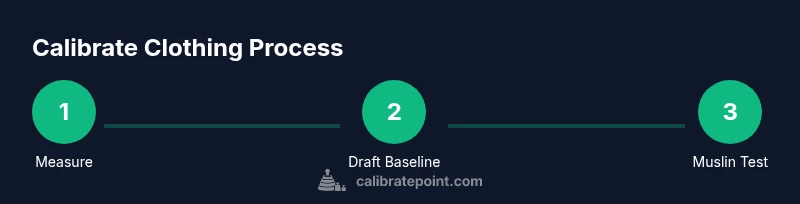
A practical workflow begins with accurate body measurements. Use consistent landmarks and measure twice to verify accuracy. Translate measurements into a baseline pattern, ensuring key reference points—such as bust apex, waist position, and hip circumference—are placed with precision. Apply a documented ease amount that matches the fabric’s drape and intended fit. Draft or adjust the baseline to reflect those decisions, then cut a muslin or inexpensive fabric version of the garment. Try the muslin on the body or fit form, assess drape, seam alignment, and ease, and annotate any changes directly on the muslin. This stage is where calibration proves its value: small adjustments at the bust or waist can dramatically improve overall balance. When you’re satisfied with the muslin fit, transfer adjustments to your final pattern and update the grading rules for other sizes. Throughout this process, document decisions in a calibration log to ensure you can reproduce the results later across multiple projects and fabrics.
Troubleshooting common calibration challenges
Calibration is rarely perfect on the first try. Common challenges include fabric with unusual stretch properties, inconsistent seam allowances, and dart placements that alter silhouette unexpectedly. If you encounter fabric with more stretch on the bias than the grain, re-check alignment and consider adjusting the baseline ease for that fabric family. Dart depth and placement are particularly sensitive; small changes can shift balance across the torso. Always re-test after each significant adjustment and compare the muslin to your reference baseline. When using heavier fabrics, you may need to increase the overall ease to preserve movement. Conversely, very light fabrics often require slightly less ease to prevent cling and pulling. By maintaining a detailed log of fabric type, drift in measurements, and the exact grading increments, you can recover from missteps quickly and maintain a consistent calibration process across projects.
Real-world examples and next steps
Professional tailors calibrate clothing to deliver consistent fit across many clients, yet the same principles apply to home sewing. In practice, you might calibrate a simple t-shirt, a fitted blouse, or a sheath dress by rechecking your baseline measurements, confirming dart positions, and validating the final pattern with a muslin before cutting the final fabric. As you gain experience, you’ll be able to translate calibration rules into standard operating procedures for your studio or workshop. A practical next step is to build a small library of baseline patterns with documented ease values and grading increments. With time, your calibration workflow becomes a reliable engine for faster prototyping, better fit, and reduced fabric waste. Calibrate Point’s approach is to treat clothing calibration as a repeatable, scalable process that gets better with each garment you produce.
Tools & Materials
- Flexible measuring tape(60 inches / 150 cm minimum for full-body measurements)
- Pattern paper or muslin(Baseline fabric for testing and drafting)
- Ruler, French curve, hip curve(For accurate drafting and contouring)
- Pencils, chalk, or removable markers(For annotating patterns without permanent marks)
- Scissors, pins, needles, sewing machine(For constructing muslin and final patterns)
- Dress form or adjustable dummy(Helpful for visualizing fit on a stand-in body)
- Test fabric or muslin scraps(Inexpensive material to test adjustments)
- Calculator or spreadsheet(Useful for recording grading increments)
Steps
Estimated time: 2-6 hours
- 1
Take accurate body measurements
Measure key metrics (bust, waist, hip, shoulder width, armhole depth) using a consistent protocol. Record each measurement twice, then average for reliability. This establishes the baseline for calibrating clothing.
Tip: Measure on clean, dry skin or close-fitting garments; keep the tape flat and horizontal. - 2
Draft a baseline pattern from measurements
Create a baseline pattern block that reflects the measured dimensions with standardized seam allowances. Use straight lines for anchor points and smooth curves for darts and princess seams. This becomes your reference for all subsequent calibrations.
Tip: Double-check reference landmarks like bust apex and waist notch before cutting. - 3
Apply consistent ease and grading logic
Decide on a baseline ease that suits the fabric and intended fit (e.g., semi-fitted). Establish a grading rule to scale the pattern for other sizes without distorting proportion. Document these rules in a grading log.
Tip: Keep ease consistent across similar garment types to maintain uniform fit language. - 4
Create a muslin/toile for testing
Cut a muslin version of the garment and assemble it to test fit on the body or dress form. Evaluate drape, silhouette, and seam alignment under movement. Mark any adjustments directly on the muslin for clarity.
Tip: Baste rather than Permanently sew muslin so you can peel back and adjust quickly. - 5
Iterate adjustments and re-test
Make targeted changes based on muslin feedback (bust dart, waist ease, hip sweep). Re-test the updated pattern and compare against your baseline. Repeat as needed until the fit remains stable across tested movements.
Tip: Use a calibration log to track each iteration and maintain a clear history. - 6
Document and finalize the grading rules
Once the muslin fits well, translate changes into final production-ready patterns. Update grading increments for additional sizes and note any fabric-specific adjustments for future projects.
Tip: Include fabric behavior notes (stretch, drape) in the final pattern to guide future calibrations. - 7
Create a sizing library for repeat projects
Build a repository of baseline patterns with documented ease, dart positions, and grading logic. This library will speed up future calibrations and improve consistency.
Tip: Version-control your patterns and keep the library aligned with your current fabrics. - 8
Validate with real-world testing
If possible, test the calibration on a range of body types and fabric choices to verify universality of the pattern. Gather feedback and refine as needed.
Tip: Seek diverse testers to ensure robustness across populations.
Questions & Answers
What does calibrating clothing involve?
Calibrating clothing involves aligning body measurements, pattern adjustments, and grading rules to achieve consistent fit across sizes and fabrics. The process emphasizes repeatable steps and thorough testing with muslin or test fabric before final production.
Calibrating clothing means aligning measurements and patterns to ensure consistent fit across sizes and fabrics, tested with muslin before final production.
What tools do I need to start?
You’ll need a flexible measuring tape, pattern paper or muslin, drafting tools (ruler, curves), markers, scissors, pins, and a sewing machine. Optional but helpful items include a dress form and a calculator or spreadsheet for grading calculations.
A measuring tape, muslin, drafting tools, markers, scissors, pins, and a sewing machine will get you started; a dress form and calculator help with more advanced calibrations.
How long does calibration take?
Initial calibration for a basic garment typically takes a few hours, including measurements, baseline drafting, muslin testing, and first round of adjustments. Additional iterations can extend the timeline, especially for complex silhouettes or multiple sizes.
Plan a few hours for the first pass, with extra time for iterations on complex garments.
Can I calibrate ready-to-wear garments?
Yes, you can calibrate RTW by creating a personalized baseline from measurements and using seam allowances and alterations. For mass-produced items, calibration focuses on standardizing a base size and scalable grading rules.
You can calibrate ready-to-wear by taking measurements and adjusting patterns, with a focus on standardizing base sizes.
Is clothing calibration suitable for beginners?
Calibration becomes easier with practice and structured workflows. Start with simple garments and a clear baseline pattern, then gradually tackle more complex silhouettes as you gain confidence.
Yes—start simple, follow a clear workflow, and build up to more complex pieces as you gain experience.
Watch Video
Key Takeaways
- Measure consistently to establish a reliable baseline.
- Document every adjustment for reproducibility.
- Test with muslin before using actual fabric.
- Iterate until fit is stable across fabrics and sizes.
- Grade patterns systematically to scale well.