How to Calibrate Shoes for an Accurate Fit at Home
Learn practical, step-by-step methods to calibrate shoes for a precise, comfortable fit. This guide from Calibrate Point covers tools, measurements, techniques, and safety tips for DIY calibration.


Goal: Learn to calibrate shoes for an accurate, comfortable fit. This guide covers choosing the right tools, measuring foot dimensions, and adjusting insoles and laces for optimal support. You'll learn to verify fit through walking tests, multi-point pressure checks, and safe, reversible tweaks—without damaging your footwear. These steps apply to everyday sneakers and performance shoes alike.
Why calibrating shoes matters
Calibrating shoes is a practical, hands-on way to optimize fit, comfort, and performance. When you calibrate a pair of shoes, you assess how your feet interact with the shoe's last, midsole, and insole so that pressure is balanced across the forefoot, midfoot, and heel. This is not about redesigning footwear; it's about customizing its current fit to your unique feet. For DIY enthusiasts and technicians, calibration reduces hotspots, slips, and fatigue during long days on your feet.
A precise fit matters for more than just comfort. Poorly calibrated shoes can contribute to blisters, in-grown nails, or altered gait patterns that place extra stress on ankles, knees, and hips. Over time, misalignment can aggravate conditions such as plantar fasciitis or Achilles tendinopathy. By calibrating shoes, you create a repeatable process to verify fit across different activities—walking, running, standing, and climbing. The Calibrate Point team notes that even small changes in tongue tension, insole thickness, or heel counter snugness can shift pressure maps significantly. When you treat calibration as part of routine footwear maintenance, you extend the life of your shoes and protect your feet.
In everyday practice, calibrated shoes empower you to shop with confidence, adjust older pairs without pricey repairs, and share reliable method with teammates or clients. The goal is not vanity but measurable comfort and durable performance. By following the steps in this guide, you’ll gain a reproducible workflow to calibrate shoes and verify improvements using simple tests and observations.
Key concepts: fit, volume, and support
To understand how to calibrate shoes, it helps to define three core concepts: fit, volume, and support. Fit refers to how well the shoe aligns with your foot length and width. If a shoe is too short or too narrow, you’ll experience crowding and pressure points. Volume describes the overall capacity inside the shoe—toe box height, forefoot depth, and the amount of space around the arch. A shoe with too little volume compresses the foot; too much volume invites slipping and instability. Support covers arch stabilization, heel counter rigidity, and midfoot lockdown. Proper support reduces fatigue and guides your gait.
When calibrating shoes, you’ll adjust these elements with practical tools like insoles, lace patterns, tongue padding, and even heel counters. Small changes in any of these areas can shift pressure distribution across the foot. The goal is to achieve even contact under the ball of the foot and heel while preserving enough room for toes to move naturally. Throughout this guide, you’ll see how to evaluate fit using simple tests and observations, while keeping safety and comfort as the top priorities.
The role of insoles, overlays, and lacing in calibration
Insoles alter the vertical stack height and arch support, which directly affects fit and comfort. Calibrating shoes frequently involves trying different insole thicknesses or adding/removing orthotic inserts to fine-tune arch height and pressure distribution. Overlays—thin material placed under the tongue or around the heel—can tighten or soften contact points without replacing the entire insole. Lacing patterns influence how the upper locks down the foot. Techniques like locking the lace at the midfoot or using a surgeon’s knot can improve heel stability and reduce slippage during activity.
As you calibrate shoes, document which changes produced the best improvements. A reversible approach (switching insoles or adjusting lacing rather than cutting material) lets you experiment safely without ruining the shoe. For athletes, precise insole placement can be the difference between a comfortable long run and early fatigue. Always verify that adjustments do not compress the toes or restrict blood flow; comfort is the ultimate test.
Tools and materials you’ll need (and why) for shoe calibration
This section highlights practical tools for calibrating shoes. Use a measuring ruler to capture foot length and width, a flexible tape measure for circumference, and tracing paper to map your foot’s outline. A caliper or digital foot gauge helps quantify thicknesses, while a notepad keeps your observations organized. Optional tools include a pressure-main or pressure-sensor pad if you have access to one; these provide a visual map of pressure distribution under the foot. Always use socks that replicate your usual wear to ensure measurements reflect real-world performance. Finally, keep a clean workspace and a small flashlight to inspect the shoe’s interior for hidden lumps or deformities.
Step-by-step overview of the calibration workflow
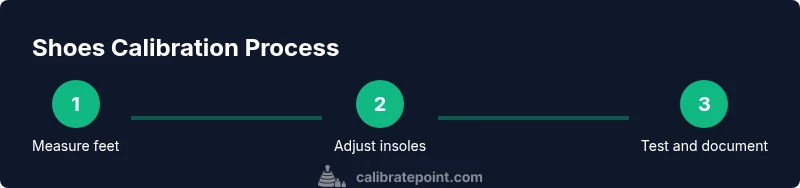
- Prepare your footwear and workspace. Clear a flat surface, remove dirt, and arrange your tools. This ensures stable measurements and reduces the risk of misreading margins. Tip: Keep shoes upright to avoid shifting the last during measurement.
- Measure length and width of the foot. Place the foot on a ruler or use a measurement card to note the longest toe length and widest point. Record both feet for comparison. Tip: Measure both feet; the larger one is your reference.
- Assess volume and arch height. Try to insert a finger between the shoe’s insole and its upper along the arch area. If your finger is hard to fit, the volume is likely low; if there’s extra space, you may need more depth. Tip: Use arch height measurement tools if available.
- Inspect heel fit and forefoot space. Walk a few steps while standing with weight on the midfoot. If the heel slips, adjust the heel counter or lace pattern. Tip: Use a heel-locking lace technique to improve stability.
- Modify insoles and test gradually. Swap thicknesses, remove or add inserts, and test gradually. Tip: Always test with the socks you plan to wear and ensure toe room remains comfortable.
- Test fit with real movement. Take short walks, jog slowly if appropriate, and monitor hotspots or discomfort. Document what changed and whether you felt improvement. Tip: Revisit measurements after a trial period to confirm stability. Estimated total time: 60-90 minutes
Detailed considerations for special footwear and foot shapes
People with high arches, wide feet, or orthotics present unique calibration challenges. High-arch feet often require additional arch support or slightly more fill under the midfoot; wide feet benefit from a broader toe box and carefully chosen lace patterns to avoid constriction. For children’s shoes, growth tolerance matters: allow a small amount of extra room and check regularly as feet grow. When working with orthotics, calibrate around the insert rather than removing it entirely; this preserves the alignment you’ve already established. For performance footwear, lighter insoles with precise arch height can translate into improved stability during dynamic movements. The core principle remains: calibrate shoes by testing real-world movement and adjusting gradually, documenting every change for reproducibility.
Safety, limitations, and when to seek professional help
Calibration is a practical skill, but it has limits. Never modify a shoe in a way that compromises structural integrity or safety, such as cutting the outsole or removing the heel counter beyond recommended tolerances. If you experience persistent pain, numbness, or numbness during activity, stop calibration and consult a clinician or a certified pedorthist. If you’re using custom orthotics, verify that all elements are compatible with your shoe’s size and lacing scheme to avoid constriction. Finally, remember that some shoe models are inherently limited in how much you can alter their fit; in those cases, replacing the pair might be the most effective solution.
Real-world calibration case study: sneakers vs performance shoes
Consider a casual sneaker and a lightweight performance runner. In the sneaker, calibrating shoes often centers on toe box space and replacing a thicker insole to address heel slip. For a performance runner, calibration emphasizes arch support and midfoot lockdown to support a fast, mid-to-long-distance stride. Each case benefits from a consistent measurement protocol: compare both feet, test with the intended socks, and log changes. As you complete these steps, you’ll build a repeatable process that delivers a more accurate fit and longer shoe life. The bottom line is that sensor-based tools can enhance calibration, but your own sense of comfort and stability remains key. By applying these methods, you can calibrate shoes effectively in diverse contexts.
Authoritative references you can consult
- Centers for Disease Control and Prevention (CDC): https://www.cdc.gov
- National Institutes of Health (NIH): https://www.nih.gov
- ScienceDirect (major publication platform): https://www.sciencedirect.com
These sources provide foundational information on foot health, biomechanics, and measurement methods that underpin practical calibration techniques. Use them to deepen your understanding and to verify any measurements you perform during the calibration of shoes.
Tools & Materials
- Measuring ruler (metric and/or imperial)(Minimum length to measure foot length; 15 cm or longer is ideal)
- Flexible tape measure(For foot circumference and width measurements)
- Foot tracing paper or tape(To map foot outline on a flat surface)
- Notebook and pen(To record measurements and adjustments)
- Extra insoles or orthotics (optional)(For testing different arch heights)
- Socks you normally wear(To replicate real-world fit)
- Scissors or utility knife (optional)(Only if you plan to trim insoles under guidance)
- Flat, clean workspace(Plenty of light and a hard surface)
Steps
Estimated time: 60-90 minutes
- 1
Prepare your workspace and shoes
Clear a flat surface, remove dirt, and arrange your tools. Ensure the shoes are upright to prevent last shift during measurement. Use a stable mat to avoid slips, and lay out a notebook for quick notes.
Tip: Keep a dedicated calibration area to avoid cross-contamination with other tasks. - 2
Measure length and width
Place the foot on the ruler or measurement card; note the longest toe-to-ball length and widest point. Record both feet for comparison, and mark dominant foot as reference if there’s a clear difference.
Tip: Measure with the socks you plan to wear for the most accurate fit. - 3
Assess volume and arch height
Slide a finger between the insole and upper near the arch to gauge clearance. If space is tight, you may need more volume; if the arch feels too close, adjust arch support or insoles accordingly.
Tip: Use arch-height tools if available to quantify height in millimeters. - 4
Check heel fit and forefoot space
Take several steps with weight on the midfoot and heel. If the heel slips, tighten the latch or switch to a heel-locking lace pattern to improve stability.
Tip: Lock-lacing is a quick fix to improve heel control without major changes. - 5
Modify insoles and test gradually
Swap insoles for different thicknesses, or add/remove inserts to alter arch height. Re-test with the same sock and movement pattern to compare results.
Tip: Document each change and compare notes against baseline measurements. - 6
Document results and adjust again if needed
Record outcomes in a calibration log, noting which changes yielded the best comfort and stability. If needed, repeat steps 2–5 to refine fit.
Tip: If discomfort persists, revert to a previous configuration and seek professional advice.
Questions & Answers
What does it mean to calibrate shoes?
Calibrating shoes means adjusting fit and support using insoles, lacing, and liners to achieve even pressure distribution across the foot. It’s usually a reversible, non-permanent set of changes you test and refine.
Calibrating shoes means adjusting fit with insoles and laces to spread pressure evenly. It's reversible and you test changes as you go.
Can I calibrate shoes at home?
Yes. With basic tools and careful testing, you can calibrate most everyday shoes at home. Start with measurements, then try different insoles and lacing patterns to find what feels best.
Yes, you can calibrate at home with basic tools. Begin with measurements and test insoles and lacing.
How long does calibration take?
Expect 60 to 90 minutes for a thorough home calibration, especially if you’re testing multiple insoles and lacing patterns. You can repeat sessions as you refine the fit.
Typically about an hour to an hour and a half for a thorough calibration.
What if my feet are unequal?
Treat the larger foot as the baseline for fit, then adjust the other foot accordingly. Focus on comfort and stability during movement, using symmetrical changes where possible.
If your feet aren’t the same, base your calibration on the larger foot and adjust for comfort on the other.
Do I need professional help for calibration?
Home calibration covers many cases, but persistent pain or unusual foot structure may benefit from a certified pedorthist or podiatrist. They can provide orthotic-specific guidance.
You can start at home, but seek professional help if pain persists or you have special orthotics.
Is the calibration permanent after wearing?
No. Calibration is adjustable and reversible. If you switch shoes or insoles, you’ll need to revisit the calibration steps to maintain accuracy.
Calibration isn’t permanent; you’ll need to revisit adjustments when changing shoes or inserts.
Watch Video
Key Takeaways
- Calibrate shoes to improve fit and comfort.
- Use reversible adjustments to test increments safely.
- Document measurements and outcomes for consistency.
- Arch height, heel stability, and toe space are key fit drivers.
- Special footwear requires tailored calibration strategies.