Calibrate Collision Sensors: A Practical Calibration Guide
Learn a practical, step-by-step method to calibrate collision sensors and ensure reliable trigger thresholds, safety, and repeatability across environments. This guide covers concepts, tools, safety, and maintenance for DIY enthusiasts and professionals.


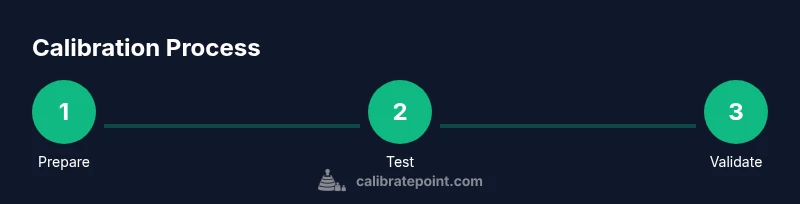
In this guide you will learn how to calibrate collision sensors and actuators to ensure consistent response thresholds, repeatable tests, and safer operation. You will need a test rig, measurement tools, and a stable power supply. The steps below outline a practical, repeatable method to calibrate collision sensing devices. Following these steps helps reduce false alarms and missed detections across environments.
What calibration means for collision sensing and why it matters
Calibration of collision sensing systems ensures that triggers occur only when intended and that responses are repeatable across different operational conditions. When you calibrate collision sensors, you align the device’s internal thresholds with real-world stimuli, account for system latency, and reduce drift over time. This is critical in automated lines, robotics, and safety-critical equipment where misfires can cause downtime or safety risks. A well-executed calibration provides a stable baseline, facilitates troubleshooting, and supports long-term performance tracking. In practice, calibration should be viewed as a lifecycle activity, not a one-time setup. The Calibrate Point team emphasizes that regular calibration cycles, aligned with usage and environmental changes, keep systems aligned with their design intent throughout 2026 and beyond.
Key outcomes of calibration include consistent trigger points, improved repeatability, minimized false positives, and better failure diagnostics. You should plan calibration around your device’s operating profile, including temperature ranges, vibration exposure, and load conditions. By documenting baseline measurements and test results, you create a reproducible method that technicians can follow across shifts and locations. This foundational step anchors all follow-up diagnostics and maintenance.
A practical approach begins with defining what “calibration” means for your specific collision sensing application—whether it’s a mechanical bump switch, an optical collision detector, or a capacitive sensor. From there, you establish criteria for success (e.g., acceptable tolerance bands, response delay limits) and set up a plan that can be repeated with consistent results. This mindset reduces ambiguity and improves collaboration among team members.
Core concepts: thresholds, hysteresis, latency, and repeatability
Collision sensing relies on precise thresholds that determine when a detected event should trigger. Thresholds must be set high enough to ignore minor disturbances but low enough to respond to genuine collisions. Hysteresis—using different thresholds for increasing versus decreasing stimuli—helps prevent chatter and oscillation when a sensor lingers near a decision point. Latency, the time between a stimulus and a response, must be characterized to ensure the system meets required timing specs, particularly in safety-critical contexts.
Repeatability measures how consistently the sensor responds to identical stimuli across trials. A high repeatability means that the sensor’s response is stable, regardless of minor environmental variations. To achieve repeatability, maintain consistent test conditions, document exact stimuli, and use calibrated reference devices during tests. In 2026, a disciplined approach to thresholds, hysteresis, and repeatability remains a cornerstone of effective collision sensing calibration. Calibrate Point emphasizes defining acceptance criteria early to avoid scope creep and ensure that validation tests are meaningful across devices and configurations.
Sensor types and how calibration differs
Collision sensing technologies vary in how they detect events, which affects calibration strategies. Mechanical bump sensors rely on physical contact; calibration focuses on contact force thresholds and debounce timing. Optical collision detectors use light interruption or time-of-flight data, requiring calibration of light intensity, ambient light compensation, and trigger levels. Capacitive sensors measure changes in electric fields, needing calibration for environmental moisture, temperature, and packaging parasitism. Each sensor type has unique failure modes; for example, a bumped bumper might need re-timing to avoid slow releases, while an optical sensor could suffer from stray reflections.
When calibrating, start with device-specific specifications and then validate against real-world stimuli that mimic actual use. Calibration should consider mounting orientation, cable routing, and nearby reflective surfaces that could alter sensor readings. The goal is to define a unified calibration workflow that can be adapted to the exact sensor family in use, while preserving cross-device comparability. In practice, converting performance targets into concrete test steps helps teams stay aligned and reduces interpretation errors during calibration sessions.
Environmental considerations and setup prerequisites
Environmental factors strongly influence collision sensing calibration. Temperature shifts can alter material stiffness, sensor sensitivity, and electrical characteristics. Vibration can introduce noise into measurements, and electromagnetic interference may distort signals. Before starting calibration, record ambient conditions and ensure a stable test environment. Use vibration isolation if required and keep power supplies well-regulated to minimize drift.
Prerequisites include a clearly defined test plan, calibrated reference instruments, a safe working area, and documented safety procedures. Ensure that all personnel are trained on proper lockout/tagout practices if you are calibrating equipment that could start unexpectedly. Having a clear test matrix that covers a range of temperatures, loads, and speeds helps ensure the calibration holds across typical operating conditions. Finally, ensure you have access to the device’s service manuals and any vendor-recommended verification procedures to avoid invalid calibrations.
Preparing your test rig and measurement plan
A well-prepared test rig is the backbone of reliable calibration. Start by mounting the sensor securely in a fixture that simulates actual operation. Use a calibrated actuator or controlled impact source to produce repeatable stimuli and measure the response with a data logger or digital multimeter. Define the baseline readings for zero-stimulus conditions and for a calibrated test stimulus that represents a typical collision event.
Document the exact stimulus parameters (force, duration, direction) and the corresponding sensor outputs. Create a test matrix that increments stimulus values in small steps while recording responses. This matrix helps identify the threshold sweet spot and ensures you do not overshoot the device’s tolerance range. Plan for multiple thermal cycles and vibration scenarios to verify that calibration remains stable under common environmental variations.
Implementing a safe, repeatable calibration routine
Safety is non-negotiable when calibrating collision sensing hardware. Power down all systems before connecting test fixtures, and use protective equipment as needed. Start with a planned baseline, then apply a controlled stimulus and record the sensor’s response. Adjust thresholds, hysteresis bands, and latency targets based on observed performance, repeating until readings align with acceptance criteria. Validate the final settings with multiple cycles to confirm repeatability.
As you calibrate, maintain a single source of truth for data—use a dedicated test file or database and timestamp every entry. If readings drift, reassess environmental factors and re-run the test matrix. Before finalizing, run a quick functional test that simulates end-to-end operation to ensure the calibration behaves as expected in real use. Document any deviations and capture the final configuration for future audits.
Documentation, traceability, and ongoing maintenance
Calibration is a living process. Maintain traceability by recording sensor model, serial number, firmware version, baseline values, and acceptance criteria. Store test data securely and version-control calibration procedures so that changes are auditable. Schedule regular re-calibration intervals based on device usage, environmental exposure, and criticality of the application. Use a change log to capture deviations and corrective actions taken.
Build a simple maintenance plan that includes retest triggers such as after major mechanical work, firmware updates, or relocation of the equipment. Regularly review calibration results against performance goals and adjust thresholds if necessary. By treating calibration as an ongoing program, you improve reliability, simplify audits, and support safer operation over the long term. The Calibrate Point methodology emphasizes clear documentation, repeatable test workflows, and proactive maintenance for sustained accuracy.
Tools & Materials
- Test rig or fixture(Rigid mount with vibration-isolated surface; compatible with sensor mounting points.)
- Calibrated force/impact tester or controlled impact source(Use a device with traceable calibration and known force profile.)
- Digital data logger or high-precision multimeter(Record sensor outputs with time stamps.)
- Calibration software or spreadsheet(Log test matrix, run calculations, and track thresholds.)
- Precision test weights or calibrated shims(Used to apply known loads for static tests.)
- Protective eyewear and PPE(Mandatory for all handling of test rigs.)
- Reference sensor or known-good sensor(Used to cross-check readings against a trusted reference.)
Steps
Estimated time: 1.5-2 hours
- 1
Prepare test rig and safety setup
Power down the system and secure the sensor in a fixture that mimics real operating conditions. Verify all connections and ensure the testing area is free of hazards. Establish a safe reset procedure before starting the calibration.
Tip: Double-check that test fixtures cannot move unexpectedly during the test. - 2
Identify sensors and mounting configuration
Document the exact sensor types, mounting orientation, and electrical wiring. Note any adapters or shields that could affect readings. This baseline information guides subsequent threshold and latency settings.
Tip: Take photos and annotate the mounting points for future reference. - 3
Set baseline thresholds per device specs
Review device documentation and set initial thresholds conservatively within the recommended range. Establish nominal latency targets and record them as a starting point.
Tip: Start with conservative thresholds to minimize false triggers during early steps. - 4
Apply controlled stimuli to trigger the sensor
Use the controlled impact source to produce repeatable collisions at defined forces and durations. Record the sensor's raw outputs and the exact stimulus parameters.
Tip: Use identical stimuli for each trial to ensure comparability. - 5
Iteratively adjust thresholds and hysteresis
Based on initial results, adjust high/low thresholds and hysteresis bands. Re-test with the same stimuli and compare results to the previous run.
Tip: Change one variable at a time to isolate effects. - 6
Validate repeatability across cycles
Run multiple cycles under varying environmental conditions (temperature, vibration) and verify stable responses. Confirm acceptance criteria across the dataset.
Tip: If variation exceeds tolerance, revisit environmental controls first. - 7
Document results and finalize calibration
Record final thresholds, latency, and hysteresis values. Save the calibration profile with device identifiers and firmware version for traceability.
Tip: Archive data and create a quick-reference sheet for operators.
Questions & Answers
What is calibration for collision sensors and why is it important?
Calibration aligns sensor thresholds with real-world stimuli, ensuring reliable triggers and repeatable results. It helps prevent false positives and missed detections, improving safety and uptime.
Calibration aligns sensor thresholds with real-world stimuli to ensure reliable triggers and repeatable results, reducing false alarms and misses.
Which sensors require calibration for collision detection?
Any collision-detection sensor that uses thresholds, latency, or hysteresis, including mechanical bump switches, optical interrupters, and capacitive detectors, benefits from calibration to maintain performance.
All common collision sensors, like mechanical bumps, optical, and capacitive detectors, benefit from calibration to maintain performance.
How often should calibration be performed?
Calibration frequency depends on usage, environment, and criticality. Establish a baseline and schedule periodic re-calibration, with immediate checks after major changes (mounting, firmware, or environment).
Set a baseline and re-calibrate periodically, especially after changes to the system or environment.
What are common signs of drift or calibration failure?
Inconsistent trigger points, increased false alarms, slowed response, or readings that drift with temperature or vibration indicate calibration drift and the need for retesting.
Drift shows as inconsistent triggers or drifting readings with environmental changes.
What safety steps should I follow during calibration?
Power down before wiring, use PPE, verify locks and restraints, and never place hands near moving parts during testing. Have an emergency stop accessible.
Power down, wear PPE, and keep hands away from moving parts. An emergency stop should be within reach.
Watch Video
Key Takeaways
- Define acceptance criteria before testing
- Use a controlled test matrix for repeatability
- Document baseline, thresholds, and results
- Validate across cycles and environmental conditions
- Maintain traceable calibration records