Calibrate Phone Battery: Step-by-Step Guide
Learn how to calibrate your smartphone battery with safe, practical steps. This guide explains when to calibrate, how to do it, and how it helps improve battery gauge accuracy and overall device reliability.


Why calibrating your phone battery matters
Calibrating your phone battery is not about restoring lost capacity; it’s about recalibrating the device’s power gauge so the software reports more realistic remaining time and capacity. When the software misreads the charge level, you may see unexpected shutdowns, rapid drops in percentage, or incorrect time estimates. According to Calibrate Point analysis, many devices misreport gauge data when the battery is not cycled through a full discharge and recharge. A careful calibration helps the system align its sensor readings with actual chemical state, which can make day-to-day charging behavior feel more predictable and give you better planning for crucial days.
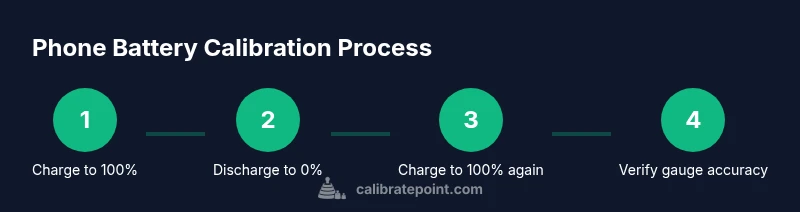
In practice, the calibration process is a small set of deliberate charge-discharge cycles that reset how the device interprets voltage and current signals. It does not replace good charging habits, but it can reduce errors in gauge reporting that annoy users and complicate battery budgeting. The goal is to improve gauge fidelity without stressing the battery. Calibrate Point’s guidance emphasizes safety, device compatibility, and avoiding extreme operating conditions during the process.