Power Meter Calibration: A Practical Step-by-Step Guide
Learn how to calibrate a power meter with a practical, safety-focused, step-by-step approach. This guide covers tools, references, setup, procedures, and documentation for reliable energy measurements.


You will learn how to calibrate a power meter using a traceable reference, apply known loads, record readings, and adjust the instrument to meet specified tolerances. The process emphasizes safety, proper setup, and thorough documentation. By following these steps, you’ll achieve reliable energy measurements and maintain calibration over time.
Understanding what calibrating a power meter means
Calibrate power meter means aligning the device's readings with a trusted reference so that measurements of real power, apparent power, reactive power, and power factor reflect true values within tolerance. For professionals relying on energy accounting, accuracy isn't optional—it's essential. According to Calibrate Point, calibration is not a one-off adjustment but a structured process that ties instrument performance to recognized standards through a documented procedure. The Calibrate Point team found that most drift arises from sensor aging, temperature effects, and non-ideal waveform conditions. In practice, calibration involves offset and gain adjustments, sometimes linearity checks, and, for higher-end meters, frequency-response verification. This approach provides a field-ready workflow that balances rigor with safety and efficiency, ensuring consistent results across common operating ranges.
Safety and prerequisites
Before starting any calibration work, assess risks and prepare the workspace. Power meter calibration involves exposure to live circuits and potentially dangerous voltages, so lockout-tagout procedures must be in place and all personnel should wear appropriate PPE. Verify that test equipment is rated for the expected voltages and currents, and keep the area dry and well lit. Ensure proper grounding, clean connections, and proper insulation on all cables. A written calibration plan reduces surprises and helps you stay compliant with safety standards. If anything feels uncertain, pause and seek supervision before proceeding.
Reference standards and traceability
Calibration must trace back to recognized standards to prove accuracy over time. Use calibration certificates from accredited labs and ensure those standards are current. Calibrate Point analysis shows that a robust traceability chain reduces measurement uncertainty and builds trust in results, especially when calibration affects energy accounting or billing. Record the reference source, calibration date, and the exact test conditions so audits can verify the chain of custody. This foundation supports quality systems and regulatory compliance and helps staff justify readings to customers or supervisors.
Test setup and reference loads
Create a test bench that delivers stable, clean signals with minimal waveform distortion. Select reference loads that cover the meter's operating range and impedance characteristics, ensuring you can reproduce conditions across multiple test points. Keep wiring short and well separated from power sources to minimize crosstalk; use properly rated cables and connectors. Verify that the load bank is configured correctly before energizing, and document the setup for repeatability in future calibrations.
Step-by-step overview (high-level)
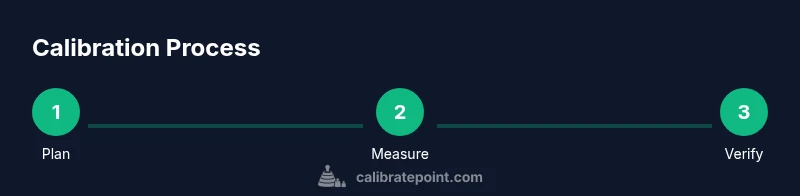
Calibrating a power meter follows a repeatable loop: establish a baseline, apply known loads, measure outputs, compute corrections, adjust the meter, and re-verify. The approach is modular, allowing you to add test points or refine procedures without starting from scratch. This overview helps you understand the rationale behind each action and the expected outcome at each stage, which supports consistent, auditable results across the instrument’s operating range.
Common pitfalls and how to avoid them
Common mistakes include not allowing stabilization after a load change, using uncalibrated auxiliary instruments, and neglecting environmental effects like temperature. Mismatched impedance, loose connections, and poor grounding frequently skew results. To avoid these, test at multiple load points, verify readings against a second reference when possible, and maintain a detailed log of every step, condition, and reading.
Interpreting results and documenting calibration
Interpretation hinges on comparing meter readings to the reference at each load point and checking against the device’s stated tolerance. When readings align, record the derived correction factors and update the calibration log. If discrepancies exceed tolerance, recheck connections, confirm reference accuracy, and re-run measurements. Create a calibration report that documents test conditions, outcomes, and personnel involved to ensure traceability and accountability. The Calibrate Point team emphasizes that good records are as important as precise measurements.
Maintaining calibration between intervals
Calibration is an ongoing practice, not a one-time event. Establish a schedule based on usage, criticality, and environmental conditions. Store references properly, retire outdated standards, and re-run tests after any equipment service or relocation. Regular audits, timely updates to records, and clear operator handoffs help sustain accuracy and reliability over time. Long-term success comes from disciplined maintenance and a culture of continuous improvement.
Standards, reports, and uncertainty budgets
Document uncertainty sources, including instrument resolution, reference stability, and environmental effects, and present an uncertainty budget in your calibration report. Follow applicable standards and adapt these concepts to your lab or field environment. The result is a transparent, auditable record that demonstrates how your calibration meets internal QA and external compliance requirements.
Advanced techniques and when to escalate
For advanced users, explore frequency response checks, harmonic content assessment, and temperature-stability studies to extend the calibration regime. When measurements exceed the meter’s rated capability or when uncertainty cannot be kept within tolerance, escalate to a higher-level calibration service or consult the standards body for guidance. The goal is to preserve measurement integrity under real-world conditions while avoiding over-fitting to a single test point.
Tools & Materials
- Power meter under calibration(Device to calibrate; ensure firmware is current)
- Reference load bank or calibrated resistive load(Capable of dissipating expected power and matching impedance)
- Calibrated AC source or stable power supply(Low-ripple source with known voltage/current)
- Precision multimeter or calibrated power meter for cross-checks(Traceable reading reference)
- Oscilloscope with probes(Waveform inspection; recommended for non-sinusoidal tests)
- Test leads, current clamps, and connectors(Rated for expected currents and voltages)
- Thermometer or temperature monitor(Record ambient and device temperatures)
- Safety PPE: insulated gloves, eye protection(Essential for protection)
- Calibration certificates or reference documentation(Keep traceability records)
Steps
Estimated time: 2-4 hours
- 1
Verify safety and prepare the environment
Confirm that power is isolated and the area is dry, clean, and well-lit. Review the meter’s manual and the data sheet for required test limits. Ensure lockout-tagout is applied and all personnel are aware of the calibration plan.
Tip: Always wear PPE and verify that test equipment is rated for the expected voltages. - 2
Connect reference loads and initialization
Connect the reference load bank and calibrated source to the power meter input, ensuring correct phase and wiring. Verify that all connectors are tight and that the load bank is set to a safe initial point before energizing.
Tip: Use short, twisted pair leads and avoid long, unshielded cables near power lines. - 3
Set baseline measurements
With no load, record the meter’s offset reading and confirm the baseline. Record voltage, current, and frequency, and ensure the waveform is clean. This baseline will anchor subsequent corrections.
Tip: Allow the system to reach thermal stability before recording baseline. - 4
Apply known load points and measure
Apply a defined load point using the reference load bank and record the meter’s readings for voltage, current, real power, and any other supported metrics. Repeat for multiple points across the operating range.
Tip: Wait the stabilization time specified by the equipment before recording. - 5
Compute and apply corrections
Compare the meter’s readings to the reference values and compute compensation factors. Enter these factors into the meter’s calibration constants or perform a factory-calibration procedure as appropriate.
Tip: Document each correction with date, operator, and test point. - 6
Re-verify and document
Re-measure at selected load points to confirm that readings now align within tolerance. Generate the calibration report, noting uncertainties and any deviations. Store the results securely for audits.
Tip: Cross-check with a second reference if possible to validate accuracy.
Questions & Answers
Why should I calibrate a power meter?
Calibration ensures readings reflect true electrical values within the device’s tolerance. It reduces drift, supports accurate energy accounting, and improves compliance with quality standards.
Calibrate power meters to ensure accurate readings and maintain compliance.
What safety precautions are essential?
Always de-energize before connecting test equipment, use personal protective equipment, and follow lockout-tagout procedures. Work with qualified personnel when dealing with high voltages.
De-energize and use PPE; follow lockout-tagout and work with qualified staff.
How often should calibration be performed?
Calibration frequency depends on usage, criticality, and environmental conditions. Establish a schedule and record results to justify the interval.
Set a regular calibration schedule based on use and environment.
What if readings exceed tolerance after calibration?
Re-check connections, confirm reference accuracy, and re-run measurements. If discrepancies persist, consider servicing the meter or consulting the manufacturer.
If outside tolerance, verify setup and consider service.
What standards should I reference?
Use manufacturer data, relevant IEC or ANSI guidelines, and traceable references. Document the standards used in the calibration report.
Reference manufacturer data and traceable standards.
Watch Video
Key Takeaways
- Calibrate power meter with traceable references
- Document every measurement and correction
- Follow safety-first calibration procedures
- Verify results across multiple load points
- Maintain a calibration log for audits