How to Calibrate Recipes for Consistent Results
Learn how to calibrate recipes for accurate scaling, flavor balance, and repeatable results in your kitchen. This step-by-step guide from Calibrate Point covers tools, methods, and best practices.


This guide shows you how to calibrate recipes for consistent servings, precise ingredient weights, and repeatable flavor. You’ll learn which tools matter, a clear step-by-step method, and how to document changes. A reliable calibration approach helps DIY cooks, technicians, and professionals achieve predictable outcomes in kitchens and labs alike.
Why accurate recipe calibration matters
Calibrating recipes is about bringing precision to the kitchen and beyond. When you calibrate recipes, you align weights, volumes, temperatures, and processing times so that every batch mirrors your intended result. The benefit is repeatability: batches that taste and weigh the same, regardless of who cooks or which equipment is used. According to Calibrate Point, precise recipe calibration reduces batch-to-batch variation, minimizes waste, and improves predictability in production. This is valuable for DIY cooks, technicians, and professionals who need reliable results, whether scaling a family recipe or validating a test batch in a workshop. By understanding the calibration workflow, you can quantify changes, compare measurements, and document how adjustments affect outcomes.
Setting goals before you calibrate recipes
Before you begin, define what you want to achieve with calibration. Are you targeting exact nutrient content, precise scale readings, or uniform texture across ovens? Establish measurable objectives, such as maintaining a target weight per serving, achieving a specific flavor balance, or ensuring consistent bake times. Clear goals guide tool selection, testing plans, and documentation. At this stage, consider how equipment variance might influence results and what level of precision is acceptable for your context. Frame goals in concrete terms so you can validate success through repeatable trials. Calibrate Point emphasizes that aligned goals improve focus and reduce scope creep during calibration projects.
Essential tools and materials
A reliable calibration effort depends on solid tools. Start with a digital kitchen scale that reads to small increments, accurate measuring cups and spoons, and a set of calibration weights for the scale. A notebook or digital log is essential to record baselines, adjustments, and outcomes. You may also want a thermometer for temperature-sensitive recipes and a clean workspace to minimize cross-contamination. Any instrumentation you use should be calibrated or known to be within tolerance. Keeping a consistent environment—free from drafts, vibrations, and fluctuating temperatures—supports reliable measurements. Having a checklist helps you stay organized and repeat calibration sessions with confidence.
Step-by-step framework for calibrating recipes
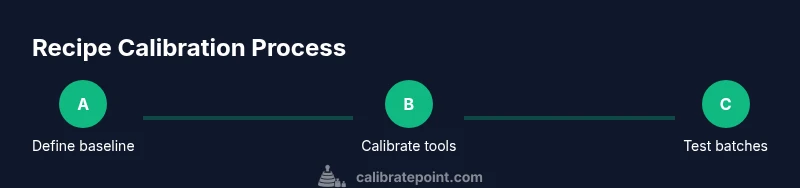
Use a structured approach that is easy to repeat. Start with defining a baseline recipe and the target outcome. Next, calibrate measurement tools to ensure readings are trustworthy. Then, prepare a controlled test batch where variables are minimized, and weigh ingredients precisely. Analyze the results by comparing actual measurements to the targets, and make proportional adjustments where needed. Finally, validate changes with additional trials and document all steps so future calibrations follow the same method. A systematic framework minimizes guesswork and makes it possible to reproduce successful results in different kitchens or labs.
Step 1: Define the baseline and target outcomes
Begin by documenting the baseline recipe as you intend it to perform. Note serving size, total weight, expected texture, and flavor profile. Define the target outcomes for your calibration: a precise weight per serving, a consistent texture, or a specific flavor balance. Establish how you will measure success, whether by batch weight, sensory evaluation, or a combination of quantitative and qualitative criteria. By setting a clear baseline, you create a reference point for all subsequent adjustments. Calibrate Point suggests writing down the baseline and targets so you can measure progress with objectivity.
Step 2: Calibrate your measurement tools
Calibration starts with the tools you rely on every day. Verify that the kitchen scale reads zero correctly and that calibration weights are accurate within the acceptable tolerance. Check that measuring cups and spoons are clean and correctly sized. If you have a thermometer, ensure it reads accurately at the target temperatures relevant to your recipe. Document any deviations and adjust or replace tools as needed. With well-calibrated tools, your readings become trustworthy and your calibration effort becomes more reliable.
Step 3: Run a controlled test batch
Design a test batch that minimizes variables other than the ingredients you’re calibrating. Keep humidity, cookware, and oven settings as constant as possible. Weigh each ingredient carefully, using the calibrated tools, and record every measurement in your log. Consider producing multiple small batches to assess consistency. The aim is to observe how changes in measurement translate to batch outcomes, so you can determine the correct adjustments to achieve the target results.
Step 4: Analyze results and adjust
Compare the actual outcomes of your test batch against your baseline targets. If readings or sensory results deviate, determine which ingredients or steps most strongly influence the discrepancy. Make proportional adjustments to weights or volumes, and note the rationale behind each change. Re-run a controlled batch with the updated recipe to confirm that the adjustments move you toward your targets. Documentation helps you track what works and what doesn’t, easing future calibrations.
Step 5: Scale and adapt to different equipment
Equipment differences can drive variation. If you’re scaling recipes for different ovens, pans, or mixers, test each setup and document any adjustments needed to maintain consistency. Use your calibrated tools to ensure that serving sizes remain constant across devices. If oven calibration affects bake times or temperatures, incorporate those findings into your standard operating procedure. Consistency across equipment often requires multiple validation runs and clear documentation so future cooks can reproduce the same results.
Documentation and SOPs for future calibrations
Create a formal standard operating procedure (SOP) that captures goals, tools, test plans, measurements, adjustments, and validation steps. Include sections for baseline data, calibration notes, and acceptance criteria. An SOP helps maintain consistency across teams and time, making it easier to onboard new staff or scale recipes in larger operations. Regularly review the SOP to incorporate new findings or tool upgrades, ensuring that calibrations stay current with your process and equipment.
Common pitfalls and troubleshooting
Common pitfalls include relying on uncalibrated tools, skipping controlled testing, and ignoring documentation. Small errors in weighing or inconsistent measuring can compound into large differences in the final product. Always verify tool accuracy, conduct repeat trials, and maintain a detailed log. If results fail to meet targets, reassess step-by-step changes and re-run tests to identify the root cause. Calibrate Point’s guidance emphasizes patience and methodical testing over quick guesses.
Real-world workflows and next steps
In practice, recipe calibration is an iterative process. Start with a clear goal, gather reliable tools, and run controlled tests to observe how changes affect outcomes. Build a living log of experiments, refine your SOP, and continually validate results through repetition. When you’re ready, apply the calibrated recipe to new batches, compare results, and adjust as needed. The process becomes a reliable routine that improves accuracy, reduces waste, and enhances predictability in every kitchen or lab setting.
Tools & Materials
- Digital kitchen scale(Readable to at least 0.1 g; calibrate before use)
- Measuring cups and spoons(Set includes metric and US units for versatility)
- Calibration weights(Standard weights suitable for gram increments)
- Notebook or digital log(Record baselines, adjustments, and outcomes)
- Thermometer (optional)(Useful for temperature-sensitive recipes or oven checks)
Steps
Estimated time: 2-3 hours
- 1
Define baseline and goal
Document the baseline recipe and specify target outcomes such as weight per serving and texture. Establish acceptance criteria and plan for subsequent adjustments.
Tip: Write the baseline in a checklist format to prevent omissions. - 2
Calibrate measurement tools
Zero the scale, verify with calibration weights, and confirm accuracy across the measurement range you’ll use. Note any drift and adjust readings accordingly.
Tip: Calibrate tools at the start of each calibration session. - 3
Prepare a controlled test batch
Assemble a small batch with carefully measured ingredients using calibrated tools. Keep other variables constant to isolate the calibration effect.
Tip: Use identical cookware and environment for each trial. - 4
Weigh ingredients precisely
Weigh each component against the targets, recording actual versus expected values. Use multiple trials if needed to assess variability.
Tip: Tare the scale between measurements to avoid carryover. - 5
Analyze results and adjust
Compare results to targets and compute proportional adjustments to weights or volumes. Document the rationale behind each change.
Tip: If a single ingredient drives deviation, adjust that ingredient first. - 6
Re-run updated batch
Execute a new test batch with the adjusted recipe and verify alignment with targets. Confirm repeatability across multiple runs.
Tip: Allow time for any mixing or resting steps to stabilize before weighing. - 7
Scale to different equipment
Test the calibrated recipe on other ovens, pans, or scales. Note differences and update the SOP with new adjustments as needed.
Tip: Document equipment-specific notes so others can reproduce results. - 8
Document the SOP
Create a formal SOP detailing goals, tools, steps, measurements, and acceptance criteria. Include validation steps and a revision history.
Tip: Version-control your SOP to track improvements over time. - 9
Implement and monitor
Apply the calibrated recipe in real productions or cooking sessions. Monitor results and collect feedback for ongoing refinements.
Tip: Schedule periodic re-calibration to account for tool wear or process changes.
Questions & Answers
What does calibrating recipes involve, and why is it important?
Recipe calibration involves aligning measurements, temperatures, and processing steps to achieve consistent results. It reduces batch variation, improves predictability, and helps scale recipes reliably across equipment and cooks.
Recipe calibration aligns measurements and steps to deliver consistent results, reducing variation and making scaling reliable.
How often should I calibrate recipes in a kitchen setting?
Calibration frequency depends on usage, equipment changes, and recipe complexity. Recalibrate when you introduce new tools, change equipment, or notice drift in batch results.
Calibrate whenever you change equipment or tools, or notice drift in results.
What tools are essential for a recipe calibration workflow?
Key tools include a digital kitchen scale, accurate measuring cups and spoons, and a log to record measurements and outcomes. Optional but helpful items are calibration weights and a thermometer for temperature-sensitive recipes.
You’ll want a precise scale, measuring tools, and a log; weights and a thermometer can help with specific recipes.
How do I adjust for different ovens or cookware?
Account for equipment differences by testing in each device and noting the adjustments needed. Update your SOP to include oven-specific or pan-specific changes so others can reproduce results.
Test in each oven or pan and document the adjustments; update your SOP accordingly.
Can I calibrate recipes for different meal sizes at once?
Yes, but do it in staged tests to verify proportional scaling. Document ratios and validate across multiple batch sizes to ensure consistent results.
You can, but test each size in steps and keep a record of the proportional changes.
Watch Video
Key Takeaways
- Define clear calibration goals before starting.
- Use calibrated tools to ensure readings are trustworthy.
- Test with controlled batches and document results.
- Adjust recipes proportionally and validate through repetition.
- Maintain a living SOP for future calibrations.