Calibration Mastery: A Practical Guide for Accurate Results
A practical, step-by-step calibration guide for accuracy and reliability. Learn methods, safety considerations, and documentation practices for professionals and DIY enthusiasts.


Calibration is the process of aligning a measurement system with a known standard so outputs reflect true values. It reduces drift, improves repeatability, and guarantees traceability across tasks. This quick answer introduces fundamentals, common methods, and practical steps to start calibrating instruments confidently.
What is Calibration?
Calibration is the process of aligning a measurement system with a known standard so its outputs reflect true values. According to Calibrate Point, calibration is a discipline that goes beyond a one-time check; it is a continuous practice that protects accuracy over time. The Calibrate Point team found that establishing traceability—linking results to recognized standards through certificates, identities, and uncertainty budgets—is central to credibility in metrology. In practice, a reference standard is used to compare an instrument’s output against known values; deviations inform adjustments or corrections. Calibration also accounts for environmental factors such as temperature, humidity, vibration, and power stability, since these conditions influence readings. A good calibration program documents who performed the work, when it was done, which standards were used, and the instrument’s acceptable range. The aim is to minimize measurement uncertainty and ensure consistent decisions across the device’s lifecycle.
Why Calibration Matters in Practice?
Calibration matters across industries. A kitchen scale that isn’t calibrated can lead to incorrect ingredient measurements, impacting recipes and nutrition labels. A multimeter in an electronics lab or repair shop must produce trustworthy values to ensure safety and functionality. Temperature sensors in manufacturing require regular checks to prevent product spoilage or process drift. Torque wrenches used in assembly must deliver precise torque to ensure structural integrity. pH meters in food and beverage contexts rely on stable readings for quality and safety. The overarching message is clear: regular calibration protects accuracy, reduces rework, and builds confidence in decisions. Calibrate Point analysis emphasizes that ongoing calibration supports reliability and quality by providing a defensible performance baseline. When results are traceable to recognized standards, teams can justify maintenance schedules and process adjustments with auditable evidence.
Key Calibration Methods and Standards
Calibration methods vary by instrument type but share core principles: use traceable reference standards, follow documented procedures, and maintain traceability to national or international references. Common methods include gauge blocks and calibrated weights for length and mass, electrical standards for voltage and resistance, temperature references using fixed-bath or reference sensors, and chemical standards for pH or titration. Each reference comes with a certificate that states its value and measurement uncertainty. A calibration certificate records instrument identity, the standard used, observed deviations, any adjustments, and the final result against the standard. Organizations pursuing quality systems often adopt ISO/IEC 17025 or ISO 9001 to demonstrate competence and reliability. In practice, confirm calibration intervals, assess environmental controls, and ensure the workspace meets instrument specifications. The absence of formal acceptance criteria can lead to inconsistent results. Reliability hinges on repeatable methods, well-documented standards, and ongoing verification.
Step-by-Step Calibration Workflow
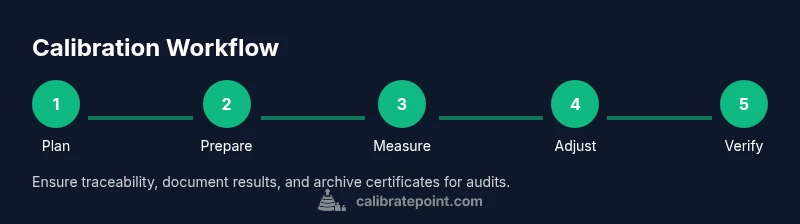
Calibration follows a structured workflow to stay aligned with standards and audit trails. Plan the session by defining the instrument, reference standard, acceptance criteria, and environmental limits. Prepare the environment by stabilizing temperature, cleaning surfaces, and verifying reference standards. Measure by recording instrument outputs against the standard; repeat measurements to reduce random error. Adjust only when permitted by manufacturer guidance or internal policy, and document every change. Verify by re-measuring to confirm alignment and assess drift. Finally, document results in a calibration certificate, noting instrument IDs, standards used, environmental conditions, and dates. A robust workflow supports repeatability and traceability across teams and sites.
Common Pitfalls and Safety Considerations
Common pitfalls include skipping environmental checks, using damaged reference standards, or performing adjustments without proper authorization. Always verify the instrument is compatible with the reference standard and follow documented procedures. Temperature drift, supply voltage fluctuations, and mechanical wear can all compromise results, so stabilize the environment before beginning. Safety considerations are essential when calibrating high-energy, pressurized, or chemical instruments. Wear appropriate PPE, secure all equipment, and never bypass safety features to chase a test result. When in doubt, pause and consult the calibration manual or supervisor. Remember: safety and accuracy go hand in hand.
How to Choose Calibration Tools and Vendors
Selecting the right tools and partners hinges on traceability, documented certificates, and compatibility with your instruments. Look for reference standards with valid certificates, known uncertainties, and clear scope. Ensure tools cover your instrument types (length, mass, electrical, thermal, chemical) and that the environmental controls meet device specifications. Vendor support matters: access to calibration services, on-site visits, and timely certificate delivery reduce downtime. Favor vendors who provide transparent uncertainty budgets, calibration intervals, and audit-ready documentation. Finally, confirm data handling workflows align with your QA systems and that the vendor supports your industry standards and regulatory expectations.
Documentation and Record-Keeping
Documentation is the backbone of calibration programs. Create a calibration plan with instrument IDs, reference standards, certificates, and acceptance criteria. Record all measurements, adjustments, and environmental conditions. Maintain a calibration certificate for each instrument, plus a master log that tracks intervals, next due dates, and any out-of-tolerance events. Digital records are convenient for searchability and audit readiness, but ensure secure backups. Include traceability details linking results to reference standards and the issuing laboratory. Good records support accountability, facilitate audits, and help teams understand instrument performance over time.
Case Studies and Real-World Scenarios
In a small workshop, a technician calibrates a torque wrench against a certified torque standard, documenting the reading, instrument ID, and ambient conditions. After verification, the wrench reads within tolerance, and production proceeds with confidence. In a food-processing environment, a pH meter is calibrated against buffer solutions with known pH values; the team records the buffers’ lot numbers, concentrations, and temperature during calibration. The meter passes verification, supporting product quality and regulatory compliance. In both cases, traceable calibration certificates and meticulous documentation enable quick audits, predictable maintenance, and safer operations.
Quick Start Checklist
- Define instrument and reference standard
- Verify traceability certificates and uncertainty budgets
- Stabilize the environment (temperature, humidity, vibration)
- Record multiple measurements for each test value
- Apply adjustments only when allowed by policy
- Re-verify after adjustments and document results
- Archive calibration certificates and logs
- Schedule next calibration according to usage and risk
Tools & Materials
- Calibrated reference standard (gauge blocks, weights, reference meter, etc.)(Must have valid calibration certificate and traceability.)
- Device under test (DUT)(Ensure it is clean, powered per spec, and safe to operate.)
- Calibration software or data-logging templates(For recording measurements, deviations, and adjustments.)
- Clean, stable workspace(Flat surface free from vibrations; use a temperature-stable area.)
- Environmental monitor (temp/humidity/pressure)(Keep within instrument specifications during calibration.)
- Personal protective equipment (PPE)(Safety glasses, gloves as needed for chemical or mechanical work.)
- Calibration certificates and identifiers(Include part numbers, serials, and expiry dates.)
- Calibration tools for adjustments (as applicable)(Only use manufacturer-specified tools and follow procedures.)
Steps
Estimated time: 1-2 hours
- 1
Plan the calibration session
Define the instrument, reference standard, acceptance criteria, and environmental limits. Confirm the scope and ensure compliance with internal policies.
Tip: Prepare a checklist and verify traceability before starting. - 2
Prepare the environment and tools
Set up the bench, stabilize temperature, verify reference standards, and check that all safety measures are in place.
Tip: Allow time for environmental stabilization to minimize drift. - 3
Measure against the reference
Record the instrument output compared to the standard; take multiple readings to reduce random error.
Tip: Use consistent measurement procedures and avoid parallax errors. - 4
Adjust within allowed parameters
If adjustments are permitted, apply manufacturer guidance and document every change.
Tip: Do not exceed the recommended adjustment range or alter non-relevant settings. - 5
Verify after adjustment
Re-measure with the reference to confirm alignment and check for drift over time.
Tip: Compare post-adjustment results to acceptance criteria. - 6
Document and archive
Create a calibration certificate, log measurements, environmental conditions, and instrument IDs.
Tip: Store certificates digitally with secure backups and version control.
Questions & Answers
What is calibration and why is it important?
Calibration aligns instruments with standards to improve accuracy and traceability, reducing measurement uncertainty over time.
Calibration aligns your tool with recognized standards to ensure accurate readings and traceability.
How often should I calibrate my tools?
Frequency depends on usage, environment, and manufacturer recommendations. Use a risk-based approach to set intervals.
Calibrate based on use, conditions, and what the manufacturer suggests.
What is traceability in calibration?
Traceability links instrument readings to national or international standards through documented certificates.
Traceability means readings connect to recognized standards via certificates.
What should I do if a calibration fails?
Recheck setup, repeat measurements, and consult the standard. If inadequate, adjust or replace the instrument as needed.
If readings fail, re-check the setup and repeat the measurements.
Do I need specialized equipment to calibrate?
Yes, typically you need reference standards, environmental controls, and certified instruments tailored to your DUT.
Usually you need proper reference standards and controlled conditions.
Can I calibrate without manufacturer support?
Some devices can be calibrated with generic references, but follow standards and keep thorough records.
You can calibrate some devices yourself if you follow standards and document results.
Watch Video
Key Takeaways
- Plan before calibrating for accuracy
- Use traceable standards with certificates
- Document all readings and adjustments
- Verify final alignment against the standard
- Schedule regular calibrations and reviews