Difference Calibration and Verification: A Practical Guide
Explore the difference calibration and verification, two essential processes for accurate measurements. Learn definitions, when to use each, methods, scheduling, and how to maximize data integrity and regulatory compliance.


Difference calibration and verification describes two distinct paths to measurement trust. Calibration adjusts readings to reference standards, reducing bias for specified conditions and temperature ranges. Verification checks ongoing performance without changing the instrument; this article explains definitions, procedures, costs, and decision criteria, reflecting difference calibration and verification in practice.
Understanding the Core Difference
The phrase difference calibration and verification captures a fundamental split in how we pursue trustworthy measurements. Calibration is an active adjustment process that aligns an instrument’s output with a recognized reference, thereby reducing systematic error. Verification, by contrast, is a confirmatory check that the instrument still meets its stated performance criteria without altering its setup. In practice, laboratories and field teams often implement both in a staged plan to protect data integrity, comply with standards, and minimize downtime. According to Calibrate Point, a structured approach to these activities helps organizations map risk, tolerance bands, and instrument maturity into a practical calibration and verification program. This section sets the tone for the deeper dive that follows, focusing on definitions, scope, and how the two concepts complement one another.
Key Definitions: Calibration vs Verification
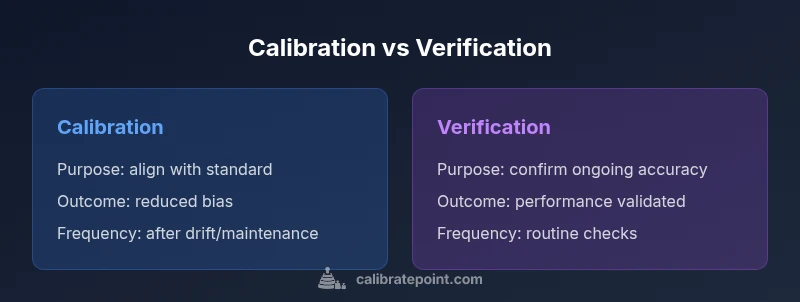
Calibration is the process of adjusting measurement instruments to align readings with reference standards. It typically involves traceable standards, environmental controls, and documented correction factors. Verification is the ongoing assessment that measurements remain within specified limits, without changing or reconfiguring the instrument. Both activities contribute to measurement quality, but they serve different purposes: calibration fixes bias, while verification confirms ongoing compliance. In many industries, regulators expect both elements as part of a comprehensive quality system. The distinction matters for scheduling, cost planning, and how you interpret data from your measurement chain.
Why the Distinction Matters in Practice
Understanding when to calibrate and when to verify prevents unnecessary downtime and ensures data reliability. Calibration is most valuable after instrument installation, after repairs, or whenever a drift or bias is detected. Verification is essential for routine quality checks, ongoing performance monitoring, and regulatory demonstrations. Practitioners should document each step's objectives, criteria, and results so team members can trace decisions back to evidence. The practical takeaway is to design workflows that balance the need for accuracy with the realities of operation, maintenance windows, and budget constraints.
Comparison
| Feature | Calibration | Verification |
|---|---|---|
| Primary purpose | Tune instrument accuracy to reference standards | Confirm ongoing accuracy against specs |
| Primary outcome | Bias reduction and drift correction | Ongoing performance confirmation |
| Typical procedures | Apply correction factors, adjust sensors, document traceability | Re-test readings against criteria, without changing setup |
| Frequency | Triggered by drift signals, after repairs, or on schedule | Regular checks as part of quality system |
| Cost considerations | Upfront lab/standards cost, instrument downtime | Ongoing labor, reference checks, possible travel |
| Best-for scenarios | New instruments, after maintenance, or when bias is suspected | Routine compliance and monitoring |
Pros
- Improves measurement accuracy and repeatability
- Reduces long-term drift and bias
- Supports regulatory compliance and audit readiness
- Enables proactive maintenance planning
Disadvantages
- Calibration can require instrument downtime
- Verification may incur recurring costs and staffing
- Not all instruments require frequent calibration or verification
- Over-calibration can be unnecessary or disruptive
Calibration plus verification provides the most reliable measurement framework
Calibration delivers long-term accuracy by correcting bias. Verification sustains performance over time. Together, they form a robust strategy for trustworthy data and regulatory compliance.
Questions & Answers
What is the difference between calibration and verification?
Calibration actively adjusts a device to align with reference standards, reducing bias. Verification checks that the device continues to meet performance criteria without modifying its setup. Together, they ensure both accuracy and ongoing reliability.
Calibration tunes accuracy, verification confirms ongoing performance, and both are essential for dependable data.
How often should calibration be performed?
Calibration frequency depends on risk, usage, and regulatory requirements. After major repairs or when drift is detected, recalibration is typically necessary. Establish a documented schedule tailored to your instrument and process.
Set a schedule based on risk and usage, and recalibrate after repairs or drift is observed.
Can verification replace calibration?
Verification cannot replace calibration if bias is present. It is valuable for routine checks, but without calibration you may miss systematic errors. Use verification to sustain performance after calibration has been done.
Verification checks ongoing accuracy, but calibration is needed to correct bias when detected.
What methods are used in calibration?
Calibration uses traceable standards, environmental control, and correction factors. Methods vary by instrument type but typically involve comparison to a reference and adjustment of readings to achieve conformity.
Calibration relies on traceable standards and adjustment to align readings with references.
How should results be documented?
Document every calibration and verification activity, including reference standards, settings, environmental conditions, and pass/fail criteria. Maintain an auditable trail for audits and continuous improvement.
Keep a complete, auditable log of all tests, references, and outcomes.
What are typical costs involved?
Costs include equipment downtime, reference materials, and labor. Calibration can involve upfront setup and travel for service, while verification adds recurring checks and documentation efforts.
Expect upfront calibration costs and ongoing verification expenses tied to time and materials.
Key Takeaways
- Define your accuracy goals before starting
- Differentiate calibration from verification in your plan
- Schedule based on risk, usage, and regulatory needs
- Document procedures and track results for traceability
- Balance downtime with the value of data quality