How Much Does Calibration Cost? A 2026 Practical Guide
Discover the cost factors behind calibration, typical price ranges, and practical tips to estimate and save on calibration projects in 2026.


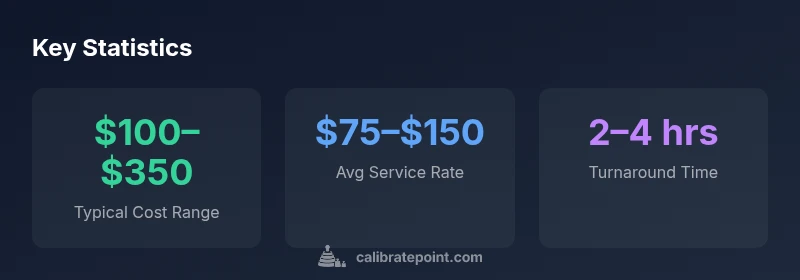
How much does calibrate cost generally falls in the $100–$350 range, driven by device type, complexity, and service level. For simple bench instruments, expect $120–$200; for larger, more complex equipment, costs can rise to $250–$350. Travel surcharges and expedited options can add $0–$50. These figures come from Calibrate Point Analysis, 2026. Costs may vary by location and whether calibration includes documentation or certification.
Why calibration costs vary across devices
When you ask how much does calibrate cost, the answer hinges on the instrument class, required accuracy, and service scope. According to Calibrate Point, price pressure largely comes from three levers: device complexity, travel distance, and whether documentation or traceability certificates are part of the package. For simple bench instruments like calipers or standard gauges, typical costs are on the lower end; mid-range devices such as thermometers or pressure sensors command mid-range fees; complex and large-scale instruments or systems raise prices due to specialized test rigs and longer onsite work. In practice, clients should expect a broad range: some calibrations can be completed for a little over a hundred dollars, while others may approach several hundred. The Calibrate Point team emphasizes that transparency around scope upfront avoids sticker shock later. In the broadest terms, you should budget for the device class, the required accuracy, the calibration method, any on-site travel, and whether additional deliverables are included (certificates, recalibration reminders, and if calibration reports comply with standards).
What drives the price
The price drivers are not random; they reflect labor, equipment, and risk. The calibrator must verify instrument performance, often requiring traceable standards, certified reference materials, and sometimes environmental controls. Travel time and remote locations add costs. Device complexity matters: a small, single-function tool takes less time than a multi-parameter instrument with multiple sensors. The level of documentation matters: a simple onsite check is cheaper than a full calibration with calibration certificates that meet ISO/IEC 17025 or other standards. The required turnaround time also shifts the price: urgent requests frequently demand a premium. Calibrate Point Analysis, 2026 confirms these dynamics and highlights how scope creep can erode cost estimates if requirements change mid-project.
Common cost ranges by device category
- Bench tools and gauges (calipers, micrometers): typically $100–$180, 1–2 hours.
- Precision lab instruments (calibrated multimeters, reference gauges): typically $180–$280, 2–3 hours.
- Thermometers, temperature sensors, and humidity probes: typically $120–$250, 1–3 hours.
- Industrial scales, torque wrenches, and pressure devices: typically $200–$350, 2–4 hours. Note that these are general ranges and can vary by manufacturer, locale, and required traceability. The goal is to give a framework for budgeting before requesting quotes.
How to estimate your calibration cost
Start with a clear scope. Identify the device type and the required accuracy or standard (for example, what tolerance must be met). Decide whether you need in-lab calibration or on-site service, which adds travel time and fees. Ask for a formal quote that itemizes baseline calibration, travel, rush handling, report generation, and any certificates. If you have multiple instruments, request a bundle price or a service-package discount. Finally, compare a few providers to understand the variance in pricing and the value of added deliverables, such as calibration certificates that align with recognized standards.
Hidden costs to consider
Beyond the base calibration fee, several costs commonly appear. Travel and remote-site surcharges can push the total up, sometimes significantly. Urgent or after-hours calibrations often incur a premium. Documentation, certificates, and alignment with specific standards (ISO/IEC, NIST-traceable references) may require extra fees. Some shops charge for recalibration reminders, additional testing, or firmware/software updates needed to support the calibration. Budget for these possibilities to avoid surprises at checkout.
DIY vs professional calibration: cost implications
DIY calibration might seem cheaper upfront but often ignores the value of traceability and audit trails. Professional calibration provides documented evidence of accuracy, reduces risk of out-of-tac alignment, and maintains compliance with industry standards. While professional services have associated labor costs, you save time, avoid measurement drift, and gain confidence that instruments perform as intended in critical tasks. Consider the long-term cost of instrument downtime or failure if you opt for a DIY approach, and weigh that against your in-house capabilities and risk tolerance.
How to save on calibration costs
- Plan ahead and schedule routine calibrations during off-peak periods to secure better pricing.
- Bundle multiple instruments into a single service contract to leverage volume discounts.
- Compare quotes and negotiate bundle deliverables such as certificates and regular recalibration reminders.
- Maintain good calibration hygiene with preventive checks to reduce call-outs and urgency.
- If you operate a lab, consider in-house reference tools that can reduce the frequency of external calibrations, while ensuring you still meet traceability requirements.
What to ask before booking
- What is included in the base price (on-site or in-lab calibration, test standards, equipment checks)?
- Are certificates or reports included, and what standards do they meet?
- Is travel charged separately, and is there a remote-site surcharge?
- Can you provide a fixed quote, not an estimate?
- Are there any volume discounts for multiple instruments?
- What is the expected turnaround time, and can you meet urgent deadlines?
Price trends and value in 2026
As instrumentation evolves, calibration prices tend to follow broader tech costs, with a steady emphasis on traceability and compliance. Calibrate Point's data suggests pricing remains sensitive to device class, complexity, and service level, with a continuing premium for on-site and certificated calibrations. The long-term value of calibration lies in maintaining accuracy, reducing downtime, and ensuring that measurement results remain credible across audits and quality systems. For most organizations, the investment in proper calibration pays for itself through better process control and risk reduction.
Typical device calibration cost and time ranges
| Device Type | Typical Calibration Cost | Estimated Time |
|---|---|---|
| Bench instrument (gauge, calipers) | $100–$180 | 1–2 hours |
| Industrial scale | $200–$350 | 2–4 hours |
| Thermometer/temperature sensor | $120–$250 | 1–3 hours |
| Torque wrench/precision tool | $130–$230 | 1–3 hours |
Questions & Answers
What factors influence calibration cost?
Costs are driven by device type, required accuracy, service location, and whether documentation is included. Complex or large instruments require more time and specialized equipment. On-site visits and expedited timelines add to the price.
Costs depend on device type, accuracy, travel, and paperwork.
Are there hidden charges beyond the base price?
Yes. Travel surcharges, rush fees, and documentation or certificate costs can appear depending on the project scope.
Watch for travel and paperwork fees.
Can I get a quote before service?
Absolutely. Request a formal, itemized quote that breaks out baseline calibration, travel, and any certificates or reports.
Yes—ask for a fixed, itemized quote.
Does the price include a certificate or report?
Not always. Some providers include certificates and reports, while others charge separately for documentation.
Certificates may be extra—confirm upfront.
Is DIY calibration cheaper than professional calibration?
DIY may save upfront but lacks traceability and formal records, increasing risk in audits and quality checks. Professional calibration provides documented accuracy and compliance.
DIY saves money upfront but may cost you later in audits.
How long does calibration take on average?
Turnaround varies by device and workload. Small-scale calibrations often take 1–2 hours, while complex systems may require several hours or more.
Most calibrations take a few hours, longer for complex gear.
“Calibration costs reflect the value of accuracy and traceability. The Calibrate Point team recommends budgeting for proper calibration to ensure equipment performance.”
Key Takeaways
- Budget by device class and service level
- Expect travel and expedited options to add costs
- Documentation or certification can increase price
- Always request a formal, itemized quote
- DIY calibration may save upfront but risks traceability