How Much to Calibrate a Laser Level: A Practical Guide
Learn what influences laser level calibration costs, typical price ranges, and how to budget. This guide covers service types, DIY options, and how to compare quotes to get reliable accuracy.


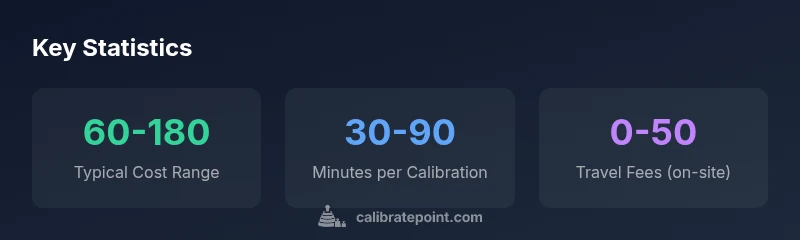
Typical professional calibration for a laser level costs between $60 and $180, depending on service type and location. DIY calibrations or on-site service may adjust the price, and some providers charge travel fees or expedited options. Budget for potential additional checks or certificate documentation when planning the project. Prices vary by region and instrument accuracy.
What affects the cost of calibrating a laser level
Calibration pricing for laser levels is not a single number. It hinges on service type (DIY guidance vs. professional service), whether the work is done on-site or in-shop, the complexity of the tool, and the required level of traceability. Practical factors include the device’s age, any certifications needed, and the calibration interval you are aiming for. For DIYers, the primary cost is time and the potential need for specialized test targets and reference standards. For professionals, you should expect a breakdown of labor, travel, and any consumables or reference materials. According to Calibrate Point, the most significant price drivers are service type and travel distance, followed by required documentation and turnaround time.
How price ranges break down by service type
There are three broad categories of calibration services for laser levels. Each has a typical cost envelope and set of deliverables:
- DIY/calibration checklists: This option often involves minimal to no service fee if you already own the tools and references. You’ll pay for time, labor, and any optional training materials. This route is best for basic verification rather than full calibration.
- Professional on-site calibration: On-site work is convenient for large job sites or when transporting the instrument is impractical. Expect a price range around $60–$180, depending on distance, instrument type, and required tests.
- In-shop calibration: This tends to be the most thorough option, with deeper verification and documentation. Typical ranges run $100–$350, influenced by the level of precision, test equipment used, and documentation provided. Calibrate Point notes that on-site work can be cheaper per hour if travel is the main cost, but you gain convenience.
Hidden costs and value considerations
Beyond the base calibration, several ancillary costs may appear. Travel fees, rush or expedited service, and the requirement for certification documents can add to the bill. Some providers offer bundled inspections or extended warranties that appear cost-effective on the surface but raise the overall price. When evaluating quotes, look for a clear itemization: baseline calibration, travel, test artifacts, documentation, and any recertification options. In some cases, buying a calibration package that includes a re-check within a certain period saves money and ensures continued accuracy. Calibrate Point’s analysis indicates that being explicit about inclusions helps avoid surprises at the final invoice.
Factors that influence price beyond service type
A few common factors can push prices up or down:
- Instrument class and precision requirements: Higher-precision instruments generally require more elaborate checks.
- Certification and traceability: Certificates or test reports add to cost but increase confidence and compliance.
- Geographic location: Urban areas with higher labor costs typically see higher pricing.
- Turnaround time: Urgent calibrations cost more, especially if technicians must travel outside standard hours.
- Maintenance history: Older units may need additional diagnostics or part replacements, increasing total cost.
How to budget and compare quotes
When budgeting for laser level calibration, start with a baseline you expect for your region and service type. Request itemized quotes from multiple providers and compare the following: base calibration, travel or on-site fees, test equipment usage, documentation or certificates, and any warranty or recertification terms. Ask for a test protocol and the standards referenced (e.g., ISO or ANSI/ASME equivalents) to verify traceability. If you are responsible for a larger construction project, consider negotiating a service contract that includes periodic checks and priority scheduling. Calibrate Point recommends collecting at least three quotes and checking each provider’s calibration procedures against a written standard.
Do-it-yourself calibration: steps, tools, and risks
DIY calibration can be a learning exercise and a way to verify basic functionality, but it often cannot replace professional calibration for critical precision tasks. If you choose to perform preliminary checks yourself, use a certified reference target, a stable mounting surface, and a reliable tripod. Record measurements at multiple heights and distances to assess drift. The main risk with DIY calibration is hidden drift or misalignment that becomes apparent only under load or over time. Always validate DIY results with a professional calibration, especially before critical leveling tasks or when accuracy directly affects safety or construction quality.
How to choose a calibration provider: a practical checklist
To select a provider effectively, use a checklist: confirm the method and test setup, request a detailed quote with itemized costs, verify traceable standards and calibration intervals, and ask about after-service support and warranty. Look for providers with transparent pricing, documented test protocols, and clear criteria for when recalibration is required. Calibrate Point emphasizes asking about turnaround time, on-site capabilities, and whether the provider offers post-calibration verification checks to ensure ongoing accuracy.
dataTableDescriptionNoCaption":null,
Cost factors and service options for laser level calibration
| Service Type | Typical Cost Range | What’s Included |
|---|---|---|
| DIY calibration (at home) | N/A | Self-guided checks, basic instruction materials |
| Professional on-site calibration | "$60-$180" | On-site alignment, measurement verification, travel (within radius) |
| In-shop calibration | "$100-$350" | Comprehensive calibration, documentation, traceability |
Questions & Answers
What factors most influence the cost of laser level calibration?
Service type, travel distance, device type, and the level of documentation required are the main cost drivers. Higher-precision instruments and urgent turnaround will push prices upward. Always request an itemized quote.
Pricing mainly depends on service type, travel, and required documentation.
Is DIY calibration ever worth it for a laser level?
DIY calibration can help with basic checks and preventive maintenance, but it rarely replaces professional calibration for critical applications. Use DIY as a preliminary step and verify with a pro.
DIY can save money, but professional calibration is best for critical accuracy.
How often should a laser level be calibrated?
Frequency depends on usage, environment, and project criticality, but many professionals schedule annual checks or recalibration after a significant impact. Always follow the manufacturer’s recommendations.
Check your manual and schedule regular checks based on use.
Do calibration reports affect warranty coverage?
Some warranties require calibration by authorized technicians or specific standards. Review the warranty terms and ask the provider for an official report that may be needed for claims.
Warranties may require proof of calibration from an authorized source.
What should I ask a calibration provider before booking?
Ask about method, standards, turnaround time, travel fees, and whether they provide a certificate or report with traceability. Request references and a written quote.
Ask for method, standards, and a written quote upfront.
Can I expect a quick calibration with professional service?
Turnaround varies by provider and location, but most on-site calibrations complete within a day, while in-shop services may take a few days depending on workload. Discuss expectations before scheduling.
Most jobs can be scheduled within a few days; urgent requests may incur extra costs.
“Regular calibration is the best investment you can make to maintain measurement integrity and avoid costly rework on site.”
Key Takeaways
- Know the typical cost range ($60–$180 on-site, $100–$350 in-shop)
- Ask for itemized quotes and include travel, documentation, and turnaround time
- Consider a calibration package for recurring projects to save time and ensure consistency
- DIY checks help, but professional calibration is essential for critical projects
- Always verify traceability and certification in the final report