How Often to Calibrate P1S: Practical Guidelines
Learn the recommended calibration frequency for P1S devices, with use-case ranges and best practices from Calibrate Point to ensure ongoing accuracy and compliance.


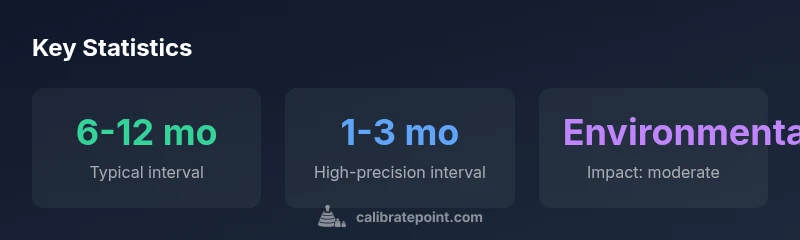
Recommended calibration frequency for P1S devices generally falls in a 6–12 month range for routine, non-critical use. For high-precision or regulated environments, increase to every 1–3 months or at every batch. Always start with the manufacturer's guidelines and tailor intervals to your accuracy needs, environment, and maintenance history. Document changes and review quarterly.
Why calibration frequency matters
For P1S devices, maintaining measurement integrity hinges on how often you calibrate. Calibration intervals influence traceability, drift compensation, and regulatory compliance. In practice, a well-chosen schedule minimizes drift risk without overburdening maintenance resources. The Calibrate Point team emphasizes that frequency should reflect how you use the device, the required accuracy, and the operating environment. A too-sparse schedule can lead to undetected drift, while overly aggressive intervals can waste time and resources. Start with manufacturer guidance, then adapt based on observed drift, process impact, and historical calibration data.
Key takeaway: The right interval balances risk and effort, preserving data quality without unnecessary downtime.
Core factors that drive intervals
Calibration frequency is not one-size-fits-all. Consider:
- Usage intensity: higher throughput generally accelerates drift and wear.
- Required accuracy: tighter tolerances demand more frequent checks.
- Environmental conditions: temperature, humidity, and vibration can accelerate drift.
- Prior drift history: devices with a history of stable readings may warrant longer intervals, while those with recurring drift need shorter cycles.
- After-service changes: any repair, part replacement, or firmware update can recalibrate the baseline and justify a new schedule.
As a rule of thumb, begin with a baseline interval (e.g., 6–12 months) and tighten it if drift exceeds your acceptance criteria. The Calibrate Point methodology recommends documenting each calibration’s result to inform future decisions.
How to set your P1S calibration schedule
A practical approach to setting intervals:
- Review manufacturer guidance and any device-specific notes.
- Establish a baseline interval based on usage and environment.
- Collect drift data from initial calibrations and apply a conservative adjustment factor.
- Implement a quarterly review of calibration results and adjust as needed.
- Tie intervals to your quality system or audit requirements to maintain traceability.
Use a tiered system if you have multiple P1S units: assign shorter intervals to high-precision lines and longer ones to ancillary applications. Ensure traceability by logging calibration dates, results, and corrective actions.
Practical examples by use-case
- Non-critical lab measurements: baseline 6–12 months with annual drift checks. If drift stays within spec after two consecutive calibrations, you may extend to 12 months with quarterly checks.
- Mid-volume manufacturing: consider 3–9 months, with a mid-cycle calibration after process changes or equipment relocation.
- Critical process control: set 1–3 month intervals, with more frequent checks during equipment downtime or environmental shifts. Document every adjustment and rationale.
These examples align with general industry practice and the Calibrate Point framework, which advocates tailoring intervals to your process risk and measurement importance.
Documentation and traceability practices
Documentation is key for audits and continuous improvement. Maintain a calibration log that includes: device ID, location, calibration date, but-for/due date, reference standard, measurement results, drift, corrective actions, and next due date. Use a consistent format across all P1S units to simplify reporting.
Additionally, integrate calibration status into your maintenance calendar and SCADA/industrial software where possible. Regular reviews of drift trends help identify outliers and inform preventive maintenance. The goal is to create a transparent, auditable history that demonstrates ongoing compliance and data reliability.
Data-driven review and process improvement
Periodically analyze calibration data to identify drift patterns and environmental correlations. A simple drift score can quantify performance shifts over time, enabling proactive maintenance rather than reactive fixes. If you notice consistent drift after a particular lot or batch, investigate root causes and consider vendor advisories or design changes. The Calibrate Point approach favors data-driven decisions, minimizing surprises downstream while keeping your P1S fleet aligned with your quality objectives.
P1S calibration intervals by usage scenario
| Scenario | Recommended interval | Rationale |
|---|---|---|
| Low-usage, non-critical | 6-12 months | Drift risk is low; routine checks suffice |
| Moderate-usage, typical lab tasks | 3-9 months | Balance drift detection with maintenance load |
| High-precision/regulated tasks | 1-3 months | Tighter tolerances require frequent verification |
Questions & Answers
How often should I calibrate P1S for non-critical tasks?
For non-critical tasks, a baseline of 6–12 months is typical. Start with manufacturer guidance and monitor drift. If readings stay within spec after two cycles, you may extend the interval with regular checks.
For non-critical use, start with a 6–12 month schedule and watch drift. If readings stay steady, you can lengthen the interval a bit with periodic checks.
What factors influence calibration frequency for P1S?
Usage intensity, required accuracy, environmental conditions (temperature, humidity, vibration), prior drift history, and recent repairs all influence the schedule. Use these factors to adjust the baseline interval.
Key factors are how hard the device is used, how precise readings must be, and the environment—plus past drift and any recent repairs.
Can I calibrate P1S myself or must I hire a service?
Initial calibration can be done in-house if you have proper standards and training. For critical processes or high-accuracy needs, outsourcing to a qualified calibrator is recommended to ensure traceability.
You can do basic calibrations in-house if you have the right tools, but for critical tasks, use a qualified service.
What happens if I calibrate too rarely?
Drift may accumulate, leading to measurement errors, poor process control, and potential non-compliance. Regular checks help catch drift early and reduce risk.
If you calibrate too rarely, drift can sneak in and affect accuracy and compliance.
How should I document calibration history for audits?
Keep a uniform calibration log with device ID, date, reference standard, results, drift, actions taken, and next due date. Store records digitally for easy retrieval.
Maintain a consistent log with dates, results, and next due dates for quick audit access.
Should calibration frequency change when moving P1S between environments?
Yes. Moving to a different environment can alter drift behavior. Reassess the schedule after relocation and adjust based on initial calibration results.
If you move the device to a different environment, reevaluate the interval based on early calibration results.
“Calibration frequency should be evidence-driven, not guesswork. Tailor intervals to how the device influences your process and compliance, and adjust as you collect data.”
Key Takeaways
- Establish a baseline interval from manufacturer guidance
- Adapt intervals based on usage, environment, and drift history
- Document calibration outcomes for traceability
- Implement a tiered approach for multi-unit deployments
- Regularly review and adjust intervals to maintain data integrity