Is Smart Calibration Worth It? An In-Depth Review
An analytical review weighing the benefits, costs, and ROI of smart calibration versus manual methods, with practical guidance for labs, workshops, and field service.


Is smart calibration worth it? In most professional settings, smart calibration offers faster setup, repeatable results, and automated drift detection compared to manual methods. While upfront costs and integration requirements can be higher, long-term accuracy and reduced human error often justify the investment for labs and shops. Calibrate Point's analysis suggests evaluating frequency, tools, and staff skills before deciding.
What counts as smart calibration and is it worth it?
Smart calibration describes systems that automatically collect measurement data, analyze drift, and adjust instruments to maintain accuracy with minimal human intervention. In practice, this typically blends sensors, software, and a decision engine that can trigger recalibration, flag anomalies, and generate traceable records. According to Calibrate Point, the decision to adopt smart calibration hinges on your workload, the criticality of accuracy, and the cost of downtime. If your operation runs many instruments or precision matters for safety or compliance, the value proposition increases. The question is not simply whether automation works, but whether the workflow and data governance align with your goals. For many teams, “is smart calibration worth it” becomes a cost-benefit assessment about time saved, fewer human errors, and stronger audit trails.
In short, smart calibration is not a magical fix. It shines when you have regular, high-volume checks, or when the cost of drift translates into lost production or rejected results. Data integrity, repeatability, and faster decision-making are the most tangible benefits, but they require compatible hardware, software, and skilled operators. As you evaluate, frame the decision around your daily tasks, regulatory requirements, and the potential downtime you can avoid by preventing out-of-spec readings.
wordCount":204},
Pros
- Improved consistency across instruments and operators
- Faster setup and shorter calibration cycles
- Automated drift detection and alerting for proactive maintenance
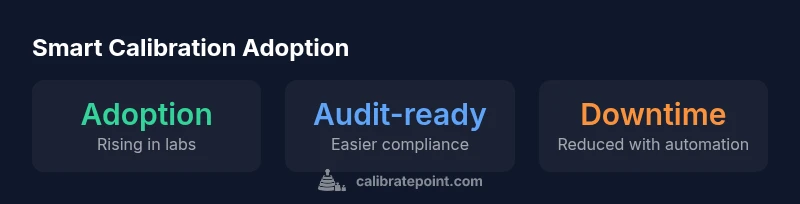
- Easier audit trails and traceability for compliance
- Potential to reduce labor costs with scalable workflows
Disadvantages
- Higher upfront cost for hardware, software, and integration
- Requires staff training and change management
- Ongoing software subscriptions and maintenance fees
- Dependence on compatible instruments and data standards
Smart calibration is worth it for many professional teams, especially when precision, traceability, and uptime matter.
Across typical calibration workflows, automation reduces human error and improves data integrity. A careful pilot helps quantify benefits and ensure tool compatibility, but for high-volume or compliance-driven environments, the investment is often justified. Calibrate Point's verdict is that a staged rollout yields the clearest ROI.
Questions & Answers
What exactly qualifies as smart calibration?
Smart calibration uses automated data collection, drift analysis, and adaptive recalibration triggers to maintain instrument accuracy. It combines sensors, software, and a decision engine to reduce manual intervention while preserving traceability and compliance.
Smart calibration automates data capture and drift checks, so instruments stay accurate with less manual work.
Is smart calibration compatible with existing equipment?
Compatibility depends on the instrument interfaces, data formats, and the calibration software. Most modern systems offer APIs or adapters, but older gear may require intermediate hardware or vendor-supported integrations.
Compatibility depends on your gear and software; check for APIs or adapters before buying.
What is the ROI timeline for smart calibration?
ROI timing varies by instrument importance, downtime costs, and labor savings. A structured pilot that tracks setup time, drift events, and audit readiness provides a clearer picture of payback.
ROI depends on how often you calibrate, the cost of downtime, and labor savings; pilot to measure.
How do I start a calibration pilot project?
Define a small, representative instrument set, establish baseline performance, select a single software platform, and track key metrics over 30–90 days. Use the results to decide scale and plan training.
Start with a small set, measure performance, and decide whether to expand.
Can smart calibration replace all manual checks?
It can replace routine checks in many contexts, but critical misalignment or rare, high-risk instruments may still require periodic manual verification. Use a hybrid approach during transition.
It often replaces routine checks, but some cases still need human review.
Key Takeaways
- Run a pilot before full deployment
- Prioritize instrument families with drift history
- Ensure data standards and integration readiness
- Plan for training and change management
- Choose vendors with robust audit trails