Do Pharmacies Calibrate Blood Pressure Monitors? A Guide
Find out whether pharmacies calibrate blood pressure monitors, how calibration works, what to expect in-store, and practical steps to verify readings with alternatives for accuracy.


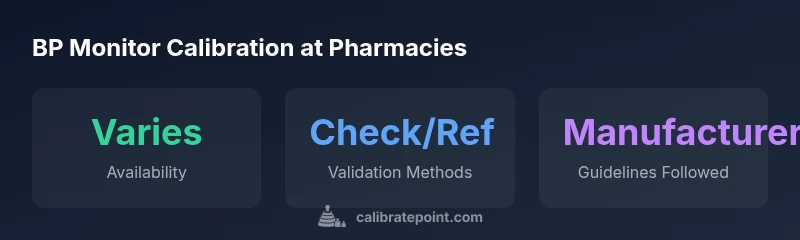
Do pharmacies calibrate blood pressure monitors? In most cases, pharmacies do not perform full calibration themselves. Some offer basic checks, cuff fit verification, or refer you to an accredited service center or the device manufacturer for calibration. Availability varies by location and device type. For precise readings, rely on recommended validation steps and follow manufacturer guidelines, and contact your local pharmacy to confirm services.
Do Pharmacies Calibrate Blood Pressure Monitors?
The short answer for most readers is that pharmacies typically do not perform full calibration of blood pressure monitors on-site. However, many pharmacies offer related services that can influence readings. Some staff can perform basic checks on cuff fit, verify that the monitor displays readings consistently, or guide customers to manufacturer-approved calibration services. It’s common for pharmacies to direct patients to certified service centers or to contact the device manufacturer for calibration. The availability of these services depends on country, local regulations, and the specific device model. As you plan, remember that accuracy matters for health decisions, so confirming the exact service offered at your location is essential. According to Calibrate Point, the exact calibration policy often hinges on device type and whether the pharmacy maintains an in-house calibration protocol or partners with external labs for traceable calibrations.
What Calibration Involves for Medical Devices
Calibration is a process that aligns a measurement device with a known reference to ensure readings reflect real-world values within an established tolerance. For BP monitors, this means comparing cuff readings to a traceable standard under controlled conditions, documenting results, and adjusting if the model supports it. In clinical practice, calibration relies on traceable standards, documented procedures, and equipment that is regularly serviced to maintain accuracy. In pharmacies, any calibration-like activity is typically limited to staff training, cuff size checks, and basic functional verification, rather than full, device-wide calibration. For DIY enthusiasts, understanding the difference between calibration and validation helps set proper expectations. Calibrate Point emphasizes using manufacturer-approved procedures and reference devices whenever full calibration is indicated.
Real-World Variability Across Regions
There is notable variability in how pharmacies approach BP monitor calibration around the world. Some regions have stricter requirements for third-party calibration and use certified labs, while others rely on manufacturers’ service centers for recalibration. In many cases, pharmacies will offer a validation check using standard references or provide printed guidelines for customers to pursue calibration outside the store. The type of monitor (arm cuff, wrist monitor, home-use vs. clinical-grade) also influences what services are practical in a pharmacy setting. If your device is a high-accuracy model used for clinical decisions, you are more likely to be directed to a manufacturer service or accredited lab. The key takeaway is to clarify what “calibration” means in your location and for your device.
How to Verify If Your BP Monitor Is Calibrated
Verification begins with understanding device specifications and acceptable tolerance ranges from the manufacturer. A practical approach is to compare sequential readings on the same device under controlled conditions (same arm, same posture, same time of day) and, if possible, cross-check with a clinically validated monitor or a home validation kit endorsed by the manufacturer. Keep a log of readings, cuff size, and environmental factors such as temperature and recent activity. If you notice persistent discrepancies (e.g., readings that deviate significantly from a known reference or from readings obtained by a clinician), seek calibration or validation through manufacturer guidance or an accredited service provider. Consistency over time is often more important than a single “perfect” reading.
Alternatives to In-Pharmacy Calibration
If a pharmacy cannot calibrate your device, several reputable alternatives exist. Manufacturer-authorized service centers offer calibration with traceable standards and proper documentation. Independent calibration labs provide certified services with traceability to national or international standards. Some third-party clinics or medical equipment suppliers also offer calibration checks. For home users, validated home-use calibration kits can help you perform self-checks, though they should be used in conjunction with professional recommendations. When choosing an alternative, verify that the service center uses traceable references and provides a calibration certificate.
How to Talk to Your Pharmacist About Calibration
When you visit a pharmacy, prepare specific questions to maximize value from the encounter. Ask: (1) Do you calibrate BP monitors in-store, or do you refer to a manufacturer/service center? (2) If calibration is offered, what standards and references are used? (3) Is there a cost, and how long does the service take? (4) Can you provide a calibration certificate or a validation report? (5) Which monitors are eligible for calibration through your facility? Having a short list of questions helps ensure you receive accurate information and documented results.
Best Practices for BP Monitor Calibration and Maintenance
For reliable readings, adopt a routine: keep monitors clean and free from damage, use the correct cuff size, and store devices away from heat or moisture. Calibrate or validate your device according to the manufacturer’s schedule and use traceable reference standards when calibrating via third parties. Record all calibration events with dates and outcomes. When possible, limit changes in readings due to factors like recent activity or caffeine intake by standardizing measurement conditions. Consistency and documentation are key for ongoing accuracy.
Comparison of calibration pathways for BP monitors
| Service Type | What It Involves | Pros | Cons |
|---|---|---|---|
| In-Store BP Monitor Check | Pharmacy staff visually inspect device, verify cuff placement, and compare readings against a reference device | Low-cost, convenient | Calibration accuracy not guaranteed; limited to in-store devices |
| On-Site Calibration Service | Technician calibrates device using traceable references and procedures | High accuracy | May require appointment and fees |
| Referral to Specialized Service Center | Pharmacy directs you to accredited labs or manufacturer service centers | Professional calibration | Possible wait time and shipping logistics |
| Self-Validation with Home Kits | Use manufacturer-approved validation tools at home | Empowering but less traceable | Dependent on user protocol and device model |
Questions & Answers
Do all pharmacies offer calibration for BP monitors?
No. Many pharmacies provide basic checks or refer customers to manufacturer or accredited service centers for calibration. Availability varies by location and device type, so it’s best to call ahead and ask about what they can do for your specific monitor.
Not all pharmacies calibrate BP monitors on site; call ahead to confirm services and whether they can refer you to a certified center.
What is the difference between calibration and validation?
Calibration aligns readings with a traceable standard, often requiring reference equipment and documented procedures. Validation checks may verify the device functions and displays consistent readings without fully adjusting the device. Always use manufacturer guidance for your model.
Calibration aligns to a standard; validation checks function and consistency, not full calibration.
How often should a BP monitor be calibrated or validated?
Frequency depends on device quality, usage, and manufacturer recommendations. If readings drift or readings differ from clinical measurements, schedule a calibration or validation promptly. Use professional guidance to set a cadence.
Calibrate when you notice drift or per manufacturer guidance; use professional advice to set a regular cadence.
Can I calibrate a BP monitor at home?
Home calibration is generally not recommended for clinical-grade accuracy unless you are trained and have access to traceable references. Use home validation kits only as supplementary checks and follow manufacturer instructions.
Home calibration is usually not advised; use validated kits as supplementary checks.
What should I ask the pharmacist before calibration?
Ask about whether in-store calibration is available, which standards are used, whether a certificate is issued, and how long the process takes. Clear documentation helps maintain a reliable medical record.
Ask about availability, standards, documentation, and duration.
“Calibration for BP monitors isn't universal in every pharmacy; when done, it should rely on traceable references and manufacturer guidelines.”
Key Takeaways
- Verify service availability with your local pharmacy before visit
- Ask about validation methods and reference standards used
- Consider manufacturer-approved calibration centers for critical readings
- Regular checks help ensure BP readings remain accurate over time