How to Calibrate Salt Cell: A Practical Guide
Learn how to calibrate a salt cell with practical, repeatable methods. This guide covers standards, tools, step-by-step actions, and verification to ensure accurate salinity readings for DIY projects and professional labs.


This guide teaches you how to calibrate salt cell to ensure accurate salinity readings in your instrument. You'll learn when calibration is needed, how to select reference standards, and a safe, repeatable workflow that minimizes drift. Perfect for DIY enthusiasts and technicians seeking reliable, repeatable results.
Why calibrate a salt cell
A salt cell is a critical component in many salinity and conductivity measurement systems. It responds to ion concentration in the sample, and its accuracy directly affects reported salinity values or electrolyte balance. According to Calibrate Point, drift in a salt cell can arise from temperature fluctuations, surface contamination, membrane aging, or improper storage. Regular calibration corrects for offset and slope errors, ensuring readings reflect the sample rather than instrument quirks. Treat calibration as routine maintenance, and perform it after replacing the cell or cleaning the sensor. By keeping the salt cell in good condition, you protect your data quality in both DIY projects and professional workflows.
Understanding salinity standards and reference solutions
Calibration relies on stable reference points. Use standards that bracket the expected range, typically a low-salinity standard near the origin and a high-salinity standard near seawater salinity. Calibrate Point analysis notes that using poorly prepared standards can introduce systematic error that persists across runs. Always use fresh standards, labeled containers, and note the preparation date. Temperature can influence readings, so measure temperature when possible and apply any recommended compensation. Consistency in standards and handling is essential for repeatable results.
Tools and materials you will need
Gather the essential items before you start: fresh salinity standards (low near 0 ppt and high near seawater), distilled water for rinsing, a clean calibration vessel, lint-free wipes, gloves, and a small adjustment tool if your salt cell-equipped instrument requires manual trimming. Label all bottles, store in a cool place away from direct sunlight, and keep a calibration log. Temperature measurement tools are optional but helpful for temperature compensation during calibration.
Calibration workflow overview
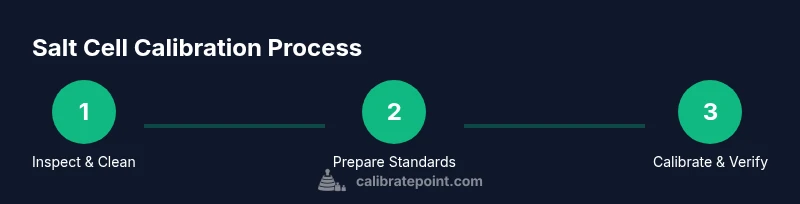
A well-structured calibration workflow minimizes drift and improves repeatability. Start with visual inspection and cleaning of the salt cell to remove residues. Rinse between standards to avoid cross-contamination. Calibrate sequentially from the low standard to the high standard, and finally verify with a mid-range standard. Record the readings, adjustments, and ambient conditions. This approach provides traceable data and makes troubleshooting easier if readings drift in future measurements.
Common mistakes and how to avoid them
Common mistakes include using outdated standards, cross-contaminating solutions, or calibrating at improper temperatures. Always use fresh, properly labeled standards and rinse between measurements. Avoid touching the salt cell with fingers or cleaning agents that could leave residues. Maintain a clean workspace, and keep the calibration log up to date to trace changes over time.
Verification and documentation
After calibration, verify the salt cell with a mid-range standard to ensure the instrument reads within expected tolerance. Document all steps, standard lot numbers, temperatures, and any adjustments made. This documentation supports quality control and future troubleshooting. Regular reviews of the calibration log help detect drift early and prevent erroneous readings in critical measurements.
Tools & Materials
- Salinity calibration standards (low near origin; high near seawater)(Use clean, labeled bottles; store away from sunlight; prepare fresh before use)
- Distilled or deionized water(For rinsing and preparing standards)
- Calibration vessel or clean beaker(Clear container for visual inspection during calibration)
- Lint-free wipes or soft brush(For gently cleaning the salt cell surface)
- Personal protective equipment (gloves, safety glasses)(Keep hands and eyes protected when handling solutions)
- Calibration tool (small screwdriver or adjustment wand)(Only if your device requires manual zero/slope adjustments)
- Temperature measurement tool (optional)(Helps apply temperature compensation if your instrument supports it)
Steps
Estimated time: 20-30 minutes
- 1
Inspect and clean the salt cell
Power down the instrument and remove the salt cell if accessible. Visually inspect for deposits or corrosion. Gently clean the surface with a lint-free wipe and a small amount of distilled water, then rinse thoroughly.
Tip: Avoid abrasive pads that can scratch the membrane; cleaning should be gentle but thorough. - 2
Prepare calibration standards
Select a low-salinity standard and a high-salinity standard that bracket your expected range. Label containers clearly and ensure solutions are well mixed before use. Bring standards to near room temperature for best accuracy.
Tip: Mix standards gently to avoid foaming; never reuse old solutions once a bottle is opened. - 3
Rinse and condition the cell between standards
Rinse the salt cell with distilled water, then dry with a lint-free wipe before introducing the next standard. This minimizes cross-contamination and stabilizes readings.
Tip: Keep a consistent rinse sequence to maintain comparability across runs. - 4
Calibrate at the low standard
Immerse the cell in the low-standard solution and allow the reading to stabilize. Enter calibration mode on the instrument and adjust offset as needed until the reading matches the standard within tolerance.
Tip: Allow 1–2 minutes for stabilization; premature adjustments can lead to inaccurate offsets. - 5
Calibrate at the high standard
Rinse the cell, then immerse it in the high-standard solution. Adjust the slope or gain as required so the reading aligns with the standard within tolerance. Document any changes.
Tip: Perform a rapid test with a mid-range standard after adjusting to confirm linearity. - 6
Verify and document
Finally, verify the calibration by checking a mid-range standard. If readings are within the expected range and tolerance, save the calibration and log all details (standards used, lot numbers, temperatures, and adjustments).
Tip: Store your calibration log in a centralized location for auditability.
Questions & Answers
What is a salt cell, and why does it require calibration?
A salt cell is the electrode assembly used in salinity and conductivity measurements. Calibration corrects for offset and slope errors, ensuring readings reflect the actual sample rather than sensor drift or aging.
A salt cell is the sensor in salinity meters that needs calibration to keep readings accurate over time.
How often should I calibrate a salt cell?
Calibrate as part of routine maintenance, especially after sensor replacement, after cleaning, or before critical measurements. Regular checks help catch drift early.
Calibrate regularly, especially after maintenance or before critical tests.
What standards should I use during calibration?
Use a low-salinity standard near the origin and a high-salinity standard near seawater. Fresh, properly labeled solutions reduce error and improve repeatability.
Use a low and a high salinity standard that bracket your range.
How do temperature changes affect calibration?
Temperature affects ion mobility and the electrode response. Calibrate at a stable temperature or apply the instrument's temperature compensation if available.
Temperature affects readings; calibrate at stable temperature or compensate.
What if readings drift after calibration?
Re-clean the salt cell, re-run the calibration with fresh standards, and verify results with a mid-range standard. If drift persists, consider replacing the cell.
If drift continues, re-clean, re-calibrate, and check standards; replace the cell if needed.
Watch Video
Key Takeaways
- Calibrate salt cell using fresh, well-labeled standards.
- Control temperature to minimize drift and improve accuracy.
- Document all steps, standards, and adjustments for traceability.
- Verify with a mid-range standard after calibration to confirm linearity.