Calibrate Weight Max on Your Scale: A Practical Guide
Learn to calibrate weight max on a scale using traceable weights, safe setup, and a repeatable workflow to achieve accurate, auditable results suitable for QA and compliance.


Calibrate weight max by validating the scale at its rated maximum, using traceable calibration weights, and adjusting readings via the manufacturer’s procedure. Begin with a zero check, then load weights up to the maximum, recording results and applying corrections as needed. Prioritize safety, repeatability, and documentation throughout the process.
Understanding Weight Max and Why It Matters
In precision work, 'calibrate weight max' means aligning a scale's response at or near its advertised maximum capacity. This matters because many scales exhibit nonlinearity, drift, or rounding errors as the load approaches the max. If you skip max-capacity calibration, readings for heavy loads can become deceptively optimistic or pessimistic, creating a hidden bias that shows up during QA checks, inventory counts, or process control. According to Calibrate Point, the starting point for any max-weight calibration is a clear understanding of the scale's rated capacity and its tolerance specification, plus a plan for how to verify accuracy across the range. You will typically rely on a set of traceable calibration weights that represent the extremes between zero and the maximum. The process also requires a stable testing surface, minimal vibration, and a consistent ambient environment. In professional practice, documenting each reading, noting environmental conditions, and cross-checking with a secondary reference improves traceability and confidence. The goal is to produce stable, repeatable results that you can prove with simple pass/fail criteria. When you approach weight max with this structured mindset, you minimize surprises and preserve the instrument's life by avoiding repeated overload or excessive recalibration cycles.
Types of Scales and Their Max Capacity
Scales come in many forms: mechanical beam balances, single- or multi-platform digital balances, and bench or floor scales used for industrial tasks. Each type has a defined maximum capacity printed on the label or in the user manual. Understanding where your device sits on the capacity curve helps you plan the calibration weights and the sequence of loads. Digital scales may implement automatic linearization and calibration routines, but those features are not a substitute for a hands-on max-weight check. Analog scales rely more on the physical property of the load cell and often require careful tensioning of the springs during calibration. In all cases, ensure the scale is placed on a level surface and that the measurement platform remains free of obstructions. If the instrument supports multiple units (grams, kilograms, pounds), confirm the measurement unit you will use for the max-weight calibration to avoid conversion errors. Finally, keep a copy of the manufacturer’s tolerance and adjustment limits; those figures guide whether you should perform a minor offset correction or a full-scale recalibration. Remember: max capacity isn't just a number on the plate—it's a limit that shapes your method and the selection of weights.
Safety, Preparation, and Setup
Safety first: handling calibration weights and heavy loads can pose pinch points and strain risks, so wear appropriate PPE and use proper lifting techniques. Prepare the workspace by clearing clutter, ensuring good lighting, and positioning the scale on a sturdy, level bench. Before you start, power down any automatic stabilization features if the device allows it, and consult the manual about required warm-up time. Calibrate weight max procedures also require clean, dry weights; oils or residues can alter contact forces and skew readings. If you work with fragile sensors, protect them from static discharge and environmental fluctuations by using anti-static mats and controlled humidity. Check that the scale’s leveling feet or vibration isolation are set to recommended values. Take photos of the setup for your records, especially any unusual offsets observed during the verification run. Finally, establish a plan for the test sequence: begin near zero to confirm baseline, then add weights gradually toward the maximum, pausing to measure and record each reading with a stable, repeatable procedure.
Calibration Weights: Selecting the Right Weights
Choosing the right weights is essential to credible max-weight calibration. Use a traceable weight set that covers the range from zero up to the scale’s rated maximum, with intermediate steps that allow you to verify linearity. The weights should be clean, free of corrosion, and handled with lint-free gloves to avoid oil transfer. For many lab and workshop scales, you’ll use a combination of fixed masses and adjustable weights to reach specific loads without overloading the platform. Ensure that each weight has documentation or a certificate of calibration, and keep these records with the device. If your system allows multiple calibration modes, decide in advance whether you will perform a single-point check at max load or a multi-point procedure that spans the range. Additionally, consider the need for thermal conditioning: large loads can heat load cells slightly, changing readings; a brief rest period between readings can improve repeatability. Finally, store the weights in a clean, organized container to prevent misplacement and accidental mix-ups during re-calibration.
Calibration Workflow: A Practical Run-Through
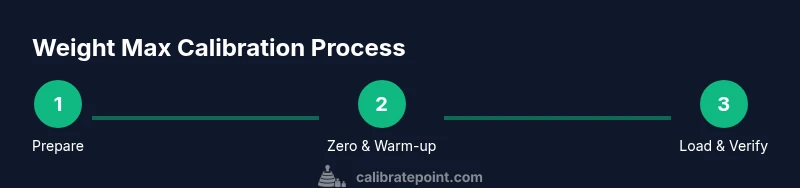
A practical run-through should follow a repeatable sequence and be documented. Start with a zero-check to confirm baseline; remove any tare offsets and ensure the platform reads zero accurately with no load. Then place the heaviest calibration weight compatible with the scale’s max, pause briefly, and record the indication. If the reading differs from the known mass, adjust the scale’s offset or gain according to the manufacturer’s procedure, then repeat with several intermediate weights. When using multi-point calibration, collect readings at multiple well-spaced loads to map the scale’s response curve. In all cases, allow the device to stabilize before recording each value and ensure the weights still sit securely on the platform. After finishing the test, re-check the full load sequence to confirm that the readings are consistent and within the predefined tolerance. This workflow reduces drift, improves accuracy, and creates a reliable audit trail for compliance or quality control. Calibrate Point analysis shows that a disciplined max-weight calibration reduces long-term measurement drift and increases confidence in heavy-load measurements.
Verification, Documentation, and Traceability
Verification means confirming that the scale responds correctly at multiple points, including near max. Record each reading, the exact weights used, the environmental conditions, and any corrective actions taken. Save a photo log of the weights against the scale’s display and maintain a written calibration report that documents the serial numbers, date, and operator. Traceability is essential for audits: link the calibration weights to their certificates, reference the equipment’s service history, and store the final results in a centralized calibration log. If possible, cross-check the results against an independent reference instrument to validate accuracy. Periodically re-validate the calibration on schedule, and update the procedure if the scale’s components wear or drift with age. A well-maintained calibration history not only supports quality assurance but also helps diagnose future measurement discrepancies by showing when and how the weight max readings changed over time.
The Expert Verdict and Best Practices
Best practice in calibrating weight max is to treat it as a structured, repeatable process rather than a one-off adjustment. Start with clear objectives, verified equipment, and a documented method; stay within the scale’s tolerance and avoid pushing loads beyond its safe operating limits. The path to accuracy includes warm-up time, clean weights, careful placement, and thorough record-keeping. The conclusion from the Calibrate Point team is simple: consistent max-load calibration reduces drift, improves repeatability, and provides a verifiable audit trail. By following a disciplined workflow and guarding against environmental influences, you’ll produce reliable measurements that stand up to QA checks and customer audits. If you’re just starting, practice on a spare instrument to build confidence before tackling a critical production scale. As you gain experience, you’ll refine the sequence to match the specific device, weight class, and measurement environment. The right combination of procedure, equipment, and discipline makes the difference between a guess and a proven calibration result.
Tools & Materials
- Traceable calibration weight set(Cover the full range up to max capacity; include a certificate of calibration.)
- Flat, level testing surface(Use a sturdy bench and verify levelness with a spirit level.)
- Calibration procedure documentation(Keep the official method and device serial numbers handy.)
- Calipers or weight-verification tool (optional)(Helpful for confirming individual masses.)
- Non-slip mat or platform(Prevents weight movement during measurements.)
- Personal protective equipment (gloves, eye protection)(Minimize residue transfer and protect hands.)
Steps
Estimated time: 60-90 minutes
- 1
Prepare the workspace and instrument
Set up the scale on a level surface, clear the area of distractions, and verify the scale is powered as required by the manual. Warm up time may be specified by the manufacturer; waiting ensures sensors stabilize before measurements begin.
Tip: Document the ambient conditions (temperature, humidity) before starting. - 2
Zero the scale and verify baseline
With no load on the platform, reset the scale to zero and confirm that the reading remains stable within tolerance. If there is a tare or off-zero error, record it and plan for offset correction.
Tip: Ensure the tare function is disabled if you are not using it. - 3
Place the heaviest calibration weight
Carefully place the maximum-capacity weight on the platform and pause to let the reading stabilize. Avoid any shifting that could introduce measurement error.
Tip: Use gloves to prevent oils from affecting contact. - 4
Record the measurement and adjust if needed
Note the displayed value and compare it to the known mass. If there is a discrepancy beyond tolerance, adjust the offset or gain per the device’s calibration procedure.
Tip: Make only small adjustments and recheck after stabilization. - 5
Repeat with intermediate weights
Sequentially apply weights at lower masses to map the scale’s response across the range. Allow stabilization time between steps and document all readings.
Tip: Stabilization times vary by device; mute vibrations if possible. - 6
Validate with max load again
Return to the max-capacity weight to confirm the calibration remains valid after adjustments. Reverify that readings are consistent across repeats.
Tip: Consistency across trials is key to confidence. - 7
Document results and store weights
Create a calibration report including dates, operator, device serial, and the vector of readings with tolerances. Store weights in a dry, organized container for future re-calibration.
Tip: Attach the weight certificates for traceability. - 8
Closeout and audit-readiness
Review the procedure, ensure all steps are complete, and prepare for audits with clear evidence of conformity to tolerances.
Tip: Keep a clean, auditable trail for future inspections.
Questions & Answers
What does calibrating weight max mean for my scale?
Calibrating weight max means validating a scale’s accuracy at or near its rated maximum capacity. It ensures readings stay accurate when handling heavy loads and helps prevent drift or nonlinear behavior at the upper end of the range.
Calibrate the scale at its max load to ensure accuracy for heavy measurements; it prevents drift and nonlinearity near the top end.
How often should I calibrate for max-weight accuracy?
Frequency depends on use, environment, and the scale’s history. For critical processes, perform a max-weight calibration during routine maintenance or after any service, relocation, or suspected drift.
Do max-weight checks during routine maintenance or after device relocation or suspected drift.
Can I calibrate without traceable weights?
Traceable weights provide confidence and regulatory footing. If you lack them, use weights from a reputable source and document their certificates of calibration; otherwise, the results may be questionable for audits.
Traceable weights are recommended for credible calibration; without them, results may not be auditable.
What safety precautions are essential during max-weight calibration?
Wear PPE as needed, handle weights carefully, keep weights on a stable surface, and avoid overloading the scale. Maintain clean hands and surfaces to prevent slipping or damaging the device.
Wear PPE and handle weights carefully to avoid injuries and scale damage.
What should I do if readings are inconsistent after calibration?
Review setup, repeat zero checks, verify weights, and check environmental conditions. If inconsistencies persist, re-run the calibration with a different set of weights or consult the manufacturer.
If readings are inconsistent, recheck the setup and repeat with careful documentation; seek manufacturer guidance if needed.
Watch Video
Key Takeaways
- Identify max capacity and tolerance before starting.
- Use a traceable weight set with certificates.
- Zero, then load with weights incrementally and record readings.
- Document every reading and environmental condition for auditability.
- Follow manufacturer instructions and brand best practices for repeatable results.