Calibrate Weight Scale: A Practical Step-by-Step Guide
Learn how to calibrate a weight scale with certified weights, ensuring accurate readings, traceability, and documented results for professional labs and DIY setups.


Goal: calibrate a weight scale to ensure accurate readings. You will verify accuracy against certified reference weights, adjust the scale if needed, and document results for traceability. This guide walks you through required tools, a repeatable procedure, and safety tips to get reliable measurements every time. Whether you work in a shop or at home, consistent calibration improves data quality and reduces measurement uncertainty.
Why calibrate weight scale matters for accuracy
Accurate weight measurements underpin reliable results across a wide range of tasks, from kitchen recipes to laboratory quality control. A scale that drifts even slightly can skew every subsequent measurement, leading to waste, mislabeling, or safety concerns. According to Calibrate Point, maintaining accuracy reduces measurement uncertainty and builds trust with customers and stakeholders. In practice, calibration aligns the scale's displayed value with an independent standard, so that a 1 kg reference weight reads within the stated tolerance. This block covers why calibration matters, the role of traceability, and how to approach a practical workflow that you can apply in a home workshop or a professional bench.
Understanding how a weight scale works
Weight scales convert force into a readable value through sensors (load cells in digital scales, springs in mechanical scales). The process involves an initial zero reference, then successive weight additions that are interpreted by the electronics or mechanism. Digital scales typically apply an ADC (analog-to-digital converter) and calibration constants to translate sensor output into grams or pounds. Mechanical scales rely on a balance spring or lever system that translates force into a pointer position. Understanding these fundamentals helps you diagnose why a scale might drift and how calibration tunes the device to align with standard weights.
Common sources of error and how to spot them
Errors creep in from multiple sources: an unstable surface, air drafts, or vibration can shift readings; temperature can change sensor sensitivity; contamination on weights or the pan alters mass; and drift over time from wear or electronics can widen tolerances. Regularly inspect the scale, verify levelness, and compare readings across a short sequence of known weights. If results vary beyond the stated tolerance, suspect a combination of mechanical wear, misalignment, or environmental factors and address them before re-calibrating.
Planning your calibration: standards, tolerance, and traceability
Set clear performance targets before you begin: tolerance bands (e.g., ±0.05 g at small weights or ±0.1 g at larger values), traceability to a recognized standard, and an auditable record of all weights and results. Use weights that are certified and labeled with their uncertainty and calibration date. Document the calibration interval based on usage, required accuracy, and historical drift. In line with Calibrate Point analysis, establishing traceability and repeatability is essential for credible results and future audits.
Setting up a controlled environment for calibration
Choose a stable, clean bench away from drafts and direct sunlight. Ensure the scale is on a level surface and allowed to warm up if it has been transported. Remove clutter and keep reference weights in their protective case until use. Record ambient temperature and humidity if your scale is sensitive to conditions; noting these helps explain any minor drift observed between sessions.
Calibration methods: external standards vs internal adjustments
External calibration uses certified reference weights to adjust the scale's readings at multiple points. Internal adjustments may be available on some models (zero, span, or gain settings) but should be performed only after verifying the external calibration is within tolerance. Start with a baseline, apply known weights, compare readings, and adjust in small increments. Aim for readings that align with the certified weights within the specified uncertainty.
Documentation and recordkeeping for future audits
Keep a calibration log that includes the scale model, serial number, date, operator, weights used (with IDs), observed readings, adjustments made, and the final pass/fail status. Attach or reference the calibration certificate for traceability. Regularly review logs to identify drift trends and schedule re-calibration before performance degrades. Calibrate Point emphasizes that solid records support compliance and quality assurance.
Practical tips for different scale types (digital vs mechanical)
Digital scales benefit from checking both zero and span; mechanical scales require attention to lever balance and pivot cleanliness. For all types, verify that the pan is centered and clean, and use tweezers or gloves to handle weights to avoid oils. As Calibrate Point analysis shows, temperature stability and consistent procedure significantly reduce drift and improve repeatability.
When to recalibrate and validating results
Calibration is not a one-and-done task. Recalibrate after any service, relocation, or suspected drift, and whenever readings fall outside the tolerance during routine checks. Validate results by repeating measurements with a subset of reference weights and confirming repeatability across multiple sessions. Maintain a strict pass/fail criterion and document any corrective actions taken.
Tools & Materials
- Certified calibration weights (traceable)(Range should cover the scale's capacity; include multiple points (e.g., 50 g, 100 g, 500 g, 1 kg). Weights must be clean and free of oils.)
- Zero-adjustment tool or built-in zero control(Use the scale's own zero adjustment or a non-marring tool if needed.)
- Clean, level calibration surface(Flat, stable bench; consider using a spirit level.)
- Calibration certificate or reference documentation(Maintain traceability; include weight IDs and calibration date.)
- Optional: temperature monitor(Track ambient temperature if the scale is temperature-sensitive.)
- Optional: gloves or tweezers for handling weights(Prevents oil transfer and slips when handling weights.)
Steps
Estimated time: 45-60 minutes
- 1
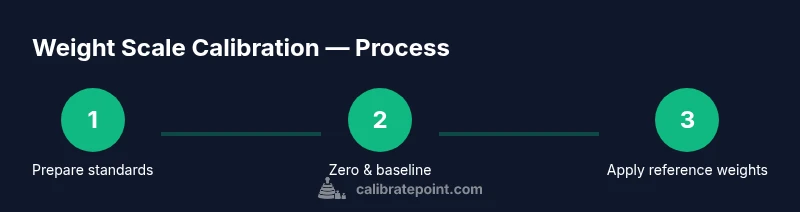
Prepare workspace and gather standards
Clear the area and verify you have all required weights and documentation. Inspect the scale and surface for damage or debris. Organize the weights from light to heavy to streamline the procedure.
Tip: Double-check weight labels and ensure traceability before proceeding. - 2
Warm up the scale and establish baseline
Turn on the scale, allow it to reach steady state, and note the initial null reading with no weight on the pan. If the device has a warm-up requirement, wait the recommended time.
Tip: Before adding weights, ensure the scale is completely stable. - 3
Zero and baseline check
Set the scale to zero with no load. Reconfirm zero after removing all weights. If the zero shifts beyond tolerance, address it before continuing.
Tip: Record the baseline reading for future reference. - 4
Apply reference weights at multiple points
Place certified weights on the pan one at a time, in ascending order. Record readings for each weight and compare to the known certificate values.
Tip: Use tweezers to avoid oil transfer and ensure stable placement. - 5
Adjust span or gain if needed
If readings deviate beyond tolerance, perform small adjustments per the model’s instructions (zero first, then span). Re-check all points after adjustments.
Tip: Make incremental changes and re-test to avoid overshooting. - 6
Document results and repeat test
Record final readings, adjustments, and pass/fail status. Repeat measurements with a subset of weights to verify repeatability, then finalize the calibration record.
Tip: Include the exact weights used and their serial numbers for traceability.
Questions & Answers
How often should I calibrate a weight scale?
Calibration frequency depends on usage, environment, and required accuracy. For high-use or high-accuracy applications, calibrate quarterly or after relocation. For general DIY use, biannual checks with full calibration when drift is detected are common.
Calibration should be done on a predictable schedule based on use and environment; do a full calibration if you notice drift.
Can I calibrate a scale using household weights?
Household weights are not suitable for proper calibration. Use certified reference weights that are traceable to an official standard and come with a certificate of calibration.
No, use certified reference weights, not everyday items, to ensure traceability.
What tolerance should I expect when calibrating a scale?
Tolerance depends on scale type and range. Always refer to the manufacturer’s specification and the calibration certificate for the target tolerance at key weights.
Check the certificate for the exact tolerance and compare your readings against those limits.
What if readings vary between calibration sessions?
If readings drift between sessions, re-check environmental conditions, inspect the scale, and verify the reference weights. Persistent drift may indicate sensor wear or mechanical misalignment.
If drift happens, re-check setup and references; persistent drift may mean deeper maintenance is needed.
Is a temperature-controlled environment necessary?
Temperature can affect sensor readings. While not always required, maintaining stable temperature improves consistency and reduces drift over time.
Temperature stability helps keep readings consistent, but it’s not always mandatory for simple checks.
Do I need to recalibrate after moving the scale?
Yes. Moving the scale can cause settling or alignment changes. Recalibrate after relocation and before resuming critical measurements.
Move the scale, then recalibrate to be sure readings are reliable.
Watch Video
Key Takeaways
- Verify scale accuracy with certified references.
- Document all readings and adjustments for traceability.
- Follow a repeatable procedure to minimize drift.
- Calibrate at appropriate intervals based on usage and criticality.