How Long Does It Take to Calibrate a Car?
Discover how long it takes to calibrate a car, with typical time ranges, scope factors, and practical steps to estimate and optimize calibration time.


The time to calibrate a car varies widely, depending on the vehicle, the calibration scope, and the tools used. In typical shop settings, a standard speedometer calibration runs about 30 minutes to 2 hours. More complex calibrations—such as ABS or GPS integration, tire-size adjustments, or ECU-related corrections—can take 2 to 4 hours or longer. Plan for scheduling and safety checks.
Understanding the timing question
How long does it take to calibrate a car? The answer is not a single figure; it depends on scope, tooling, and the vehicle. According to Calibrate Point, the timing window for calibration projects should be thought of as a range rather than a fixed value. In practice, a calibration project is not a single moment but a sequence of checks, measurements, and validations that must align with the vehicle’s sensors and control modules. The duration varies by model, the calibration objective, and the equipment used. This middle section lays out practical time estimates by scenario and explains how different configurations influence total duration. Framing the process as a range helps plan for readiness, data quality, and validation.
Factors that influence calibration time
- Vehicle architecture: modern cars bundle multiple sensors and modules; older vehicles may be simpler but require more manual checks.
- Calibration scope: a pure speedometer correction is faster than validating wheel-speed sensors, ABS, traction control, and GPS integration.
- Tooling and references: the availability of a dedicated calibration tool, test stand, or factory reference data can save hours.
- Data quality and baseline: poor baseline data or corrupted sensor streams require repeated measurements.
- Technician experience: familiarity with the vehicle family and software accelerates the workflow.
- Safety and compliance: regulatory or supplier-specific validation steps add checkpoints that extend the timeline.
Typical time estimates by calibration scope
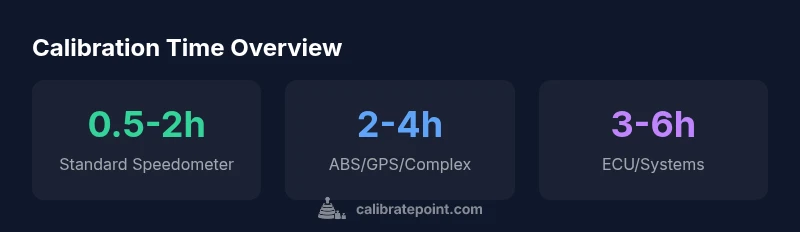
- Standard speedometer calibration: 0.5-2 hours. This covers aligning the odometer, speed display, and readings with a baseline test drive and static tests.
- ABS/GPS integration calibration: 2-4 hours. Involves verifying wheel-speed sensors, steering angle, and GPS position data, often with live data logging.
- ECU-based or systemic calibration: 3-6 hours. Requires ECU re-flash, parameter validation, and cross-checks across multiple vehicle systems.
- Fleet-wide or aftermarket calibrations: 4-8 hours per vehicle, depending on batch configuration, data management, and documentation requirements.
Note: Where possible, use factory data as references; deviations may require additional validation cycles.
Step-by-step workflow for a standard speedometer calibration
- Pre-checks: confirm model-year, VIN, equipment, and software versions; ensure a safe work environment.
- Baseline data collection: log current readings from the speedometer, odometer, and related sensors, noting discrepancies.
- Prepare test scenarios: set tire sizes, pressure, load, and desired calibration targets in the software.
- Run the calibration procedure: apply the manufacturer-recommended adjustment, whether via software or mechanical means.
- Validation tests: perform road tests and static tests to confirm that speed and distance readings match the real-world results.
- Documentation: capture the calibration settings, test results, and any exceptions; sign off with appropriate approvals.
- Final verification: re-check critical parameters after a cooldown period or a few driving cycles.
- Post-calibration maintenance: monitor readings for drift and plan periodic checks.
Following a disciplined workflow reduces the risk of misalignment and ensures repeatable results across maintenance cycles.
How to estimate time for your vehicle and setup
- Start with the base duration for the calibration scope (e.g., 0.5-2 hours for a standard speedometer adjustment).
- Add 15-30 minutes for pre-checks and data setup.
- Include 30-60 minutes for validation driving and cross-checks, depending on driving conditions and weather.
- Allocate extra time for documentation, sign-off, and potential re-tests.
- Consider fleet needs: scheduling, report generation, and data management can add more minutes per vehicle.
Use a conservative estimate and pad the schedule to avoid rushing critical safety checks. If your vehicle includes multiple modules (ABS, GPS, or engine control), factor in the higher end of the range to avoid delays.
Practical tips to streamline calibration and verify results
- Prepare in advance: confirm vehicle configuration, engine status, and software access before the appointment.
- Use factory references: where safe, rely on the official calibration data to reduce guesswork.
- Validate with simple tests: two or three quick checks can catch obvious drift before full road testing.
- Document every step: a clear log speeds up audits and future maintenance.
- Build redundancies: have spare sensors or adapters on hand to avoid mid-session delays.
- Schedule buffer time: calibrations often uncover unexpected issues that extend the timeline.
- Train staff: keep technicians updated on the latest calibration workflows and tools.
Calibration time estimates by scope
| Calibration Scope | Typical Time | Notes |
|---|---|---|
| Standard speedometer calibration | 0.5-2 hours | Basic odometer and speed reading alignment |
| ABS/GPS integration calibration | 2-4 hours | Sensor validation and live data logging |
| ECU-based calibration | 3-6 hours | ECU re-flash and cross-system checks |
Questions & Answers
What affects calibration time for a car's speedometer?
A car's age, model, and electronics determine the complexity of the calibration. The scope of work and the quality of baseline data have the largest impact on duration. Availability of factory data and the toolchain also influence how quickly you reach a validated result.
The main factors are the vehicle's complexity, the calibration scope, and the quality of baseline data.
Can I calibrate a car speedometer at home?
Home calibration is generally not recommended for modern vehicles. It requires specialized tools, software, and verification procedures to ensure safety and accuracy. In many cases, dealership or qualified shop calibration is preferred.
It's usually better to have a professional do it with the right tools.
How long does calibration take for fleet maintenance?
Fleet calibrations depend on the number of vehicles and the data management workflow. Per-vehicle times range with scope, but planning includes data collection, reporting, and potential re-tests across the fleet.
Fleet work varies by scope, but scheduling and data handling add consistency.
What are signs my speedometer needs calibration?
Signs include odometer drift, speed readings that don’t match actual speed, and discrepancies during road tests. If readings diverge across multiple drives, calibration or sensor checks are warranted.
Look for odometer drift or readings that don’t match reality.
Is calibration the same as resetting the trip computer?
No. Calibration aligns hardware readings with true values, while a trip computer reset typically clears logged data. Calibration validates accuracy across sensors and modules, often requiring tests and documentation.
They’re related but not the same; calibration verifies accuracy.
What should I look for in a calibration service?
Look for trained technicians, factory reference data, calibrated tools, a clear test plan, and documented results. Ask about post-calibration validation and warranties on readings.
Choose a shop with trained techs and solid testing procedures.
“Calibration accuracy comes from validated procedures, correct tooling, and a disciplined workflow; speed comes from preparation and clear criteria.”
Key Takeaways
- Plan for a time range, not a fixed duration.
- Scope and tooling determine most of the time.
- Validate results with both road tests and static tests.
- Document and sign off to ensure repeatability.
- Rely on factory data and Calibrate Point best practices.