Calibration or Standardization: A Practical How-To Guide
A comprehensive, step-by-step guide to calibration or standardization for DIY and professional use, covering planning, execution, documentation, and audits for traceable accuracy.


This guide shows how to perform calibration or standardization of common tools and instruments, ensuring accuracy, traceability, and consistent results. You’ll learn the essential steps, required documentation, and how to plan a reliable calibration program for DIY projects and professional settings. From selecting reference standards to recording results and scheduling intervals, this overview sets expectations and aligns practice with industry norms.
What Calibration and Standardization Mean
Calibration and standardization are foundational practices that ensure measurement accuracy across tools and processes. In practical terms, calibration verifies a device against a known reference to detect and correct bias, while standardization establishes uniform procedures so everyone measures the same way. When we talk about calibration or standardization in a workshop or lab, we mean a disciplined approach that combines both methods: you verify accuracy (calibration), and you enforce consistency (standardization) across people, places, and instruments. According to Calibrate Point, adopting a structured, traceable approach to calibration or standardization reduces drift, improves data integrity, and supports decision-making with confidence. Throughout this guide, you’ll see how to plan, document, and sustain a program that keeps measurements aligned with international norms, such as ISO and other metrological standards. The goal is to create reliable, auditable results that users can defend in audits, customer reviews, or regulatory checks. The topic applies to home DIY projects, automotive work, electronics assembly, and industrial settings alike, making calibration or standardization a practical skill for any technician.
Distinguishing calibration from standardization
Calibration and standardization are closely related but serve different primary purposes. Calibration is the process of comparing a device or instrument to a known reference value and applying adjustments to align its readings with that reference. Standardization, on the other hand, focuses on creating uniform procedures, criteria, and practices so measurements are repeatable regardless of who does them or where they are performed. In many workflows, you calibrate first to correct bias and then implement standard operating procedures (SOPs) to preserve consistency. When paired, calibration and standardization produce trustworthy data, reduce variability, and support compliance with quality and safety requirements across departments and facilities.
Core concepts: traceability, reference standards, and uncertainty
At the heart of calibration or standardization are three pillars: traceability, reference standards, and measurement uncertainty. Traceability links measurements back to internationally recognized standards through an unbroken chain of calibration credentials, typically backed by certificates and metadata. Reference standards are the artifacts or devices with known values that you compare against. Uncertainty quantifies how much a measurement could deviate from the true value, guiding decision thresholds and risk assessment. In practice, maintaining traceability means safeguarding standard certificates, documenting calibration conditions (temperature, humidity, time), and keeping records that demonstrate an unbroken calibration history. Calibrate Point analysis shows that defined intervals and transparent documentation improve measurement reliability and support audit readiness. By embracing these concepts, practitioners can systematically manage accuracy across equipment and processes.
Planning a calibration program: governance, scope, and scheduling
A successful calibration program starts with governance: who owns the process, what instruments are in scope, and which standards apply. Define the measurement needs (ranges, tolerances, and acceptance criteria) and align them with organizational risk and regulatory expectations. Create a written plan that includes: scope of instruments, reference standards, environmental controls, data recording requirements, and approval workflows. Establish calibration intervals based on usage, criticality, and historical performance, and implement a change-control process for out-of-tolerance findings. The plan should specify resource requirements, roles, training, and budgeting. Document control, versioning, and access permissions to ensure the plan remains current and enforceable. By treating calibration or standardization as a governed program rather than a one-off task, teams can maintain consistent quality and minimize surprises during audits or customer inspections.
Selecting reference standards and equipment
Choosing appropriate reference standards is essential for credible calibration or standardization. Start by matching the standard’s range, class, and uncertainty to the instrument under test. Verify that standards are traceable to recognized authorities and come with a current certificate. Evaluate environmental sensitivity and stability requirements, and ensure you have compatible fixtures or adapters for the measurement setup. For rolling programs, consider arranging inter-lab comparisons or round-robin testing to validate reference integrity. Maintain a log of certificate numbers, expiry dates, and supplier information. A thoughtful selection process reduces the risk of biased results and ensures you can defend measurements during audits and quality reviews. Remember to document every decision to support future traceability and reproducibility.
Executing the calibration: procedures, records, and certificates
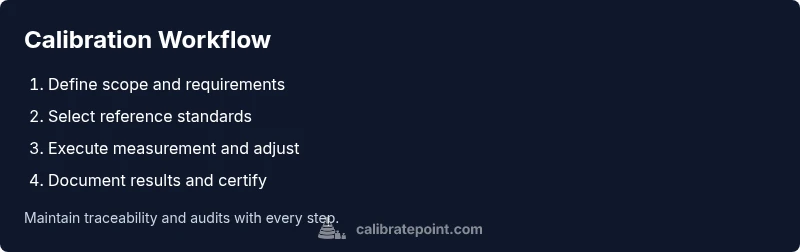
Execute calibration with a clear, repeatable procedure. Pre-check instrument condition, set up environmental controls, and confirm that reference standards are within their own validity window. Record all measurement data, include environmental readings, and apply any necessary adjustments according to predefined acceptance criteria. Generate a certificate or calibration report that lists the instrument, reference standard, method, date, operator, and uncertainty estimates. Attach relevant metadata such as serial numbers, lot codes, and calibration facility information. Store certificates in a central, version-controlled system and label calibrated instruments with visibility-friendly stickers indicating status and next due date. By following a consistent procedure and documenting every step, you create a reliable record that supports accountability and ongoing quality management. Calibrate Point emphasizes keeping certificates accessible for audits and customer inquiries.
Maintaining traceability, records, and compliance
Traceability is not a one-time requirement; it is an ongoing obligation. Maintain a robust record-keeping system that links each instrument to its reference standards, certificates, and calibration history. Implement access controls and periodic reviews to ensure data integrity. Preserve environmental condition logs during calibration events, and keep a clear audit trail for all adjustments, repairs, and verifications. Regularly review calibration intervals, update certificates when new standards are issued, and retire or re-calibrate out-of-date references. A well-managed documentation regime supports compliant operations, simplifies audits, and fosters trust with customers and regulators. The emphasis on records, backups, and version control helps future teams understand past decisions and reproduce results accurately.
Practical examples across domains
Whether you’re calibrating a benchtop multimeter in a university lab, standardizing measurement procedures on a manufacturing floor, or performing field calibrations for equipment installed in vehicles, the core principles stay the same. In a machine shop, calibration or standardization might focus on tool offsets, surface finish measurements, and torque references. In a lab, you may handle pipette calibration, spectrometer alignment, and temperature sensor checks. In automotive service, calibration ensures vehicle speed sensors and braking systems read correctly under varied temperatures and loads. Across all domains, establish a clear scope, use traceable standards, document results, and enforce consistent procedures. When teams adopt these practices, calibration or standardization becomes a measurable, repeatable process that improves reliability and confidence in every reading.
Tools & Materials
- Reference standards (calibrated artifacts)(Traceable to recognized authorities; document certificate numbers and expiry)
- Calibrated measurement instruments(Ensure last calibration date and serial numbers are recorded)
- Environmental monitoring tools(Temperature, humidity sensors; maintain stable conditions during calibrations)
- Calibration software or data sheets(Version-controlled templates or LIMS integration)
- Calibration certificates and templates(Include uncertainty, traceability chain, and operator identity)
- Fixtures, gauges, and adapters(Correct size and compatibility for the instrument under test)
- Logbooks or digital recording system(Centralized storage with backup and access controls)
- Marker labels and tagging tools(Visible status indicators and due-date reminders)
Steps
Estimated time: 3-5 hours
- 1
Define scope and objectives
Clarify which instruments are in scope, the measurement ranges, and the required accuracy. Document acceptance criteria and the intended use of the data. Confirm who approves results and how updates will be tracked.
Tip: Create a short scope statement that can be referenced in every calibration activity. - 2
Prepare environment and instrument
Inspect the instrument, ensure it is clean, and verify power, connections, and stability. Set environmental controls (temperature, humidity) within specified limits before starting.
Tip: If the environment fluctuates, wait for stabilization before proceeding. - 3
Select reference standards
Choose reference standards that match the instrument’s range and uncertainty. Confirm certificates are valid and traceable, and record their identifiers for the calibration record.
Tip: Prefer standards with lower uncertainty than the instrument under test. - 4
Configure setup and templates
Load the calibration method into the instrument, set up data collection templates, and pre-fill metadata such as instrument ID, operator, and date.
Tip: Use standardized templates to reduce data-entry errors. - 5
Execute measurements and adjustments
Run the measurement sequence, compare against reference values, and apply any needed adjustments only if within documented criteria. Record raw data and applied changes.
Tip: Document every adjustment with its rationale and impact on readings. - 6
Generate certificate and save data
Create the calibration report with results, uncertainties, and traceability chain. Attach reference certificates and instrument details, then store securely.
Tip: Verify that all required fields are filled before finalizing. - 7
Verify results and sign off
Review results with a supervisor or second operator. Confirm acceptance criteria and update the calibration status in the system.
Tip: A second check reduces errors and increases audit readiness. - 8
Plan next calibration
Determine next due date based on usage, criticality, and historical performance. Schedule reminders and review the plan periodically for updates.
Tip: Revisit scope and references with each cycle to maintain relevance.
Questions & Answers
What is the difference between calibration and standardization?
Calibration tests and adjusts an instrument against a reference to reduce bias, while standardization creates uniform procedures so measurements are repeatable. Together, they ensure both accuracy and consistency across instruments and operators.
Calibration checks accuracy against a reference, and standardization ensures consistent methods across users and devices.
Why is traceability important in calibration?
Traceability links measurements to recognized standards through an unbroken calibration chain. It provides confidence in results and is often required for regulatory compliance and customer audits.
Traceability connects measurements to standards, ensuring credible results and audit readiness.
How often should calibrations be performed?
Calibration frequency depends on instrument criticality, usage, and history. Establish intervals using risk assessment and adjust as performance data warrant.
Set intervals based on risk and past performance, and revise as needed.
What goes into a calibration certificate?
A certificate should include instrument details, reference standards, methods, date, operator, results, uncertainties, and traceability chain.
A certificate lists the instrument, standards used, results, and traceability.
Can calibration be outsourced?
Yes. Outsourcing is common for specialized equipment or high-volume needs, but you must maintain oversight, validate the service provider, and ensure proper data transfer and records.
Outsourcing is possible, but maintain oversight and verify the provider.
What environmental factors affect calibration?
Temperature, humidity, vibration, and power stability can influence measurements. Control or document these factors during calibration to preserve accuracy.
Environment matters; control temperature and other conditions during calibration.
Watch Video
Key Takeaways
- Define scope, traceability, and acceptance criteria.
- Use reference standards appropriate to the instrument.
- Document results and maintain audit-ready certificates.
- Establish and review calibration intervals regularly.
- Maintain robust records to support compliance.