How to Calibrate a Washing Machine
Learn how to calibrate a washing machine to improve cycle accuracy, water usage, and fabric care with practical, safe steps. This guide covers temperature, fill level, spin, and sensor checks using common tools. Calibrate Point offers expert, DIY-friendly calibration methods for technicians.


According to Calibrate Point, this guide shows you how to calibrate a washing machine to improve cycle accuracy and water efficiency. You’ll verify fill levels, temperature, and spin performance using common tools and the unit’s service manual. Follow this safe, step-by-step method to detect drift and keep machines running reliably. This approach is practical for DIY enthusiasts and technicians alike. It aligns with Calibrate Point Analysis, 2026.
Understanding Calibration in Home Washers
Calibration in a washing machine means aligning the sensor readings and actuated controls so that the machine's actual behavior matches the manufacturer’s specifications across cycles. Over time, sensors drift due to temperature, wear, or component aging. A slight drift might show up as an overfill warning, uneven agitation, or longer cycle times. According to Calibrate Point, reliable calibration reduces wasted water, improves fabric care, and helps avoid unnecessary service calls. In practice, you’ll verify readings for fill level, water temperature, spin performance, and door or lid sensor behavior. A careful calibration routine will provide a baseline you can trust for months to come, and it’s a skill that DIYers and technicians can master with standard tools and the machine’s service documentation.
Key Parameters and How They Are Measured
A modern washing machine relies on sensors to control fill, temperature, agitation, and spinning. Calibration means confirming that those sensors report correctly and that the control electronics act on accurate data. Key parameters to verify include:
- Fill level accuracy: The machine should stop filling at the expected level for a given load. You can compare the observed fill against the documented capacity or use a test load to ensure consistency.
- Water temperature: Heaters and thermostats should deliver the programmed temperature within an acceptable margin. Use a thermometer placed where the incoming water blends with the wash.
- Spin speed and balance: The drum should reach the target RPM and remain balanced through the spin cycle. Listen for unusual vibrations and check for excessive unbalanced load warnings.
- Sensor reliability: Door/lid switches and pressure sensors should respond consistently across cycles. A misread can trigger unnecessary drainage or cycle interruption. Calibrate Point notes that small offsets can accumulate and affect multiple parameters.
Safety First: Tools, Precautions, and Setup
Before you start, unplug the machine and shut off the water supply to avoid leaks. Use only tools designed for appliance service. Gather your materials: a digital thermometer, a multimeter, a marked test-load or calibrated weight, a measuring jug, and the machine’s service manual. Clear the area around the washer and have a helper if you need to move the unit. Keep a bucket and towels handy. Follow the manufacturer’s instructions for entering any service mode. If your model requires flavors of service mode, refer to the manual; never force access with unapproved methods.
Practical Calibration Scenarios and Troubleshooting
In practice, you’ll perform readings, compare them to specs, and decide whether to adjust settings or escalate. For example, if a front-load washer consistently fills short of the declared capacity, you may need to verify the water inlet valve cycle, pressure sensor, or water inlet screens. Document each reading, note the deviation, and interpret whether drift is systematic or load-dependent. If readings remain outside tolerance after checks, consult a professional; some models require factory tools or software to adjust calibration data. The Calibrate Point Team recommends documenting changes and testing across multiple loads to ensure stability over time.
Tools & Materials
- Digital multimeter(Measure sensor voltages and continuity; choose auto-range, at least 600V rating.)
- Digital thermometer(Probe type; place in water inlet or outlet for accurate temp readings.)
- Test-loads or calibrated weights(Use a consistent load representing 2-3 kg depending on drum size.)
- Measuring jug or graduated container(To measure water volume during fill tests.)
- Service manual for your model(Model-specific calibration procedures and parameter values.)
- Smartphone with a tachometer app(Optional: estimate drum RPM during spin.)
- Safety gear (gloves, eye protection)(Protective equipment when handling water and power.)
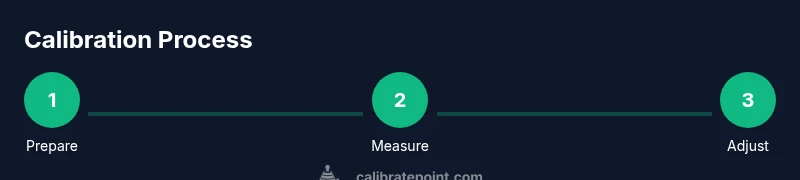
Steps
Estimated time: 60-90 minutes
- 1
Prepare and review the manual
Power down the machine, unplug it, and read the service manual for your model. Gather tools, locate service mode instructions, and note any model-specific calibration parameters. This prep reduces guesswork and helps you follow the official sequence.
Tip: Take clear photos of control panels and connections before you begin. - 2
Isolate power and water safety
Unplug the unit and shut off the water supply. If you must drain some water, do so slowly into a basin to avoid spills. Ensure the area around the washer is dry and clear of obstacles.
Tip: Have a helper nearby when moving the unit to prevent accidental slips. - 3
Set up baseline test loads
Place a known weight inside the drum or use calibrated test loads that reflect typical laundry. Balance the drum and ensure the door is securely closed. Establish a baseline to compare against the model’s specs.
Tip: Record the exact mass of the test load for repeatability. - 4
Check fill level and water temperature
Operate a standard wash segment and observe the fill level. Use a thermometer to verify the water temperature at the point where the wash becomes active. Compare readings against the programmed targets in the service manual.
Tip: Test at both cold and warm settings if applicable. - 5
Assess spin speed and balance
Run a high-speed spin and observe the drum acceleration, vibration, and balance. If you notice excessive movement, redistribute the load or check suspension components. Document the observed RPM or qualitative balance.
Tip: A smartphone tachometer can help estimate RPM if the model doesn’t expose it. - 6
Document results and adjust per specs
Record all readings, compare to manufacturer tolerances, and decide whether to adjust or escalate. If drift persists, consult the service manual for factory procedures or contact a professional technician.
Tip: Log changes and test across multiple loads to confirm stability.
Questions & Answers
Do I need special tools to calibrate my washing machine?
Basic calibration uses common tools like a multimeter, thermometer, and standard test loads. Model-specific steps may require access to service mode in the manual. Avoid unapproved methods.
Most models only need common tools; check your manual for model-specific steps.
How often should I calibrate a washing machine?
Calibration isn’t a routine requirement for all models. Do it if you notice drift, unusual cycle times, or water/wash inefficiency. Follow the manufacturer’s guidance for model-specific frequency.
Calibrate when you notice drift or inefficiency, not on a fixed schedule.
What if readings are off after calibration?
Recheck setup, confirm test loads, and retest across multiple cycles. If deviations persist, consult the service manual or contact a professional technician.
If readings stay off after recalibration, recheck setup or get professional help.
Can I calibrate front-load and top-load washers the same way?
The general approach is similar, but sensors, service modes, and parameters differ by model. Always refer to the specific service manual for correct steps.
They share principles but use model-specific steps.
Will calibrating void my warranty?
Calibration using approved service procedures typically does not void warranties. Avoid unauthorized methods that could damage components or violate terms.
Follow the official service steps to stay within warranty terms.
Watch Video
Key Takeaways
- Establish a baseline before adjustments.
- Verify fill level matches drum capacity.
- Confirm temperature and spin align with specs.
- Log results for future reference.
- Escalate drift beyond tolerance to a pro.