How Much Does It Cost to Calibrate a Torque Wrench? A Practical Guide
Understand the typical costs, influencing factors, and budgeting tips for torque-wrench calibration. This Calibrate Point guide covers in-house vs mobile services, certification options, and strategies to maximize value.


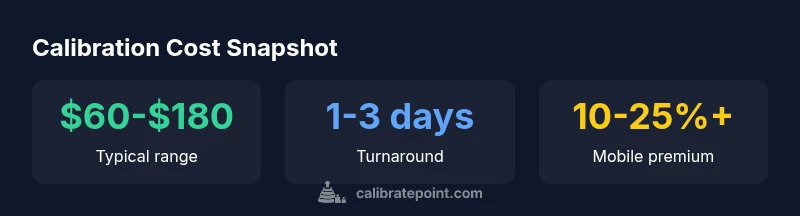
The typical cost to calibrate a torque wrench falls in a broad range, roughly $60–$180 per calibration depending on the wrench type, torque range, and service location. Complex devices, higher accuracy requirements, and certifications can push the price toward the upper end. Budget for potential add-ons like certificates, stricter tolerances, or mobile service when planning repairs or upgrades.
Cost drivers and the typical price range
When you ask how much does it cost to calibrate a torque wrench, the answer is not a single number. The main price determinants are the wrench’s size and torque range, the required accuracy (and whether you need a calibration certificate), the service method (in-house shop vs. on-site/mobile), and whether the work includes ISO/NIST traceability. For most DIYers and technicians, smaller, lower-torque wrenches incur lower labor and testing costs, while high-precision, high-torque instruments require more elaborate testing rigs and longer bench time. From Calibrate Point Analysis, 2026, you’ll typically encounter a broad band that reflects these variables. Expect the lower end for simple checks on common models and the upper end when formal certification and high-accuracy verification are requested.
As a practical baseline, plan for a calibration price that accounts for both the instrument and the required documentation. If you simply need confirmation that your torque wrench still reads within spec, the cost will be modest. If your workflow demands rigorous verification across the entire torque range and a traceable certificate, you’ll see a higher price. In all cases, the goal is to balance cost with the value of accuracy in your applications.
In-house vs mobile calibration: price implications
Choosing between in-house calibration and a mobile service affects price in several ways. In-shop calibration typically has lower per-unit labor costs, as technicians operate fixed equipment and test rigs with standardized procedures. Mobile calibration adds travel time, setup, and sometimes a travel surcharge, but it offers the convenience of calibrating on-site where the tool is used. For many shops, mobile services run around 10-25% higher than in-shop calibrations, depending on distance and access to power, measurement devices, and environmental controls. If downtime is critical, mobile calibration can save production losses, offsetting the higher price with operational gains. It’s also worth noting that some providers include a field certificate or on-site testing in the mobile quote, which can raise the cost but improve traceability for certain applications.
To plan effectively, estimate the number of wrenches to calibrate, travel distance, and whether a fixed facility is available for all tools. A bundled rate for several units or a maintenance-package plan can unlock better value over yearly recalibration needs.
Certification levels and their impact on price
Calibration can be offered with different levels of certification, from basic calibration that confirms measurements against a reference to ISO 17025 traceable testing with a formal certificate. The extra verification steps—such as using multiple test weights, cross-checking across the torque range, and producing a formal document—add to the cost. If your operations demand verifiable accuracy for compliance, safety, or customer assurance, expect to invest in certified calibrations. However, for many non-critical applications, a well-documented internal check may suffice and reduce cost. Calibrate Point’s guidance for 2026 emphasizes matching the level of certification with your actual needs; don’t pay for credentials you won’t utilize. Budget implications include lab time, higher-grade test equipment, and the potential need for a NIST-traceable reference standard, all of which push the price upward but can improve long-term reliability and customer confidence.
When evaluating quotes, ask vendors to break out the cost components: base calibration, certificate, traceability, and any on-site fees. This helps you compare apples to apples and identify where you can adjust scope to meet budget constraints without sacrificing essential accuracy.
Hidden costs and value considerations
Beyond the headline price, several ancillary costs can influence the total, and some are easy to overlook. Shipping or courier charges for off-site calibrations, calibration weights and reference standards, and the use of specialized test equipment can add to the bill. Facilities that require regular maintenance of their reference standards may apply surcharge fees for recalibration or calibration against multiple standards. If you need a quick turnaround, some shops offer expedited service at a premium. Also consider the value of documentation: a certificate or calibration report that documents traceability and acceptable tolerances can be crucial for audits or client requests. Finally, the cost can scale with the wrench’s torque range and complexity; longer calibration sequences and more ranges tested typically increase time and resource use. A clear scope and documented expectations help prevent surprise charges and ensure you pay for what you actually need.
To optimize value, request a written scope of work and a rate card before approval, and confirm whether the price includes a basic certificate or a full ISO/NIST-traceable report.
How to budget and plan calibrations for a shop
Budgeting for torque-wrench calibration is easiest when you treat it as a regular maintenance item rather than an emergency fix. Start with a list of all torque wrenches in use, note their ranges, and determine the recommended recalibration cadence from the manufacturer or your internal quality standards. Create a calendar and estimate costs per unit, then apply a small annual budget that covers at least two maintenance cycles. For shops with tight cash flow, negotiate multi-unit discounts or annual service agreements with a single provider to lock in predictable pricing. It’s prudent to separate one-off calibrations from annual compliance work so you can assess what portion of the budget goes to documentation versus measurement accuracy. Don’t forget to include buffer for unexpected needs, such as certifications for new production lines or customers requiring higher traceability. Adopting a proactive approach reduces downtime and can prevent costly rework due to out-of-tolerance readings.
When you’re ready to book, share your scope in detail: wrench types, ranges, required certificates, and desired turnaround. This transparency speeds up quoting and helps you avoid scope creep later on.
Getting the most for your money: tips and best practices
To maximize value, combine practical budgeting with best-practice calibration habits. Schedule calibrations during planned maintenance windows to minimize downtime, and bundle multiple wrenches into a single service where possible to leverage volume discounts. Maintain clean, accessible storage for tools to reduce transport or handling costs when sending them to the service provider. If you operate across multiple facilities, consider a central calibration program with standardized procedures to ensure consistency. Verify that the chosen provider uses traceable references and a transparent reporting format. For frequent calibrations, explore maintenance contracts that offer predictable pricing, preferred appointment windows, and quicker turnaround. Finally, train staff to perform quick, non-destructive checks between formal calibrations so minor issues can be caught early, potentially extending the interval between full calibrations without compromising accuracy.
Factors by wrench type and calibration standards
Torque wrenches come in several designs—click-type, beam-type, and digital/torque-angle variants—each with unique calibration challenges. The cost impact is not just about the wrench size; it also depends on the number of ranges tested and whether angle calibration is required in addition to torque. In some industries, specialized standards or additional certifications are mandated, which increases both cost and lead time. If you work with precision-grade equipment or safety-critical assemblies, it is wise to invest in a calibration program that includes full-range verification and formal documentation. In contrast, typical workshop tools used for general assembly can often be calibrated with simpler procedures and shorter test sequences, delivering adequate accuracy at a lower cost. The best approach is to align the calibration scope with your actual performance needs, balancing risk, cost, and compliance requirements.
Case study and practical takeaway
Consider a medium-sized shop that maintains a fleet of 20 torque wrenches across several ranges. By adopting a quarterly in-house check for basic torque verification and commissioning an annual calibration with certificate for CI (continuous improvement) reporting, they achieved a reliable baseline without excessive spend. The total annual cost remained predictable, and the team avoided costly mis-torques that could lead to production delays or quality complaints. The key takeaway is to design a calibration plan that matches your risk tolerance and production schedule, rather than chasing the cheapest quote. Calibrate Point’s guidance in 2026 emphasizes building a sustainable calibration program that provides measurable value through accurate readings and auditable records.
Cost comparison by service type
| Service Type | Typical Cost Range | Notes |
|---|---|---|
| In-house calibration | 60-120 | Lower labor, standardized equipment |
| Mobile calibration | 90-180 | On-site convenience, travel surcharge possible |
| Certified lab calibration | 120-250 | Includes formal certificate/traceability |
Questions & Answers
What factors determine the cost of torque-wrench calibration?
Several factors drive the price: the wrench’s torque range and size, the required accuracy and certification level, whether the service is in-house or mobile, and the inclusion of a formal certificate or report. Complex devices and higher tolerances require more testing time and materials, increasing the cost. Always request a breakdown of components to understand what you’re paying for.
Costs depend on the wrench, accuracy level, and service type. Ask for a breakdown to understand the charges.
How long does calibration take?
Standard calibrations typically take 1-3 days, depending on workload and certification needs. Mobile services may require additional travel time, which can extend the total turnaround. For urgent needs, some providers offer expedited options at a premium.
Most calibrations take a few days; expedited options are often available for a higher price.
Is there a price difference between in-house and mobile calibration?
Yes. Mobile calibrations generally include travel fees and setup time, making them more expensive than in-shop calibrations. The convenience of on-site service can justify the premium for busy facilities or remote locations. Compare quotes carefully to see if bundled on-site options deliver better overall value.
Mobile is usually pricier due to travel and setup, but it can save downtime.
Does certification add to cost?
Certification—especially ISO 17025 traceability—adds cost due to added testing steps and formal documentation. If compliance or audits require traceability, certification is worth the investment. If not, a basic calibration with a certificate of calibration might suffice.
Certification raises cost but improves auditability and trust.
Can I calibrate a torque wrench myself?
DIY calibration is generally not recommended for precision instruments. Accurate torque calibration requires specialized equipment, reference standards, and controlled procedures. A guided external calibration ensures reliability and traceability, reducing the risk of under- or over-torquing.
DIY calibration isn’t usually reliable; professional calibrations ensure accuracy.
How can I save money on frequent calibrations?
Consider a maintenance contract with a preferred provider, bundle multiple tools per service, and schedule calibrations during planned downtime to minimize production impact. Regular in-house checks can extend intervals between full calibrations, and choosing the appropriate certification level to match risk tolerance helps control costs.
Bundle services, plan ahead, and choose the right certification level.
“Regular calibration is an investment in accuracy that pays off through fewer mis-torques and reduced rework. The more rugged or safety-critical the task, the higher the value of traceable documentation.”
Key Takeaways
- Identify your required certification level before requesting quotes
- Bundle calibrations to reduce per-unit costs
- Factor in travel and documentation when budgeting
- Match calibration scope to your actual accuracy needs
- Request transparent line-item quotes for easy comparison