Calibrate Distance on Samsung Watch: A Practical Guide
Learn how to calibrate distance on your Samsung watch with a practical, step-by-step approach. Improve GPS accuracy, stride settings, and workout data confidence.


**Goal:** Verify and improve distance accuracy on your Samsung watch. This guide walks you through a practical, test-first approach to calibrate distance using known-distance routes, stride length settings, and validated testing. By following these steps you’ll reduce drift, align pace metrics, and get more reliable workout data. According to Calibrate Point, aligning stride length with your actual gait yields noticeable improvements in outdoor distance readings, especially after firmware updates or footwear changes. See the full guide for a complete workflow.
Understand why distance calibration matters on Samsung watches
Distance readings on Samsung watches originate from GPS signals, accelerometer-based stride estimation, and route-matching algorithms. Accurate distance is foundational for workout coaching, distance-based targets, and pacing calculations. If you want to calibrate distance samsung watch, you need to understand how GPS drift, stride length estimates, and map matching interact to produce readings. According to Calibrate Point, minor adjustments to stride length and a known-distance test can dramatically improve accuracy without requiring specialized tools. This section explains the why behind calibration: accuracy improves training data, safety, and trust in displayed metrics. A well-calibrated device provides consistent data across routes and surfaces, which helps you interpret results more reliably.
wordCount": 0
Tools & Materials
- Samsung smartwatch (Galaxy Watch or compatible model)(Ensure GPS is enabled and firmware is up to date)
- Smartphone with Samsung Health app linked to your watch(Pairing should be active for data synchronization)
- Pre-measured known-distance route (e.g., 0.5 km or 1 km)(Flat, unobstructed outdoor loop is ideal)
- Measuring tape or mapped distance reference(Use for cross-checks if you want extra validation)
- Notebook or digital notes app(Record stride length settings, route type, and results)
- Safe, open testing area(Choose a location with minimal distractions and clear satellite view)
Steps
Estimated time: 60-90 minutes
- 1
Open calibration settings
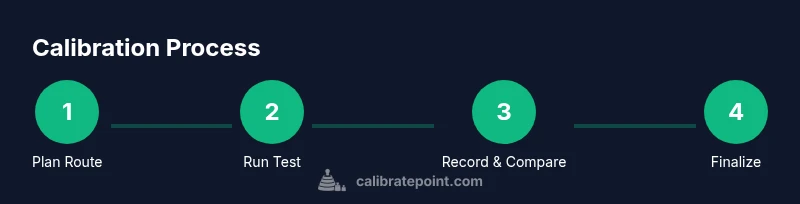
On your paired phone, open Samsung Health, go to Profile or Settings, locate Distance calibration or Stride length, and enable calibration. Confirm your units (meters vs miles) match your known-distance route.
Tip: If you can’t find the option, check for a software update or consult device-specific support articles. - 2
Enter or measure your stride length
Estimate your current stride length by walking a known distance and dividing distance by steps, or use the device’s stride estimation settings to input a measured value.
Tip: Use a comfortable pace that matches your usual training; small errors compound when testing longer routes. - 3
Perform a known-distance outdoor test
Walk or jog a measured loop (e.g., 0.5 km or 1 km) while your watch records distance. Keep a steady pace and avoid frequent pauses that could skew data.
Tip: Choose a route with minimal elevation changes to reduce variables in measurement. - 4
Compare recorded distance with known distance
After finishing, compare the distance shown on the watch against the known distance. Calculate the percentage error to gauge calibration needs.
Tip: Document both device distance and route length to spot systematic biases. - 5
Adjust stride length and re-test
If your watch consistently over- or under-reports distance, adjust the stride length in small increments and repeat the test.
Tip: Make incremental adjustments (a few millimeters) and re-test to avoid overfitting. - 6
Test multiple routes and conditions
Run the calibration test on different surfaces and weather conditions to ensure reliability across real-world scenarios.
Tip: Indoor treadmill tests can help with baseline checks but may not transfer perfectly outdoors. - 7
Finalize and document
Save the calibrated settings, log the route details and stride value, and schedule a periodic recheck after firmware updates or shoe changes.
Tip: Keep a calibration log so you can reproduce or revert changes if needed.
Questions & Answers
Can I calibrate distance samsung watch indoors?
Indoor environments limit GPS reliability, so outdoor known-distance tests are preferred. Indoor stride calibration may still influence readings, but results can vary by device and model.
Indoor calibration is limited due to GPS; outdoor tests are recommended.
How often should I recalibrate?
Recalibrate after footwear changes, firmware updates, or noticeable drift. Regular checks help maintain long-term accuracy.
Recalibrate after changes and when you notice drift.
Why is my distance off after calibration?
Common causes include GPS signal quality, changes in stride length, and route measurement errors. Re-test with a second route and confirm stride settings.
If it’s still off, re-test with a new route and check stride length.
Does calibrating distance affect calories or pace metrics?
Yes. More accurate distance improves pace estimates and calorie calculations since these metrics derive from distance and speed.
Calibration can change pace and calories estimates.
Is stride-length calibration available on all Samsung watches?
Stride-length calibration is supported on many models through Samsung Health settings, but availability can vary by model and firmware.
Stride length calibration depends on your model.
Should I calibrate distance every time I run a new route?
Not necessarily. Start with a baseline calibration and re-test if you notice drift on new routes or after significant changes.
Only re-test if you see drift on new routes.
Can calibration help with long-distance hikes or cycling?
Calibration principles apply to multiple activities, but the accuracy may differ by sport due to sensor usage and motion patterns.
Principles apply, but results vary by activity.
Watch Video
Key Takeaways
- Define your calibration goal clearly and test with a known distance.
- Adjust stride length in small increments to avoid overfitting.
- Test across routes and conditions to ensure reliability.
- Document calibration data for future reference and maintenance.